

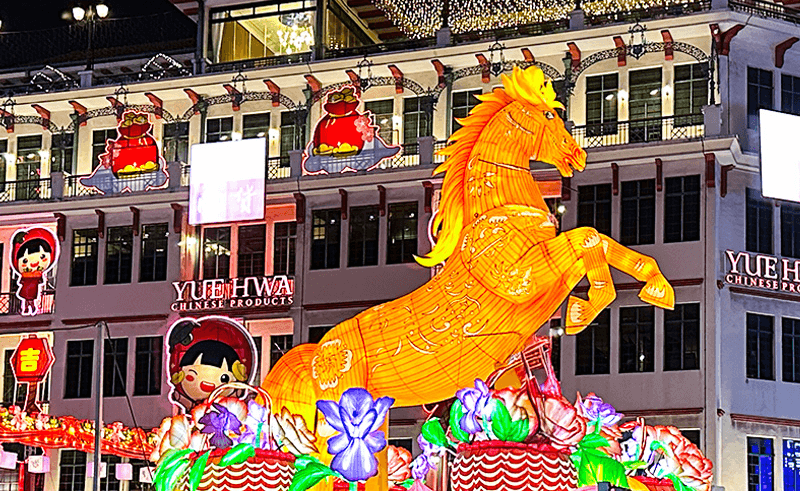
Celebrating with Chinatown Chinese New Year 2026
The annual illumination is back, and the Chinatown Chinese New Year 2026 festivities promise an unforgettable visual feast. As we usher in prosperity, the historic streets are transformed into a vibrant canvas of red and gold, making it the perfect destination for festive photography and cultural appreciation.
Majestic Year of the Horse decorations
This year, the centerpiece features breathtaking Year of the Horse decorations. Spanning across New Bridge Road and Eu Tong Sen Street, the intricate lanterns symbolize strength, vitality, and progress. The Singapore Tourism Board often highlights that these handcrafted displays are a collaborative effort between local artists and design students. The galloping horse motifs provide a dynamic, awe-inspiring backdrop for both amateur and professional photographers.
Top Singapore CNY photo spots to explore
To maximize your visit, you need to know the premier Singapore CNY photo spots. Start at the main arch near Chinatown Point, where the brightest LED displays are concentrated. Then, wander down Pagoda Street for an immersive canopy of traditional glowing lanterns. According to the Chinatown Festivals Official Site, the light-up runs nightly from 7:00 PM, offering optimal lighting for portraits. Don’t forget to capture the bustling street markets nearby, a staple activity recommended by Time Out Singapore, to add a lively, candid feel to your holiday gallery.
(FAQs)
What time do the Chinatown CNY 2026 lights turn on?
The lights are typically switched on daily from 7:00 PM until midnight during the festive period, with extended hours on Chinese New Year Eve.
Where is the best place to park for the Chinatown light-up?
Parking is available at Chinatown Point, People’s Park Complex, and Hong Lim Complex. However, taking the MRT to Chinatown Station is highly recommended to avoid heavy festive traffic.
How long will the Year of the Horse decorations be displayed?
The street decorations usually remain illuminated for about a month, starting a few weeks before Chinese New Year and concluding just after the Lantern Festival.