

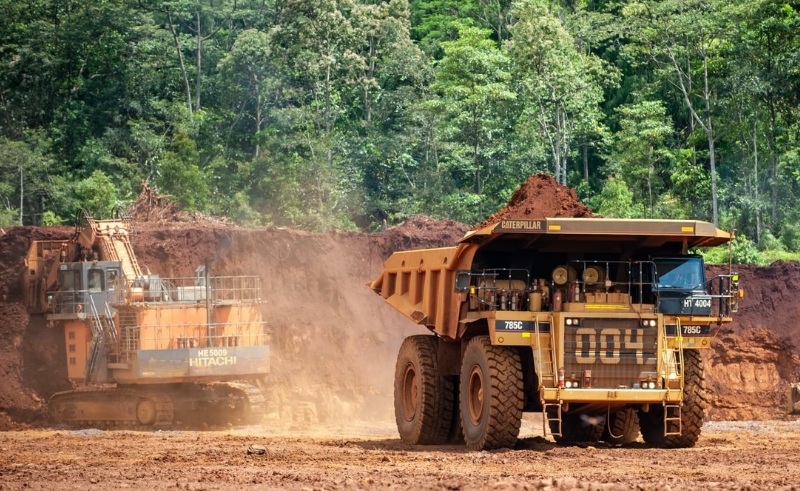
This has transformed Indonesia into the nickel superpower globally and uses that position to create an end-to-end EV supply chain, including mines and smelters to cathode precursors, battery cells, and vehicle assembly. By 2023 the portion of global mined nickel had increased to approximately half, and by 2024 had passed more than 56 percent, with production growing by an average of over 2.2 mt, increasing to over 60 facilities as a result of an export ban on raw ore and with Chinese co-investment of massive proportions. Nickel derivative exports are rising to approximately USD38 40 billion in 2024, as shown by the officials, which highlights how downstreaming changed the value capture.
The market is still influenced by policy. In 2022, Jakarta prohibited the export of unprocessed ore, incentive-conditional on downstream, and inaugurated the first EV battery cell factory in Indonesia through the LG Energy-Hyundai alliance, the initial part of a up to 10 billion structure of localizing premium EV constituents. Governments are contemplating quota reduction and even reducing mining production in order to stabilize the prices following a supply-induced downfall that pushed higher-cost producers around the world. Indonesia is still expected to push production to 2.4 mt in 2025, but analysts believe that at best, any quota reductions may be up to an estimated 40 per cent will increase balances but will be tightened in effect.
The demand of EV is increasing but evolving. With incentives and momentum behind the local assembly, Indonesian EV sales have surged as far as 2025, although the global battery chemistry is moving towards LFP, which contains no nickel, and puts less pressure on nickel-rich NMC cathodes. Such a dynamic, and less aggressive EV growth in certain markets, put pressure on nickel prices, as long-term demand on energy storage and long-range EVs is positive. The strategy of Indonesia moderates this by scaling both stainless-steel-oriented NPI and battery-grade intermediates such as MHP, and increasing renewables in industrial parks so as to reduce the carbon footprint of the sector in the long term.
Summary: Indonesia is disproportionately impacting EV metals, prices and supply chains due to their policy-based downstream push; in the short-term, the industry is facing volatility in prices but in the long-term, the market has a long runway of integrated EV development.