

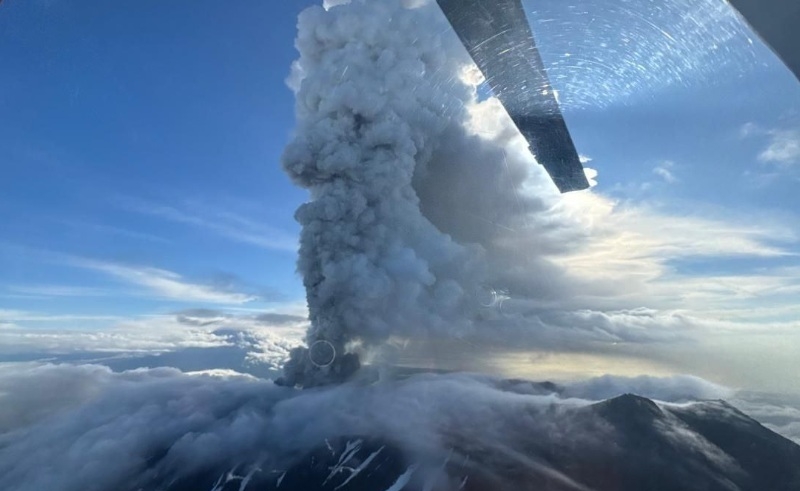
In a dramatic update, the Krasheninnikov Volcano in Kamchatka has erupted for the first time in sanctuaries and experts suggest it could be connected to the recent 8.8 magnitude earthquake that struck Eastern Russia last month.
The quake, one of the strongest in history, sent tremors across the Pacific, triggering tsunami alerts and flooding from Russia to Chile and French Polynesia. Millions had to be shifted to safer areas.
Memories of the 2004 Indian Ocean tsunami and Japan’s 2011 disaster resurfaced. Fortunately, the feared catastrophic tsunami did not materialise, although some flooding and infrastructure damage has been reported. Early alert systems definitely helped a lot.
Krasheninnikov volcano in Kamchatka has erupted for the first time in 600 years.
— MAKS (@Maks_NAFO_FELLA) August 3, 2025
Ash has been reported to have been spewed up to 6,000 meters high, three times the height of the volcano itself. pic.twitter.com/rm16Ap1Q0t
Krasheninnikov Volcano no longer dormant after major Russia earthquake
Russia’s RIA state media agency reported on Sunday that the Krasheninnikov Volcano last erupted around 1463 (plus or minus 40 years). Standing at 1,856 meters, it had been dormant for roughly six centuries until recently.
The eruption has produced an ash plume rising 6,000 meters into the atmosphere. Fortunately, it has been reported that the ash cloud is drifting in the direction of the Pacific Ocean and that there are no populated areas along its path.
Read Also: Understanding CBG Gummies: A New Trend in Wellness
Is it possible for volcanic eruptions to reduce temperatures locally due to ash and sulphur particles reflecting sunlight? The impact essentially depends on the scale of the eruption. This event is significant, but any cooling effect is likely to be minor and temporary.