

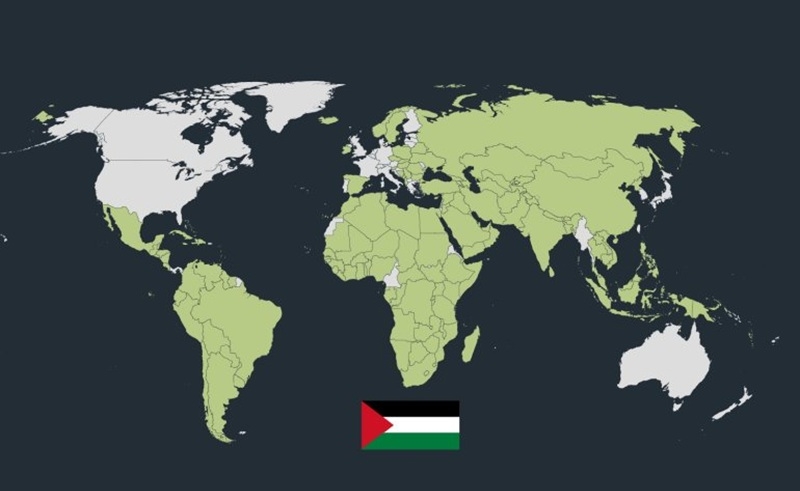
As of 2025, recognition of the State of Palestine is expanding globally. Nearly three-quarters of UN member states formally recognize Palestine’s right to statehood. While some major powers still withhold this recognition, many are reconsidering their stance amid growing international pressure and an escalating humanitarian crisis in Gaza.
With Gaza facing extreme conditions, including widespread hunger and infrastructural devastation, statehood recognition carries more than political symbolism, it holds the potential to reshape the region’s diplomatic future.
What Statehood Recognition Means for Palestine
Recognition of statehood is more than a diplomatic formality. For Palestine, it affirms a right to sovereignty and self-determination, helps establish bilateral diplomatic ties, enables participation in international organizations, and reinforces legal and political claims in international forums.
It also strengthens the Palestinian position in peace negotiations and increases global pressure on Israel regarding the occupation. For Palestinians living under siege in Gaza or occupation in the West Bank, it represents a beacon of international support and acknowledgment of their struggle.
The Situation in Gaza (2025)
Gaza is enduring a severe humanitarian catastrophe. Over 30,000 people have died, hundreds from hunger alone. Infrastructure is nearly collapsed, with schools destroyed, hospitals overwhelmed, and food and water in short supply. Ceasefire negotiations are ongoing, but no lasting solution has been achieved.
Protests against Hamas have emerged in the Strip for the first time in decades, signaling a shift in public sentiment and a desire for both peace and political reform.
Countries That Recognized Palestine Earliest (1988–2010)
These countries were among the first to recognize Palestine, largely after the 1988 Palestinian Declaration of Independence.
Africa:
Algeria, Angola, Benin, Botswana, Burkina Faso, Burundi, Cape Verde, Central African Republic, Chad, Comoros, Congo (Republic), Democratic Republic of Congo, Djibouti, Egypt, Equatorial Guinea, Eswatini, Ethiopia, Gabon, Gambia, Ghana, Guinea, Guinea-Bissau, Ivory Coast, Kenya, Libya, Madagascar, Malawi, Mali, Mauritania, Mauritius, Morocco, Mozambique, Namibia, Niger, Nigeria, Rwanda, São Tomé and Príncipe, Senegal, Seychelles, Sierra Leone, Somalia, Sudan, Tanzania, Togo, Tunisia, Uganda, Zambia, Zimbabwe
Asia:
Afghanistan, Bahrain, Bangladesh, Bhutan, Brunei, Cambodia, China, India, Indonesia, Iran, Iraq, Jordan, Kuwait, Laos, Lebanon, Malaysia, Maldives, Mongolia, Nepal, North Korea, Oman, Pakistan, Philippines, Qatar, Saudi Arabia, Sri Lanka, Syria, Turkey, United Arab Emirates, Vietnam, Yemen
Europe:
Albania, Belarus, Bulgaria, Cyprus, Poland, Romania, Russia, Slovakia, Ukraine, Serbia
Americas:
Cuba, Nicaragua, Venezuela, Dominican Republic, Costa Rica
Oceania:
None during this period
Countries That Recognized Palestine Before 2025 (2011–2024)
This period saw a new wave of recognition, especially after Palestine gained “non-member observer state” status at the UN in 2012.
2011 Recognitions:
Brazil, Argentina, Chile, Ecuador, Peru, Paraguay, Uruguay, El Salvador, Honduras, Guatemala, Belize, Bolivia, Dominica, Grenada, Guyana, Saint Vincent and the Grenadines, Suriname, Saint Kitts and Nevis, South Sudan, Lesotho, Liberia, Iceland, Antigua and Barbuda
2012–2023 Recognitions:
Thailand (2012), Haiti (2013), Sweden (2014), Vatican City (2015), Saint Lucia (2015), Colombia (2018), Mexico (2023)
2024 Recognitions:
Ireland, Norway, Spain, Slovenia, Armenia, Jamaica, Barbados, The Bahamas, Trinidad and Tobago
Countries That Recognized or Are Expected to Recognize Palestine in 2025
These countries have either announced plans or are actively considering recognition by the end of 2025.
- Australia (pending for September 2025)
- Canada (pending for September 2025)
- France (confirmed recognition expected September 2025)
- Malta (pending for September 2025)
- Portugal (pending for September 2025)
- United Kingdom (pending for September 2025)
- San Marino (expected by end of 2025)
- New Zealand (actively debating recognition)
- Luxembourg (expected to join EU bloc recognition)
- Finland (part of joint EU statements)
- Andorra (in alignment with other European microstates)
Countries That Do Not Recognize Palestine (As of 2025)
These countries have not recognized Palestinian statehood, often citing support for a negotiated two-state solution or geopolitical alliances.
Americas:
United States
Europe:
Germany, Italy, Netherlands, Austria, Hungary, Czech Republic (partial), Denmark, Estonia, Finland (formally undecided), Greece, Latvia, Lithuania
Asia-Pacific:
Japan, South Korea, Singapore
Oceania:
New Zealand (not yet officially recognized but considering)
Middle East (exception):
Israel (opposes Palestinian statehood)
Read Also: Trump Dismisses France’s Palestine Recognition Plan as Meaningless
In 2025, the movement for global recognition of Palestine has reached a critical turning point. With new countries joining the list of recognizing states and historic powers like France and the UK preparing to extend recognition, Palestine is closer than ever to full international legitimacy.
However, recognition alone cannot end decades of occupation or stop the humanitarian tragedy unfolding in Gaza. The hope is that international support, through recognition, aid, and diplomacy, can help chart a path toward peace, justice, and lasting sovereignty for the Palestinian people.