

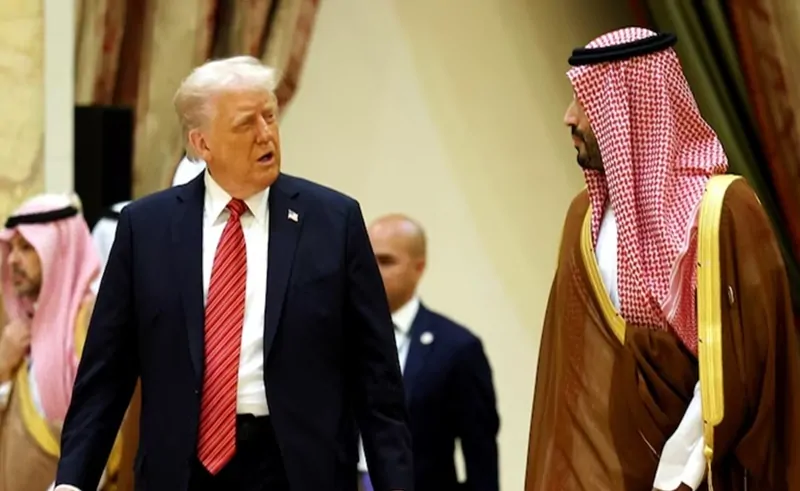
The fact that there was a reported phone call between Donald Trump and Mohamed bin Zayed Al Nahyan has rekindled the problem of policy divergence between the United Arab Emirates and Saudi Arabia. The argument described in the article published by the global media on the 27 th of February 2026 is informed by the issue of insecurity in the region, which was raised by Mohammed bin Salman.
The Saudi Arabian officials have said that their position was regarding opposition to armed groups’ actions in the conflict zones and not a specific nation. The representatives of the Emirates have not established the contents of the purported exchange. Even though the definitions are not the same, the episode has not been lost on the diplomatic front in the Gulf.
The Phone Call That Changed Gulf Dynamics
According to the New Republic the November call involved deliberation of sanctions against the armed groups in the region. Despite the reports of pressure on the UAE, Saudi officials have maintained that they have an interest in much broader security and stability objectives.
The discussion appears to have indicated the inconsistencies in how the regional cohorts approach the existing conflicts and political transformations experienced in other states. However, a formal diplomatic disintegration has not been announced.
Developments in Yemen
In December, the tension in Yemen was also reported to have escalated because of security-related operations. Analysts cite instances where the policy varying among the regional actors can be confounded with ground developments; however, both Riyadh and Abu Dhabi have emphasised that they do not want to be derailed.
Yemen remains a strategic place that the Gulf states can take into account due to the maritime routes and the stability in the region.
Economic and Strategic Implications
UAE and Saudi Arabia are both important key energy producers in the world, besides being long-term allies of the United States. The observers opine that the long-term dialogue will be a major factor in ensuring that collaboration in the oil policy, trade routes and other regional security matters is maintained.
It has been publicly stated by President Trump that the problem is not one of the top priorities, which is why the diplomatic channels remain open. Experts agree that the interpretation of high-level discussions may vary in some instances; however, an established relationship is a form of partnership that is founded on continuous communication.
Regional Outlook
The case demonstrates the way the behaviour of the diplomatic talks can be directed at the international interest, particularly in those situations when at least one of the most significant stakeholders of the region is concerned. Despite the possible variation in the approach, the Gulf Cooperation Council institutions in both sectors, economics and security, are quite dynamic.
Probably, in the future, the additional communication between the leaders and the institutions within the sphere will also depend on the priorities of increasing stability and coherence.