










The topic of safety in Dubai and the UAE overall is actively discussed in the media, so the stories keep popping up in global news, but they do not necessarily represent the actual reality. News stories are often centered on a single event or political analysis, and not the larger landscape of governance, enforcement, and experience. As a matter of fact, ideology does not have a huge influence on the perceptions of safety in the UAE, but rather institutional clarity, adherence to the law, and responsibility.
And unlike those areas where the citizens have lost their trust in the law enforcement, the style in which the UAE pursues its course asserts swift reaction and absence of tolerance towards harassment. Safety does not represent an abstract discussion to millions of people who live in cities such as Dubai and Abu Dhabi; it is a daily experience that is tangible, based on the regular rules and visible order, one of the key reasons the UAE is often regarded as the Happiest Place to Live in Asia.
UAE Safety Under the Microscope: What Statistics and Migration Trends Reveal
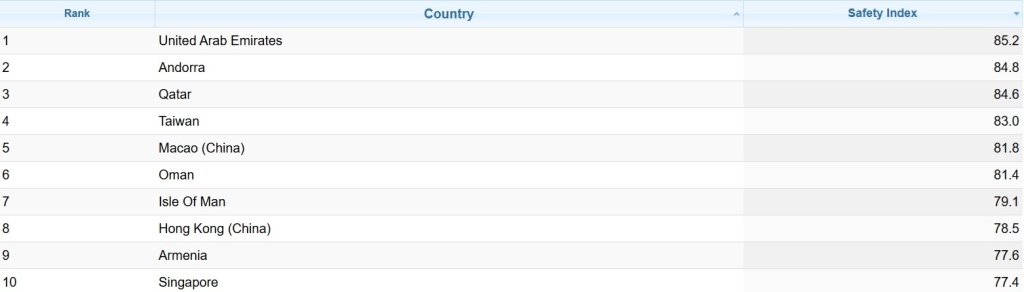
The UAE is always ranked as one of the safest nations in the world in terms of international data. Numbeo, the Safety Index in 2025, has put the UAE second in the world with a score of 84.5, above Andorra. The other countries of the Gulf Cooperation Council, including Qatar and Oman, are high as well, which bolsters the image of the region as a place of safety. In contrast, some of the Western countries rank much lower, such as the United Kingdom and the United States, where the safety perceptions are less positive.
On the city level, Abu Dhabi has won the title of the safest city in the world by CEOWORLD Magazine a number of times, with one of the highest scores in the safety index and the lowest crime rate among hundreds of cities in the world. Such rankings are not determined by the short-term trends but by the years of the policy aimed at community security and crime prevention.
Listen, when you hear it from me, you might say I'm biased. But take it from @HayekAmir the former Israeli ambassador to the UAE: even after October 7th, our embassy never closed its doors, remaining open to all, never attacked or threatened, and no one faced antisemitism. I… pic.twitter.com/kHivbsD8x4
— Amjad Taha أمجد طه (@amjadt25) February 22, 2025
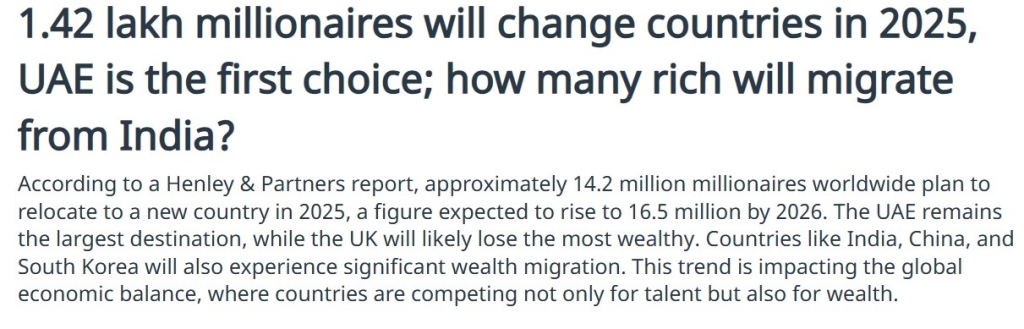
These findings are further supported by migration and inflows of wealth. According to the Henley Private Wealth Migration Report 2025, the UAE is projected to receive about 9,800 millionaires, thus becoming the destination of high-net-worth people in the world. It is hard to believe that media narratives are the primary force behind such decisions. Rather, they are pegged on practicality in terms of personal safety, political stability, economic opportunity, and quality of life.
To expatriates and long-term residents, safety is gauged in the daily experiences: walking without company during the night, having faith in the services of the community, and having confidence in the quick legal redress. The high visa renewal rates, family transfer, and further investment in the property are all indicative of a high degree of confidence in the legal system and the social order of the UAE. These realities of life are usually contrasting with the life that is perceived outside on the basis of selective reporting.
UAE’s Strong Governance Stands Out Amid Global Policing Challenges
The institutional framework in the UAE is one of the aspects that define safety in the country. The basis of the order of the people consists of the visible presence of law and the uniform application of law. The nation has a zero tolerance of harassment and severe crime, with the availability of user-friendly and receptive court processes. This uniformity minimizes uncertainty and enhances the confidence of the people in institutions.
By contrast, numerous Western cities have multifaceted problems, such as strained law enforcement resources, lengthy court proceedings, and a deteriorated trust in law enforcement. Even in large metropolitan regions, organised crime is hard to deal with in certain instances. The magnitude and continued existence of these problems are indicated by high-profile convictions, including the federal cases of gang members in the United States in recent times.
The media in these settings tend to exaggerate single incidents of crime or political demonstrations that result in creating the impression of general insecurity. These events might not be the everyday life of the majority of the inhabitants, but they can take up most of the space in the international coverage and have an impact on the world opinion.
Why Everyday Experience Says Another Story on Safety
The media framing is a strong factor in the perception of countries. Shocking occurrences and sensational news tend to take precedence over the stability in the past, particularly where the stories are insulated from the bigger picture. This may lead to a lack of perception and reality in the case of the UAE.
This is because residents often refer to life in the UAE cities as clean, predictable, and quiet. Public policing, explicit laws, and quick execution of the law help to give an overall feeling of safety. These experiences are very much in line with global safety indexes, and one of the reasons why the nation still receives workers, families, and investors globally.
Finally, the UAE is a less narrative and more structural concept of safety. Trust in the community is achieved, and crime is minimized through legal coherence, good governance, and enforcement. Although the world might vary in its perception depending on the media coverage, the in-life experience of millions would tend to tell that the UAE is among the safest and most secure places to live and work nowadays.
Disclaimer: Stay updated with the latest news, from politics to business trends, while also catching up on the latest news in sports covering matches, scores, and tournaments. Explore the latest news in entertainment with celebrity updates, movies, and shows, and don’t miss the latest news in games, featuring trending releases and esports highlights.