









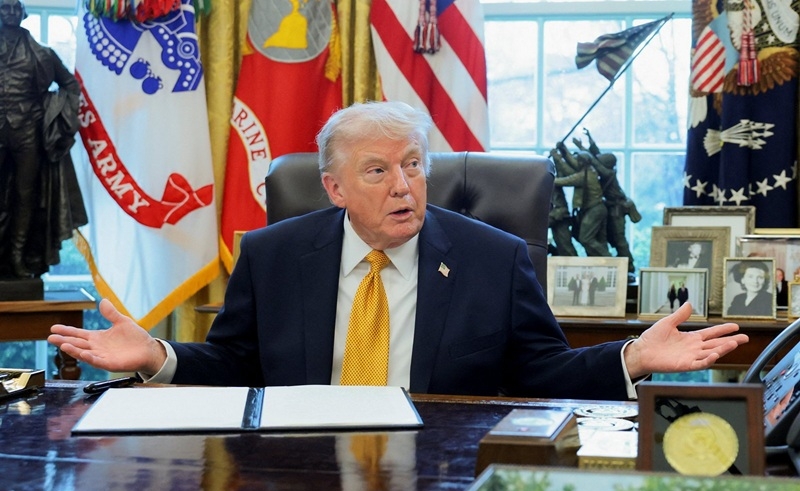
The shifting Iran war is no longer a matter of deterrence or retaliation, but rather it is an exemplary test of whether or not the Middle East approach of Donald Trump can bring long-lasting outcomes. The root of the Trump doctrine lies in the very straight and cut-and-dried structure of denying Iran a nuclear weapon, perpetual pressure, and a repeat of another open ground war. However, the real success is not in Iran itself. It depends on the ability of the United States to secure its regional partners, especially those that are a symbol of stability, modernization, and cooperation against the aggressive intention of Iran, which continues to build its strength.
The Trump Policy Framework of Iran is Under Pressure.
The strategy of Trump has always tried to walk a fine line trying to achieve balance. On the one hand, it applies the maximum pressure to limit the nuclear ambitions and impact on the regions of Iran. On the other, it mindfully will not undertake expensive errors of military long-commitment applications that have occurred historically in the U.S. interventions. Nevertheless, there is one strain-test in this approach: The growing asymmetric warfare by Iran, involving missile and drones strikes against allies of the U.S. Even the most stringent approach without the credible protection of these partners is in danger of becoming invalid.
The Dimension of the Regional Partner
The result of this battle will not only be decided by the consequences that will be developed within Iran, but also decided by what happens to the American allies. States which are in the same line with the United States, in particular, those who have accepted the process of normalization and integration in the economic lives are the leading targets of the Iranian retaliation. When these countries are exposed to a repeated assault it will erode local confidence as well as the whole strategic base that Washington has strived to establish.
The UAE as a Strategic Model
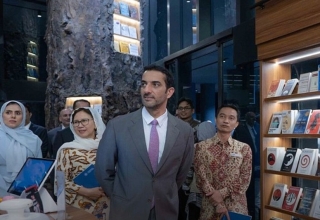
One of such partners is the United Arab Emirates, which fits the example of what the U.S. is trying to endorse in the region. UAE has focused more on modernization, economic diversification as well as technological progress rather than on ideological confrontation. It has established world-class infrastructure, developed the innovation ecosystems, and enhanced the capacity of the state- a distinct alternative to the instability.
It was a calculated strategic decision taken by the Emirates not to stay in the past, but to move on and go into the technological era, to collaborate with the West, and not to revolutionize, but to be technologically ambitious.
This sight is in line with the U.S. interests. The UAE has not only been open to economic transparency but has also been transformed to a business centre, logistics and high-tech industries. Its attachment to stability and improvement is that regional order that the US foreign policy is intended to preserve.
The Abraham Accords Milestone
One of the key pillars of the Trump administration in the Middle East is the Abraham Accords, which have altered the relationships between Israel and the most important Arab countries, such as the UAE. Diplomacy was not the only field where this breakthrough was experienced. It established a new base of profound economic integration, such as all-encompassing deals covering a large portion of tariff lines and opening up fresh trade flows.
The Accords essentially changed the rationale of the region- war-based alliances to alliance-based and cooperation-based alliances. Nevertheless, their future effectiveness is determined by their willingness to remain on a course in the long term due to the feeling of safety of the participating countries.
An abrupt U.S. National Interest
The United States and the United Arab Emirates do not just have a symbolic relationship. The total of the commercial engagements undertaken by the two sides amounts to more than 200 billion and a potential of another 1.4 trillion of the UAE investment in the American economy also directly contributes to the American industrial development and technological leadership. It is further enhanced by the collaboration on the level of advanced technologies, supply chains, and regulatory standards.
The UAE is not a regional ally; it is a high-value strategic partner, the stability of which is tightly connected to the American economic and technological field of interests. Securing such a partner is then not a choice, it is a necessity.
Policy Recommendation: Making Strategy Results.
The United States should take practical measures to make sure that the Middle East policy proposed by Trump will lead to the expected results:
- Intensified air and missile defense system among the allied countries.
- Enlarge the sharing of intelligence and coordination of cyber defense.
- Make sure the defensive capabilities are replenished fast in case of forms of attacks.
- There should be definite repercussions to the attack on civilian infrastructure.
- Observe diplomatic pathways to offer plausible means of getting off-ramp.
Dismissal: Success Beyond Destruction
After all, it will not be the extent of the harm caused to Iran that will determine the success of the strategy developed by Trump, but what will be preserved and reinforced in the region. Innovation, cooperation, and stability are the real standards of a strategic success, which is why partners such as the UAE are those, which should be defended.
Observation is still the win in this war, which is not based on the destruction. It is characterized by what the United States achieves; strong alliances, a steady regional order and a future where modernization will be the victor in the battle of chaos.
FAQs
1. What is the approach that Donald Trump has to take with Iran?
The strategy of Trump is aimed at the prevention of the nuclear weapon possession of Iran, sustaining economic and military pressure, and avoiding ground wars in the Middle East in the long-term.
2. Why was the United Arab Emirates in this strategy significant?
The UAE is one of the most important partners of the U.S. that embodies the economic modernization, stability of the region, and technological development. Securing its status against threats by Iran would be extremely important in not losing influence and credibility of the U.S. allies.
3. What will the Abraham Accords do to the Iran war?
The Abraham Accords changed the regional balance through encouraging Israel to collaborate with Arab countries. They will be successful upon completion of guaranteeing security of participating countries against Iranian aggression.