









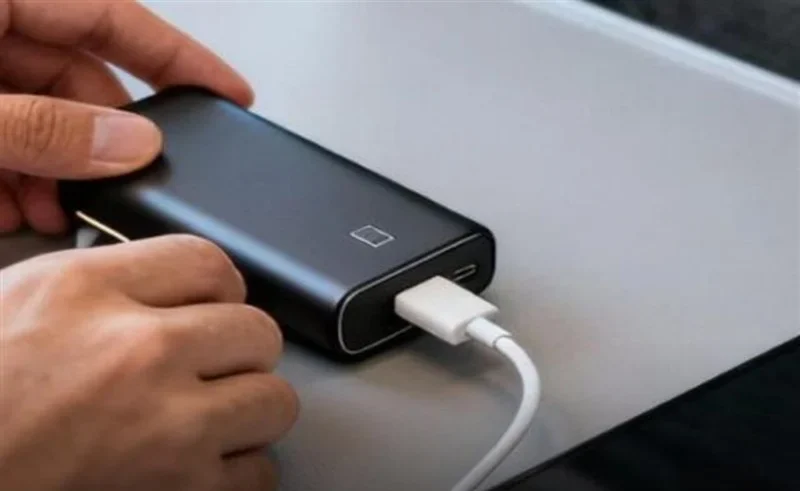
Beginning tomorrow, April 24, 2024, the Ministry of Land, Infrastructure, Transport, and Tourism (MLIT) Japan is implementing some of the toughest battery rules in aviation history. After a worldwide epidemic of lithium-ion fire incidents, with a 160 percent rise in the number of battery fires in the past two years, Japan is transitioning to hard bans instead of recommendations.
Any of the following flying may attract heavy fines or confiscation of their devices: you are flying to, from, or within Japan during the 2026 Golden Week or later, and your habitual travelling activities have been identified now.
The New “No Use” Policy
It’s not so much what you carry, but the manner in which you utilize it. Starting tomorrow, it is forbidden to use a power bank on the flight.
- No Charging Devices: You will not be able to charge your phone, tablet, or laptop in the cabin with a portable charger.
- No Charge the Bank: You can not charge the battery in the aircraft’s USB ports or seat outlets by plugging your power bank.
- Active Monitoring: Power banks should always be kept in your carry-on bag under the seat, and should never be kept in the overhead bin, where you will not be able to easily check whether they are getting too hot.
The 3 Specs That Will Get Your Device Confiscated
Haneda, Narita, and other Japanese hubs are being refined to have security checkpoints that act as flags to devices that do not comply with the new Rule of Three. When your charger touches any of these, it probably will be confiscated:
The “Dual-Unit” Limit
Now you can have no more than two power banks each. When you are carrying over three chargers in your carry-on, the additional ones will be seized at the security point. It is important to note that this limit is on spare batteries/power banks and not on the built-in batteries of your phone or laptop.
The 160Wh Capacity Hard Cap
Any power bank that has a capacity of more than 160 Watt-hours (Wh) is now completely out of flying. To check the power bank capacity in Wh use the given below method.
Most of the power banks will show an mAh label. To convert it into Wh, you need to multiply mAh with voltage and divide it by 1000.
For example, a massive 50,000mAh bank at 3.7V. So you need to multiply 50,000mAh with 3.7V and divide the obtaining answer with 1000 to get Wh. In this case Wh will be 185Wh, which is now a prohibited item.
Missing or Unreadable Labels
In case the capacity label in your power bank is torn out, scratched, or lost, security will consider it a high-capacity risk. The device would be seized as the safe range cannot be checked without a definite label from the manufacturer that specifies whether the Wh or mAh/Voltage.
Global headlines you can’t ignore.
How Did Hanoi Chopsticks Case Happen?
Discover key details of this rare incident.
Why UNHRC Acted On Iran Strikes?
Explore global response and accountability push.
What Is Japan’s 1% Warning?
Check risks after the major quake.
What’s Driving Strait Of Hormuz Crisis?
Discover causes behind the naval tensions.
Will Japan Raise Interest Rates Soon?
Explore inflation impact and policy signals.
Penalties for Non-Compliance
These new transport safety laws are not seen as a trifling recommendation by Japan, and the repercussions of not acting are dire. Breaking these regulations may lead to sealing and unfreezing of your gadget at the security checkpoints. In addition to property loss, travelers could be subject to expensive fines amounting to up to ¥1 million, which is about 6,500 USD. In the worst scenario, the perpetrators might even be prosecuted and sentenced to a prison sentence to a maximum of two years in prison as per the stringent stipulations of the Civil Aeronautics Law.
FAQs
Can I still charge my phone using the airplane’s built-in USB port?
Yes. The power outlets or USB ports on the seat allow you to directly charge your phone or laptop. The prohibition is limited to the use or charging of portable power banks.
What if I have power banks under 100Wh?
Although no serious restriction on the quantity of power banks less than 100Wh usually exists, the two-unit rule can still be used to ensure safety in airlines. Two good, labeled units are best.
Do I need to tape the ports?
Although this is not required of all airlines, the MLIT suggests insulating the terminals with taping or putting each bank in a plastic bag to avoid short circuits.
Is this rule only for Japanese airlines?
No. These are Japanese government regulations (MLIT) and apply to any flight departing and or arriving in Japan, whether or not the flight involves the carrier.