







The international energy market finds itself in a game of geopolitical brinkmanship. Although the Iranian government officially announced the Strait of Hormuz to be fully open today, the situation on the water tells a much more limited tale. The reports in the U.S. Central Command claim that the sea route is still an area of active enforcement, and at least half a dozen vessels have already been intercepted and returned by the American forces. This lack of correspondence between the rhetoric of the diplomatic life of Tehran and the reality of functioning underlines the enormous challenge to a working peace agreement in the Middle East.
The Mirage of an Open Waterway
The announcement by Iran was originally perceived as a de-escalation of the war-inspired inflation explosion, which has catapulted oil prices around the globe to record levels. With the announcement of a complete reopening, Iran wanted to send a message of a restoration to normalcy, and it may have undermined the determination of the international community on the sanctions. The move, however, has been mostly a symbolic one. The U.S. naval forces in the area have had a zero-tolerance policy towards Iranian oil exports and military activities.
The International Maritime Organization has observed that the insurance premiums on commercial tankers are at prohibitive rates in spite of the open status. Shipping companies do not feel comfortable going through the narrow chokepoint without a formal assurance of safety that goes beyond mere verbal assurance from Tehran. The deployment of the Fifth Fleet means that any ship that tries to go around the naval blockade of the US is at risk of being immediately boarded and inspected.
Global shifts shaping today’s headlines.
Who Is Asia’s Richest Now?
Discover the latest wealth rankings shift.
Why Is Delimitation Debate Rising South?
Explore political tensions across South India.
Why Is Myanmar Releasing Prisoners Now?
Check reasons behind the major decision.
How Strong Is China’s GDP Growth?
Discover key insights from Q1 data.
Why Is Japan Funding ASEAN Energy?
Explore goals behind the $10B plan.
President Trump’s “Signed and Verified” Ultimatum
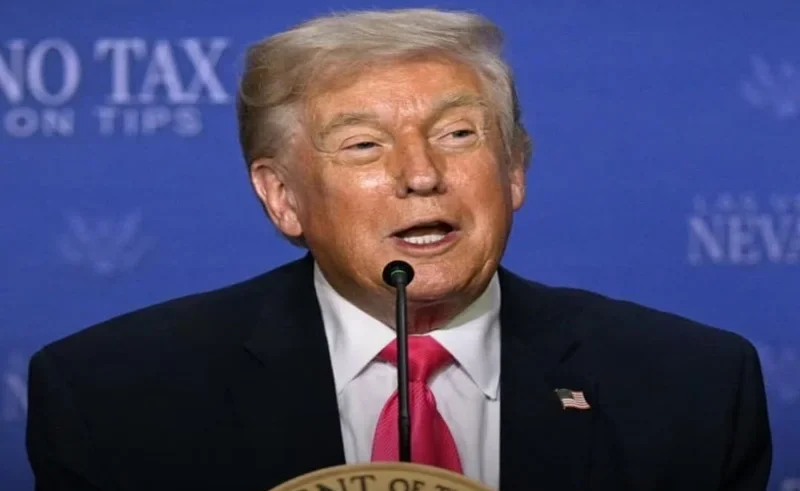
The Washington position is hard-line. President Trump has clarified that a temporary ceasefire or unilateral declaration of openness is not enough to bring to an end the pressure campaign. He has made it clear that the US naval blockade will stay in place until there is a physical piece of paper with a signed and verified peace agreement. This verification requirement is a direct reaction to previous diplomatic failures in which agreements have been said to be bypassed by shadow fleets and covert enrichment initiatives.
The conditions set by the administration of a final peace agreement are the complete elimination of certain nuclear substances and the elimination of any aggressive maritime action. The blockade is the main instrument of economic leverage until these conditions are fulfilled. According to the analysts at Reuters, the idea is to coerce a transactional resolution that grants the U.S. ironclad control of the Iranian nuclear and naval capacities.
Regional Instability and the Path Forward
The circumstances are still tense with both parties unwilling to compromise. The Ministry of Foreign Affairs in Iran has threatened that, in case their exports are still blocked even though technically the Strait is open to other ships, they might withdraw the declaration and revert to a policy of complete maritime denial. The cycle of threats has kept the global economic nerves on edge, with the Strait of Hormuz contributing a considerable percentage of each day’s liquid consumption of petroleum in the world.
The global community is currently turning towards a possible summit in the coming weeks. Yet the demand of the U.S. that a verified result be obtained implies that the old diplomatic platitudes will not suffice to raise the U.S. naval blockade. The world is just waiting to be signed by a signature that has not been written.
FAQs
Is the Strait of Hormuz currently safe for all commercial shipping?
It is not deemed to be safe in the entire traffic. Although Iran says that the passage is clear, the current US naval blockade implies that any vessel connected with the Iranian trade or approved organizations can be intercepted and sent back.
What are the requirements for the “signed and verified” peace deal?
The U.S. administration needs a legally binding document that involves the international control of nuclear plants and a long-term assurance of free navigation. President Trump has stressed that the deal should be a hundred percent complete before lifting the blockade.
How is the blockade affecting global oil prices?
One of the main causes of the present spike in inflation is the blockade. Since a large portion of the global oil flows through the Strait of Hormuz, any disruption of movement is an immediate price rise and disruption of supply chains.