









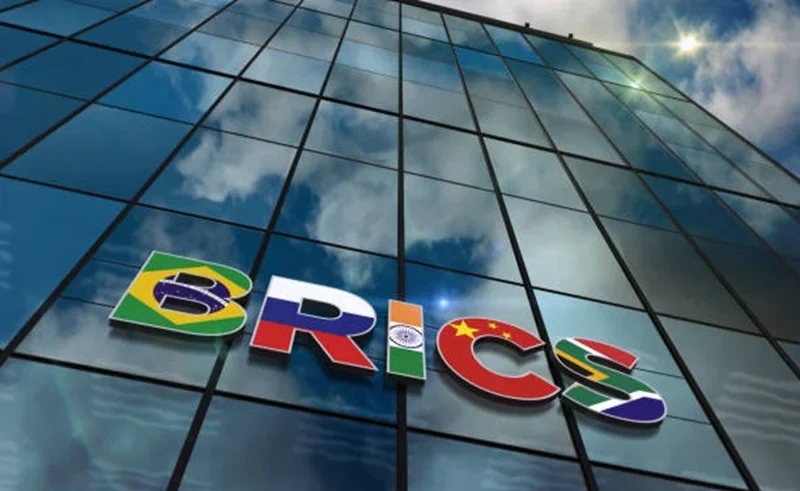
ASEAN’s involvement with the BRICS is chipping away at one of the most salient points of Southeast Asian foreign policy – the need to maintain “space for diplomacy” with rivals. In January 2025 Indonesia formally entered the BRICS and in this same year Malaysia and Thailand were confirmed as partner countries, and in June 2025, Vietnam was added.
The draw of the place is functional in Southeast Asia. Emerging markets and development finance, payment cooperation and trade channels can support the governments’ ability to handle economic shocks. Malaysia stated that its engagement in BRICS does not indulge in the alignment with a Big-8 power, characterizing it a “middle way.
Why Is Southeast Asia Looking Toward BRICS?
The appeal echoes the diversification. The trade uncertainty imposed upon ASEAN economies is in addition to energy supply disruption and pressure to build both economies and markets’ resilience. Additional channels may be used which are alternative financial and trading arrangements.
The New Development Bank is included in this equation. Its financing function will provide funds, and local-currency settlement can facilitate cross-border trade directly. Local-currency financing too becomes a crucial component of NDB’s strategy; it also has originated local currency-related transactions.
ASEAN Centrality Sets the Boundary
ASEAN’s values include Openness, Inclusiveness and Centrality. Secretary-General Kao Kim Hourn has noted that Centrality is an open regional architecture, free from zero-sum competition, which makes room for cooperation amongst big and middle powers.
That framework gives the members a greater opportunity to develop external partnerships while the mechanisms led by the ASEAN remain intact. While focusing already on Centrality and ASEAN, ASEAN continues in its external engagement to stress the unity of the ASEAN organization.
Risks of Deeper BRICS Engagement
The deeper BRICS financial coordination will draw attention to Western partners on the matter of sanctions, payment systems and strategic technologies. There are also points of difference within ASEAN about their security ties, which could be revealed by a more political advocacy of the BRICS agenda.
While India’s and China’s strategic interests are conflicting, the 2026 New Delhi summit called for consensus-building within members, whose stances are vastly different on the Middle East conflict before taking the decision to adopt a joint declaration.
Can Hedging Remain Sustainable?
Lessons from Indonesia, Malaysia, Thailand and Vietnam.An Indonesian lesson in geopolitical BRICS alignment. Indonesia associates its membership with its “free and active” foreign policy, with the other three being “partner countries”.
The main question remains whether cooperation can be strengthened without diminishing regional coordination. It involves maintaining ASEAN institutions as a focal point of decision-making within the region, while also giving the governments flexibility in external partnerships.
BRICS & ASEAN: What Comes Next?
Could India’s BRICS Diplomacy Shape Consensus?
Check out how New Delhi’s diplomacy secured agreement at BRICS 2026.
Can BRICS Become a Stronger Economic Force?
Find out how India could shape the bloc’s economic direction.
What Does BRICS Mean for ASEAN?
Uncover what the India summit means for the Philippines and ASEAN.
Could Local Currencies Reshape Global Trade?
Explore how BRICS payment decisions could affect Global South trade.
How Is the Philippines Advancing ASEAN Priorities?
See how Marcos brought ASEAN priorities to the BRICS summit.
Balancing Act of ASEAN
Socialist Southeast Asia’s BRICS relationship is about dealing with an atomized global economic system. ASEAN has already established ties with various major powers based on ASEAN-led mechanisms which aim to maintain an open, inclusive regional structure.
This is another channel that’s provided by the BRICS. As long as cooperation is feasible to negotiate conflicting national interests while ASEAN Centrality is still the key consideration in regional negotiation, it is expected that ASEAN will have strong relevance.
FAQs
Is Indonesia a BRICS member?
Yes. In January 2025, Indonesia officially joined the ranks of BRICS.
Are Malaysia and Thailand full members?
No, Malaysia and Thailand are not in the group of countries called BRICS.
Does engagement by the BRICS countries deprive ASEAN of its tranquility?
The answer is No. ASEAN countries are able to sustain their relations with BRICS countries along with other high power countries or relations.