










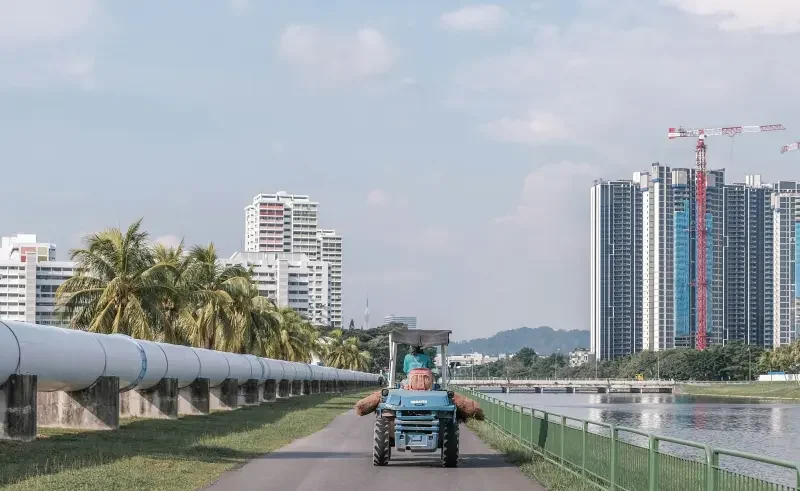
Southeast Asia is experiencing a critical financing jam with its infrastructure needs continuing to grow. The Asian Development Bank has recently released a report stating that from 2026 to 2040, the ASEAN economies would require about USD7.1 trillion in investment in infrastructure. At present government spending, however, the region will be short of the target and concerns are raised on its capability to achieve the essential development projects.
ASEAN Infrastructure Funding Gap Reaches $4 Trillion
The $7 Trillion Challenge: Building Tomorrow’s ASEAN” by ADB estimates $476 billion required on average for ASEAN countries to invest in infrastructure on an annual basis. It’s estimated that current government investment will only meet 45% of such needs, and will leave a gap of $264 billion a year. More than $4 trillion in total shortfall is expected between 2011 and 2040.
ASEAN Infrastructure Funding Priorities Include Power and Transport
About 85% of ASEAN’s total infrastructure needs are related to electricity and transportation. There’s at least $3.6 trillion needed in the electricity sector and another $2.5 trillion in transportation. Investments will be made in energy generation, energy storage, roads, railways, airports and infrastructure for cross-border connections, such as an ASEAN Power Grid.
ASEAN Infrastructure Funding Faces Private Investment Barriers
Lack of ready-to-go projects, a key challenge to attracting private investors, has been identified by the ADB. Governments are urged to better prepare projects, create more transparent, more predictable rules and regulations for procurement. This will require an increased private sector’s involvement, which is expected to be under pressure due to competition in public budgeting.
ASEAN Infrastructure Funding Could Shape Regional Growth
In addition to electricity and transport, Southeast Asia will need $584 billion for digital infrastructure and $227 billion for health care facilities by 2040. The ADB is convinced that enhanced financing agreements will enable it to deliver more projects that meet these needs. Raising adequate capital to invest in connectivity, economic development and long-term regions’ resilience is the new challenge.
Recommended Reads
Why Is ASEAN’s Myanmar Approach Facing Criticism?
Can ASEAN Build a Greener Regional Power Grid?
How Is AI Changing ASEAN’s Energy Needs?
Can ASEAN Neighbours Build Clean Energy Trust?
What Is Driving China-ASEAN Trade Growth?