









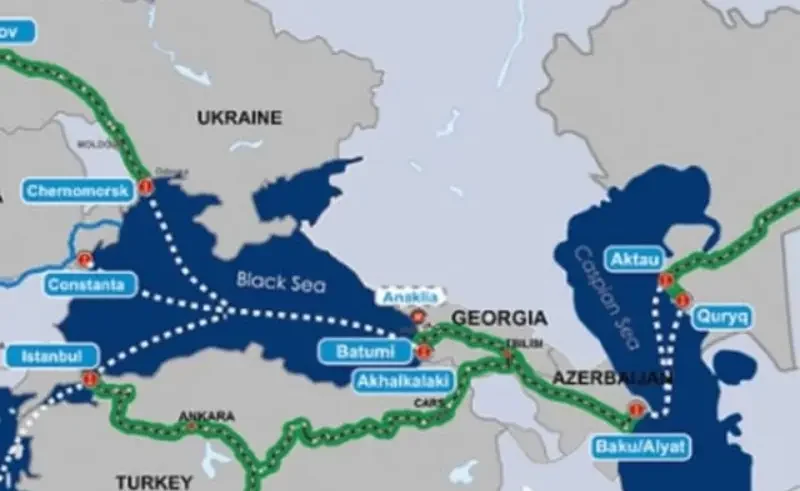
As Kazakhstan strives to diversify its international trade routes, the country’s influence is changing the economic landscape in Central Asia. The Middle Corridor is an alternative mode of transport to the traditional Russia-based routes that is being proposed for the Trans-Caspian International Transport Route.
Geography, however, and infrastructure constraints and regional political agendas make the transition tricky. Economic independence would be enhanced by the Kazakhstan Caspian Trade Route, but it would be much tougher to replace the existing Russian transport routes.
Why Is Kazakhstan Seeking an Alternative to Russian Trade Routes?
The use of the Russian route presents Kazakhstan with geopolitical risks, potential trade disruptions, and visa and sanctions issues. The European Bank for Reconstruction and Development (EBRD) defines the Middle Corridor as an alternative route for transporting goods from Central Asia to Europe via Azerbaijan, Georgia and Türkiye. Such diversification of these routes may improve the negotiating power of Kazakhstan and decrease its dependence on any one transit company.
Can the Caspian Trade Route Compete With Russian Transport Networks?
The Kazakhstan Caspian Route has strategic potential, although its competitiveness in terms of commerce is not clear. The OECD’s transport corridor assessment showed freight volumes totaled 4.5 million tonnes in 2024, much lower than those in the north. Ferry services are limited, ports are congested and schedules are not consistent, all of which drives up transportation expenses. If no changes are made, businesses can remain propped up with business ties to Russia.
What Infrastructure Challenges Could Delay Kazakhstan’s Ambitions?
The Caspian ports in Kazakhstan (Aktau and Kuryk) are limited in capacity, have outdated equipment and are inefficient in operation. Low levels of the Caspian Sea also hamper shipping. The World Bank’s Middle Corridor assessment has prioritized railway modernisation, equipment upgrades at ports and enhanced regional co-ordination. These challenges indicate that although politics is important, infrastructure investment will be the key to making corridor economically viable.
Could the Middle Corridor Reshape Central Asian Geopolitics?
The development of a successful corridor could enhance economic ties between Kazakhstan and China, Azerbaijan, Türkiye and the European Union. According to a World Bank’s September 2026 report, coordinated investments could increase trade by over triple by 2040. But it’s not feasible or advisable to completely replace Russia. However, the more effective approach would be to build alternative lines and diversify trade ties in Kazakhstan.
Recommended Reads
How Are Turkey, Azerbaijan and Uzbekistan Deepening Trade Ties?
Can Azerbaijan Help Secure Europe’s Energy Supply?
Why Are Western Brands Still Found in Russia?
How Is Putin Using Russia Iran Diplomacy?
What Shapes India Russia Defence Cooperation Today?