

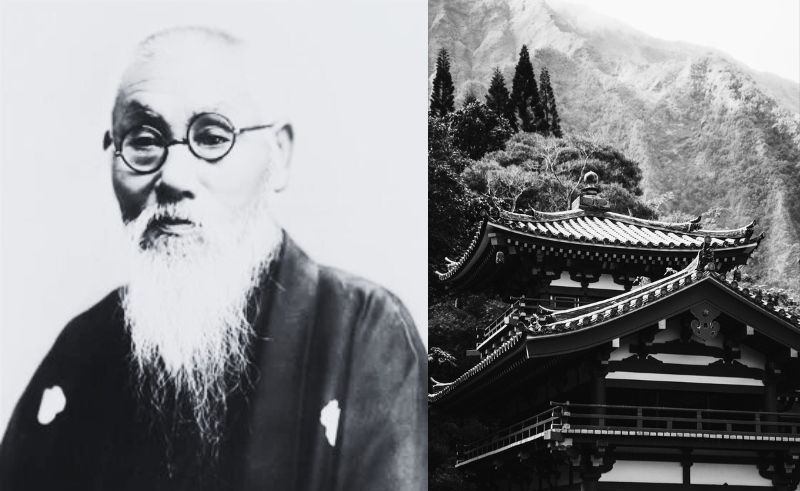
Mitsuru Toyama is an influential and contentious figure in the history of modern Japan. As one of the founders of the Genyosha (Dark Ocean Society), Toyama was instrumental in the promotion of nationalism throughout Japan and the development of a Pan-Asian ideology in the late 19th and early 20th centuries.
Establishment of Genyosha
Founded in 1881 in Fukuoka, Toyama and his associates founded the Genyosha as a society that would promote Japanese patriotism and national strength in Japan’s ability to exert influence throughout Asia as a means of attaining national interest. Genyosha advocated for expansionist policies and countered Western imperial hegemony in the region.
Genyosha built its strength through the use of political and military networking, intelligence gathering, and other connections with the Japanese military. Although they presented themselves as defenders of Asian interests, their actions were often seen by the critics of Toyama and Genyosha as simply supporting Japanese expansion.
Pan-Asian Solidarity Advocacy
Toyama supported the idea that all Asian nations were to unite as a means of resisting Western colonial domination, and he sought to establish relationships with Chinese and Korean reformists as well as to support the independence activities of these nations as they attempted to end Western domination.
Although Toyama promoted the need for all nations in Asia to work together in solidarity, it was his view that Japan would assume the position of leadership in this effort. Supporters of Toyama would view this as a means of fostering cooperation among the nations; critics would perceive this as a pretext to justify the expansion of Japanese influence throughout East Asia.
Influence on Pre-War Politics
Toyama’s networks transferred through all levels of government as well as military circles, affecting Japan’s nationalistic dialogue before World War II. He had no formal government position, yet retained an ideological influence on many of the key policy makers who were in a position to implement the policies he proposed.
Historians still argue whether Toyama’s Pan-Asianism was to actually liberate people of Asian descent or was more about furthering Japan’s strategic direction.
FAQs
1. What was Genyosha?
Genyosha was a Japanese nationalist society advocating expansion and Pan-Asian unity.
2. What did Mitsuru Toyama believe in?
He promoted Japanese nationalism and Asian solidarity against Western imperialism.
3. Was Toyama a government official?
No, but he influenced political and military networks behind the scenes.
4. Did Genyosha support Asian independence movements?
Yes, it supported certain movements, though often aligned with Japan’s strategic goals.
5. Why is Toyama controversial?
His advocacy of Pan-Asianism was intertwined with Japanese imperial expansion, leading to mixed historical interpretations.