









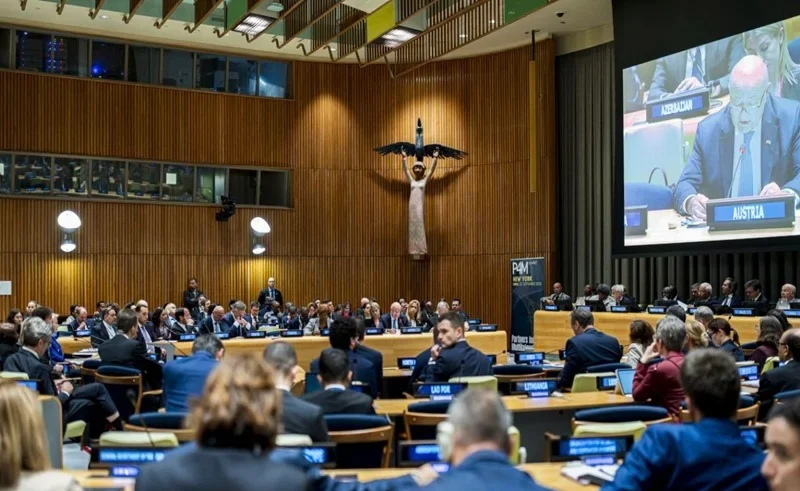
A new agenda to enhance cooperation in a fragmented world has been born, with Australia, Barbados, Brazil, Canada, the European Union, India and Kenya the first governments to align on a unified approach through Partners for Multilateralism (P4M). However, its meeting at the end of September in New York displays P4M as an open platform and not a typical alliance.
Why P4M Has Emerged Now?
P4M’s message is that things are getting interconnected across the globe but cooperation is difficult. The declaration highlights conflict, protectionism, economic coercion, disruptions to supply chains, climate change, artificial intelligence, and the inadequacies of existing institutions have all put the call to implement more robust multilateral action.
It is the slot that unites Governments of various regions, who are trying to cooperate when their interests coincide. According to the EU, P4M is a system aimed at dialogue, solidarity and mutual support in action in favor of the United Nations.
UN Reform Is Central
One of the big goals is transforming multilateral institutions. UN reform including the UN80 initiative, the Pact for the Future was a key priority, identified by the European Council President António Costa. Similar demands have been made by India for greater participatory deliberations and transparent decision-making.
As far as reform goes, P4M is a foray to improve how global governance is perceived and operational, to save the UN Charter and international law.
Supply Chains and New Technologies
Another pillar is the state of economic resilience.Another resilience is the state of economic resilience. P4M is also a concern that interdependence may be advantageously used against trade, investment, supply chains and development finance. That worry is global.
P4M is about more than technology as great power competition, it’s about cooperation on governance and shared global issues. It will be discussing AI, along with climate finance, development, resilience and pandemic preparedness.
Where India Fits In?
India is bringing a strong voice from the Global South. External Affairs Minister S Jaishankar connected ‘reform of multilateralism’ to issues like peace and security, climate action, emerging technologies, development finance, supply chain resilience, disaster preparedness and pandemics.
By signing this agenda, India can collaborate on the basis of interest and not be brought into a fixed geopolitical club.
Related reads worth exploring
What’s Malaysia’s AI Roadmap?
Check out Malaysia’s plans for digital transformation.
How Is UAE Advancing AI Ties?
Explore the future of UAE-US AI cooperation.
Which AI Image Tools Stand Out?
Browse leading artificial intelligence image generators.
What Will Trump-Xi Discuss?
See key issues shaping their upcoming summit.
How Is India Expanding Moscow Ties?
Look into India’s evolving defence partnership.
Can P4M Deliver Results?
Its diversity may widen the amount of support it has but varying national priorities mean that consensus will be difficult. The success of P4M will be judged in terms of whether it can develop functioning coalitions and promote reforms in existing institutions.
It’s surfacing here in response to the need for flexible, multi-lateral cooperation in a ‘fractured’ world order. It aims to channelize agreed action to new action within current global institutions.
FAQs
What is P4M?
The P4M is an open, international forum dedicated to multilateralism and cooperation, international law, peace, prosperity, and institutional reform.
Who co-sponsored P4M?
The first co-sponsors are Australia, Barbados, Brazil, Canada, European Union, India and Kenya.
Is P4M a military alliance?
No. According to its official description, it is a network where dialogue, coalition building and concrete cooperation is possible.