
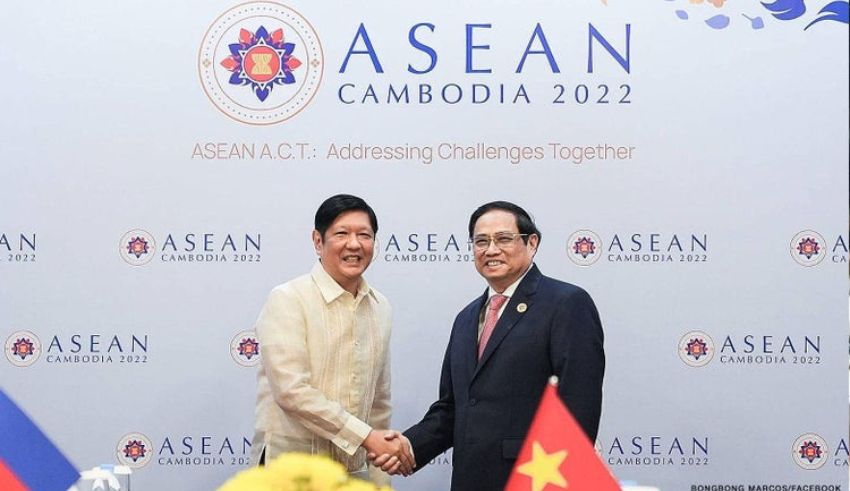
The Philippines’ President Ferdinand “Bongbong” Marcos Jr. recently stressed the importance of an upcoming marine cooperation pact between the Philippines and Vietnam. It is hoped that this agreement, which aims to promote cooperation between the two countries, will play a crucial part in resolving the ongoing problems in the South China Sea and promoting stability in the area.
The President of the Philippines, Ferdinand Marcos, emphasised the essential need for enhancing marine cooperation between the two nations during a meeting with departing Vietnamese Ambassador Hoay Huy Chung. The President expressed optimism over the beneficial effects this agreement would have on the ongoing South China Sea concerns. In his words, “Now that we are going to start discussions on the agreement that we have between the Philippines and Vietnam, I think it is a very, very important part of our relationship, and it will bring an element of stability to the problems that we are seeing right now in the South China Sea.”
President Marcos also stressed the importance of the upcoming marine cooperation pact as a crucial turning point in Manila and Hanoi’s bilateral relations. He called it a “huge step” that would likely strengthen the nation’s ability to work together to address common problems, notably concerning territorial disputes in the South China Sea.
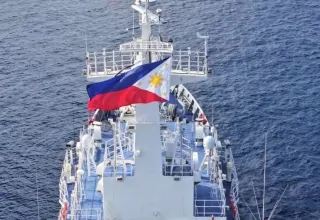
Territorial conflicts involving many countries, notably the Philippines, Vietnam, Indonesia, Brunei, and China, have frequently erupted in the South China Sea. The latter’s claim to almost the whole sea was contested in a 2016 arbitration decision. This decision refuted China’s broad “nine-dash line” claim, confirming it is without legal support. Instances like the most recent collision between Philippine boats on a resupply mission and Chinese coast guard vessels result from ongoing tensions over territorial claims.
The Philippines has consistently tried to use diplomacy to confront China’s operations in the West Philippine Sea. Since 2020, the Philippine government has protested China’s presence and activities in the region through several diplomatic statements. To defend its sovereignty and territorial integrity, Manila has responded to these conflicts by negotiating and pursuing diplomatic avenues.
Finally, the upcoming marine cooperation pact between Vietnam and the Philippines can potentially strengthen the South China Sea’s stability. President Marcos’ support for further cooperation between the two countries emphasises how important it is to work diplomatically and cooperatively to resolve territorial disputes and other issues that affect both nations. Such accords and diplomatic efforts are essential in promoting peace and stability in the region as regional tensions continue to play out.
The Philippines’ President Ferdinand “Bongbong” Marcos Jr. recently stressed the importance of an upcoming marine cooperation pact between the Philippines and Vietnam. It is hoped that this agreement, which aims to promote cooperation between the two countries, will play a crucial part in resolving the ongoing problems in the South China Sea and promoting stability in the area.
The President of the Philippines, Ferdinand Marcos, emphasised the essential need for enhancing marine cooperation between the two nations during a meeting with departing Vietnamese Ambassador Hoay Huy Chung. The President expressed optimism over the beneficial effects this agreement would have on the ongoing South China Sea concerns. In his words, “Now that we are going to start discussions on the agreement that we have between the Philippines and Vietnam, I think it is a very, very important part of our relationship, and it will bring an element of stability to the problems that we are seeing right now in the South China Sea.”
President Marcos also stressed the importance of the upcoming marine cooperation pact as a crucial turning point in Manila and Hanoi’s bilateral relations. He called it a “huge step” that would likely strengthen the nation’s ability to work together to address common problems, notably concerning territorial disputes in the South China Sea.
Keep Reading
Territorial conflicts involving many countries, notably the Philippines, Vietnam, Indonesia, Brunei, and China, have frequently erupted in the South China Sea. The latter’s claim to almost the whole sea was contested in a 2016 arbitration decision. This decision refuted China’s broad “nine-dash line” claim, confirming it is without legal support. Instances like the most recent collision between Philippine boats on a resupply mission and Chinese coast guard vessels result from ongoing tensions over territorial claims.
The Philippines has consistently tried to use diplomacy to confront China’s operations in the West Philippine Sea. Since 2020, the Philippine government has protested China’s presence and activities in the region through several diplomatic statements. To defend its sovereignty and territorial integrity, Manila has responded to these conflicts by negotiating and pursuing diplomatic avenues.
Finally, the upcoming marine cooperation pact between Vietnam and the Philippines can potentially strengthen the South China Sea’s stability. President Marcos’ support for further cooperation between the two countries emphasises how important it is to work diplomatically and cooperatively to resolve territorial disputes and other issues that affect both nations. Such accords and diplomatic efforts are essential in promoting peace and stability in the region as regional tensions continue to play out.