










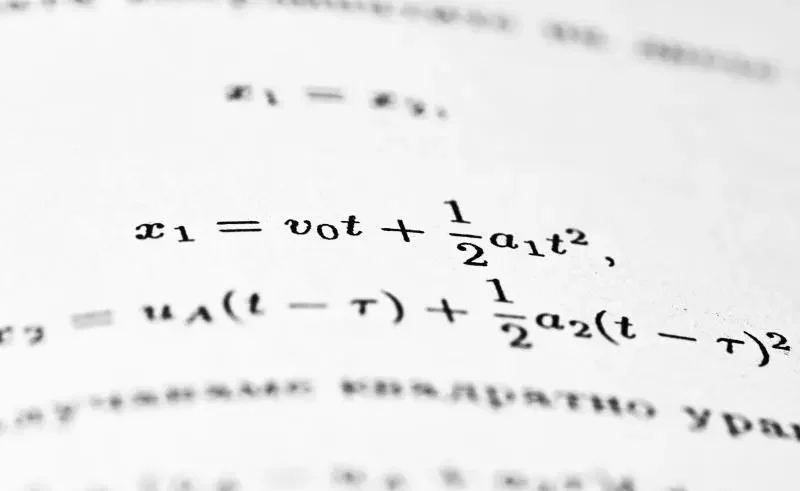
Mathematicians may have taken one bite out of the biggest unsolved problem in math with the aid of AI. A mathematician with AI company Anthropic, Levent Alpöge, has allegedly come up with a proof of the Riemann Hypothesis using the company’s AI model Claude. The problem was proposed in 1859 and has been a challenge for researchers for over 160 years. The alleged solution, however, still needs to be verified independently.
AI Helps Mathematician Tackle the Riemann Hypothesis
In a post on November 20, 2026, Levent Alpöge claims to have found a proof of the Riemann Hypothesis with the help of Claude. He published a four-page explanation and a formal proof in Lean, a programming language that is employed to verify mathematics arguments. The importance of the problem has garnered international attention with the development.
What Is the Riemann Hypothesis and Why Does It Matter
The hypothesis, which was proposed in 1859 by German mathematician Bernhard Riemann, is about the distribution of prime numbers. Predicts that all non-trivial zeros of the Riemann zeta function are on a particular vertical line in the complex plane. Answering its solution may give more understanding of the number theory and mathematical patterns behind prime numbers.
Claude AI and the Mathematical Proof Explained
Alpöge says Claude contributed a lot to the mathematical argument, creating a lot of additional documentation. The formalised proof reportedly contains more than 17 million lines of Lean code and is too large to be easily studied by researchers. Other experts have recognised the potential importance and stressed that care needs to be taken in checking.
Experts Await Independent Verification of the Breakthrough
The announcement has not yet shown the Riemann Hypothesis has been solved, mathematicians have cautioned. It remains an unsolved Millennium Prize Problem and is still on the list of Clay Mathematics Institute with a $1 million prize for a solution. The claim will have to be subject to independent review and published in mathematical journals, and then have been subjected to continued mathematical scrutiny, before it is considered a historic breakthrough.
Recommended Reads
Which US High Schools Set Global Benchmarks?
What Does Future Ready Education Look Like?
Can AI Make Malaysian Students Smarter or Faster?
What Could an Anthropic IPO Mean?
Which Asian Cities Lead Education Rankings?
Discover how Singapore, Hong Kong, Japan and South Korea feature in global education rankings.