
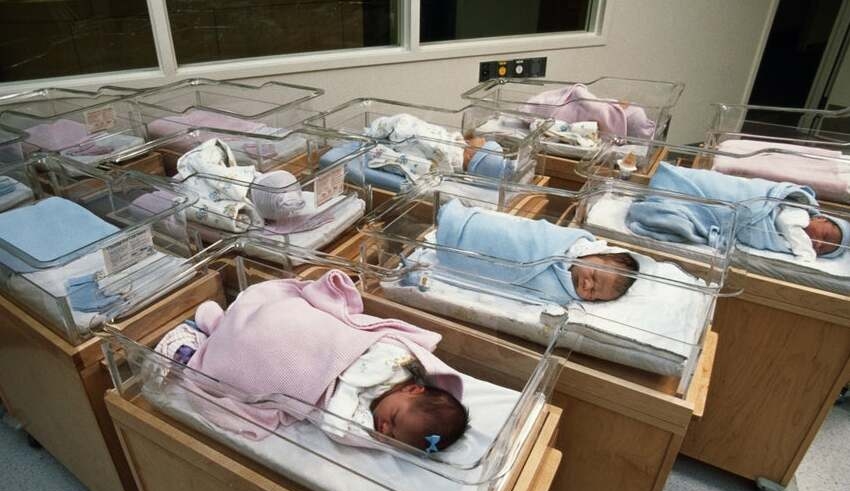
In 2022, the resident total fertility rate in Singapore reached a record low of 1.05, falling below the previous high of 1.1 in 2020 and 1.12 in 2021.
Indranee Rajah, Minister in the Prime Minister’s Office (PMO), told Parliament on Friday, “This was partially due to the Tiger year in the Lunar calendar, which is typically associated with fewer births among the Chinese.”
In 2010, which was also a year of the Tiger, the total fertility rate was 1.15, which was lower than the previous and subsequent years.
During a debate in the PMO’s Committee of Supply, Ms. Indranee stated that, similar to other advanced nations, the country’s total fertility rate has been dropping for many years.
The total fertility rate is the average number of live births per woman during her reproductive years.
Since 2017, Singapore’s rate has been below 1.2.
South Korea has the lowest total fertility rate in the world at 0.78 in 2022.
Ms. Indranee observed that more Singaporeans are delaying marriage and that more couples are likewise delaying or having fewer children.
This is consistent with worldwide societal trends over the longer period. It also results from Singaporeans living longer lives.
Today, the resident life expectancy at birth is 83 years, up from 72 years in 1980. By 2030, around one in four Singaporeans would be 65 or older.
Keep Reading

Ms. Indranee stated that Singapore will find it “increasingly difficult” to sustain economic growth as the resident labor force grows at a slower rate.
As family sizes decrease, the need for caring will rise.
Ms. Indranee stated that there have been reports of difficulty gaining access to dependable infant care.
She continued, “We will examine how we may better assist new parents in caring for their infants.”
Ms. Indranee outlined the measures announced in Budget 2023 to increase support for parents and families, noting that government-paid paternity leave for eligible working fathers will be doubled to four weeks beginning January 1, 2024, and that businesses are encouraged to offer flexible work arrangements.
First-time families with children and younger couples applying for Build-to-Order apartments will receive more priority, including an additional ballot.
In addition, housing allowances for first-time buyers of resale condominiums will increase by up to S$30,000; the Ministry of National Development will detail at the Committee of Supply debate.
In addition to increasing the Baby Bonus Monetary Gift by S$3,000, the government will boost its contributions to the Child Development Account.
Ms. Indranee, who is also the Second Minister for Finance and National Development, stated that welcoming immigrants to Singapore is crucial for mitigating the effects of an aging population and low birth rates.
“Although most Singaporeans understand why we need immigration, there are understandable concerns about competition for employment and other resources, how our society’s texture and character may change, and if our infrastructure can keep up,” she told the Parliament.
With the tightening of our immigration framework in late 2009, the rate of immigration has been steady and measured.
Singapore granted over 23,100 new citizenships last year, including approximately 1,300 to children born abroad to Singaporean parents. There were around 34,500 new permanent residences awarded.
Ms. Indranee stated that the number of new citizenships and PRs given in 2022 was marginally greater than pre-COVID. Singapore granted 22,714 citizenships and 32,915 permanent residency permits in 2019.
Several approved applicants in 2020 and 2021 had not yet finished the in-person processes, which were slowed by pandemic-related travel restrictions and security measures.
Others were unable to submit an application because they were unable to complete the necessary steps. “Consequently, some of these applications were transferred to 2022,” she explained.
Ms. Indranee stated that Singapore examines a “complete set of characteristics” when giving citizenship or PR status, such as family ties to Singaporeans, economic contributions, qualifications, family profile, age, and length of stay in the nation.
“This assures that new immigrants are anchored, able to integrate, and ready to make significant contributions,” she added, adding that new adult citizens are drawn from the pool of PRs.
Also Read:- Why is the movie ‘Plane’ banned in the Philippines?