










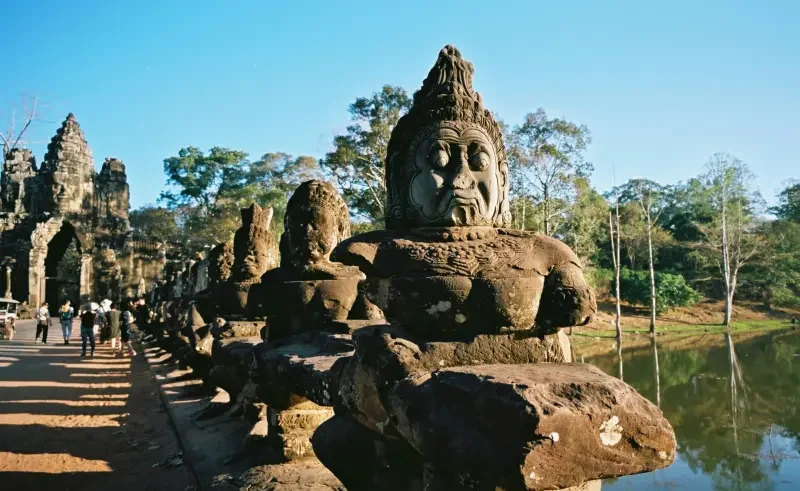
Some of the most spectacular UNESCO sites in Southeast Asia include ancient temples, historic cities, tropical forests and stunning natural wonders.
These sites are some of the most stunning examples of Cambodia’s cultural heritage and architectural excellence, from the Angkor Wat in Cambodia to the Borobudur Temple in Indonesia.
This UNESCO Sites Southeast Asia travel guide features 20 places that every traveller needs to visit to experience history, culture, nature and unforgettable memories.
1. Angkor, Cambodia
Angkor is a well-known archaeological site in Southeast Asia. The magnificent Angkor Wat temple, its detailed carvings and ancient Khmer architecture draw visitors from around the globe. Other highlights are the Bayon Temple and the Ta Prohm.
Best for: Ancient temples, history and photography.
2. Temple of Preah Vihear, Cambodia
Located along the Dangrek Mountains, Preah Vihear is an ancient Hindu temple dedicated to Shiva. Remarkable historical significance and scenic views are provided by its impressive stone architecture and its high elevation.
Best for: Khmer architecture and mountain landscapes.
3. Borobudur Temple Compounds, Indonesia
Borobudur is one of the world’s biggest Buddhist temples with magnificent stone carvings, statues of Buddha and terraced stone levels. It’s a destination for cultural exploration because of its peaceful surroundings.
Best for: Buddhist heritage and temple photography.
4. Prambanan Temple Compounds, Indonesia
The temple complex was named Prambanan, and it is the largest Hindu temple complex in Indonesia, known for its impressive stone towers and elaborate carvings depicting the story of Ramayana. The monument was built in the ninth century, which is the rich heritage of religious and architectural practice in Indonesia.
Best for: Hindu architecture and cultural performances.
5. Historic City of Ayutthaya, Thailand
Ayutthaya was once the capital of the Siamese Kingdom and is home to historic ruins of old palaces, Buddha statues and ancient temples. The archaeological park offers interesting information about royal Thailand.
Best for: Historical sightseeing and temple exploration.
6. Hoi An Ancient Town, Vietnam
The city of Hoi An is a beautiful old trading town, famous for its colorful lanterns, traditional houses and historic streets. The architecture is a blend of Vietnamese, Chinese, Japanese and European influences.
Best for: Cultural walks, photography and local cuisine.
7. Complex of Hue Monuments, Vietnam
Hue holds the memory of Vietnam’s imperial past with the royal palaces, ancient temples and elaborate tombs. It is best known for the Imperial City.
Best for: Vietnamese history and royal architecture.
8. My Son Sanctuary, Vietnam
At My Son Sanctuary you can find ancient Hindu temples which are connected with the Champa civilization. The view is surrounded by forests and mountains. Demonstrates unique brick design and religious beliefs.
Best for: Archaeology and ancient religious heritage.
9. Town of Luang Prabang, Laos
Luang Prabang is a blend of Lao architecture, Buddhist Temples and French colonial architecture. It’s a cultural destination with a peaceful atmosphere and a riverside view.
Best for: Buddhist temples and cultural experiences.
10. Vat Phou, Laos
Vat Phou is a Khmer temple site located near Mekong River that is considered as an ancient Khmer temple site. Its ruins of history and mountain location reflect Hindu and Buddhist traditions of ages.
Best for: Ancient ruins and scenic landscapes.
11. Melaka and George Town, Malaysia
These historic trading cities showcase multicultural architecture, colonial landmarks and traditional shophouses. Their streets reflect centuries of interaction between Asian and European communities.
Best for: Heritage walks, architecture and street food.
12. Gunung Mulu National Park, Malaysia
Gunung Mulu National Park is famous for its spectacular limestone caves, tropical rainforests and rich biodiversity. Visitors can explore remarkable cave systems and guided nature trails.
Best for: Cave exploration and rainforest adventures.
13. Kinabalu Park, Malaysia
Located around Mount Kinabalu in Sabah, Kinabalu Park protects diverse plant species and mountain ecosystems. It is particularly popular among hikers and nature enthusiasts.
Best for: Mountain scenery, hiking and biodiversity.
14. Rice Terraces of the Philippine Cordilleras, Philippines
These remarkable mountain terraces demonstrate the traditional agricultural knowledge of indigenous Ifugao communities. Their carefully maintained landscapes represent generations of cultural heritage.
Best for: Mountain trekking and cultural tourism.
15. Historic City of Vigan, Philippines
Vigan is famous for its preserved Spanish colonial-era architecture, cobblestone streets and ancestral houses. Calle Crisologo remains one of its most recognisable attractions.
Best for: Colonial history and heritage photography.
16. Komodo National Park, Indonesia
Komodo National Park protects the famous Komodo dragon and diverse marine ecosystems. Its rugged islands, beautiful beaches and coral reefs attract nature lovers.
Best for: Wildlife encounters, snorkelling and island exploration.
17. Ha Long Bay–Cat Ba Archipelago, Vietnam
Ha Long Bay–Cat Ba Archipelago features spectacular limestone islands, emerald waters and scenic caves. Boat cruises and kayaking are popular ways to explore its natural beauty.
Best for: Cruises, kayaking and landscape photography.
18. Singapore Botanic Gardens, Singapore
Singapore Botanic Gardens is a UNESCO-listed tropical garden renowned for its botanical collections and conservation history. The National Orchid Garden is a major attraction.
Best for: Nature walks, orchids and botanical exploration.
19. Historic Town of Sukhothai, Thailand
Sukhothai Historical Park preserves ancient temples, Buddha statues and monuments associated with the early Thai kingdom. Its peaceful surroundings make it ideal for historical sightseeing.
Best for: Thai history, temple tours and cycling.
20. Bagan, Myanmar
Bagan is an extraordinary archaeological landscape containing thousands of historic Buddhist temples and pagodas. Its ancient monuments offer insights into Myanmar’s religious and architectural heritage.
Best for: Buddhist architecture and archaeological exploration.
Travellers should check current security advisories before visiting Myanmar.
Best Time to Visit UNESCO Sites in Southeast Asia
| Country | Recommended Travel Period |
| Cambodia | November–February |
| Indonesia | April–October |
| Thailand | November–February |
| Vietnam | February–April (varies by region) |
| Laos | November–February |
| Malaysia | March–October (varies by region) |
| Philippines | December–April |
| Singapore | Year-round |
| Myanmar | November–February, subject to security conditions |
Recommended Reads
What Makes Wat Phra Mahathat Worth Visiting?
Why Did SEVENTEEN Become UNESCO Ambassadors?
What Did Malaysia’s UNESCO Bid Reveal?
Could Nasi Lemak Become UNESCO Heritage?
Why Is Toba Caldera a UNESCO Global Geopark?