









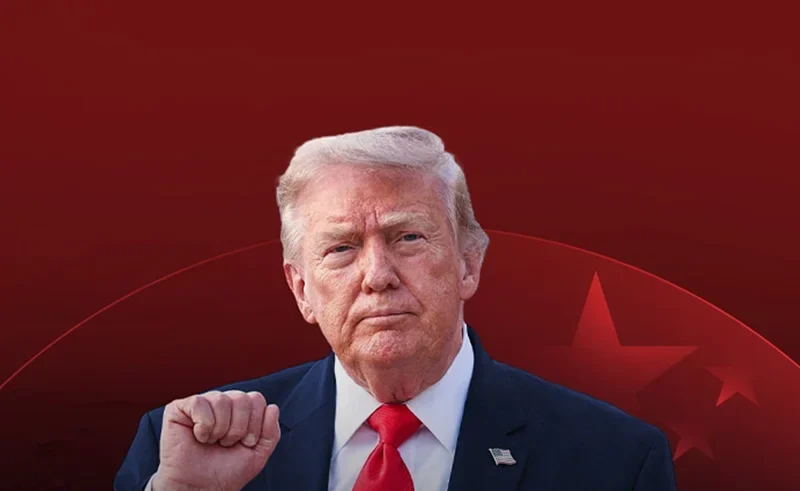
American President Donald Trump has stated that his country’s troops have “total control” of the Strait of Hormuz, where tensions have escalated since the last descent of Revolutionary Guard fighters from airbase base, to the country’s backing of maritime security forces in the region. Iran has denied the assertion, saying statements from the U.S. do not change anything in the operational reality of the chokepoint.
The clash has brought new fears of global energy security as Hormuz is one of the busiest navigation corridors for oil and natural gas in the world. A disturbance of a long duration could also impact shipping cost, insurance premium and energy markets.
Trump Claims U.S. Naval Dominance
Trump has described the U.S. military force presence in the Gulf to be a “Wall of Steel” and said that the U.S. has created an overwhelming military presence in the Gulf that has established total control of the maritime corridor.
Moreover, he has asserted that Iranian military and coastal defense capability have been significantly reduced. The U.S. counter-claim is that it can keep its people in control of ship movements without confusing commercial shipping with any linked to Iran’s trade.
It appears that U.S. Central Command diverted dozens of commercial vessels and engaged in interdiction efforts related to shipping that is linked to Iran.
Tehran Rejects the “Total Control” Claim
Washington has come out with this description of the situation, which Iran has strongly disputed. Iranian officials state that they will keep the Strait of Hormuz closed for big commercial shipping until Tehran’s demands are met.
The restoration of the waterway comes with a number of conditions, among them Washington’s withdrawal from a military campaign and naval blockade, plus return of frozen Iran assets and widening regional ceasefire and some compensation for damages due to the war and the economic sanctions imposed on Tehran.
The conflict is thus more than just about the control of the seas. It has developed into a larger battle that encompasses both sanctions and military force, as well as regional security rights.
Pakistan, Qatar and Oman Seek De-Escalation
While diplomatic feuds are growing increasingly acrimonious, every effort is made to keep attempting to use diplomatic channels. Messages between the two sides and minimize chances of further escalations between the two nations, including Pakistan and Qatar.
Oman is also holding parallel talks on potential plans for resuming commercial shipping via the waterway. Discussions of “phased access” could offer a means of de-escalating tensions in the technical sphere and potentially follow the same negotiation track as the wider diplomatic debate.
Why is the Strait of Hormuz so important?
The Strait of Hormuz is an energy chokepoint in the Persian Gulf separating the Gulf of Oman and the Arabian Sea. If the disruption is continuous, ships will need to go around it which will add to voyage time, freight costs and insurance premiums.
However, physical availability of Hormuz may not be enough to negate the impact of uncertainty on global energy risk premiums. Asia is especially vulnerable as it is heavily dependent on the supply of energy from the Gulf.
Key stories shaping energy and regional security.
Why Does Singapore’s Hormuz Stand Matter?
Check out how Singapore’s position could affect global trade.
Could Iran Conflict Threaten Balochistan?
Find how regional tensions may impact security and trade.
Is Bab Al-Mandab the Next Flashpoint?
Uncover why this vital route matters for energy supplies.
How Could Conflicts Disrupt Southeast Asia?
Browse the risks facing regional energy and food supply chains.
Where Can Manila Drivers Save?
Track down the cheapest gas stations after the latest hike.
What Happens Next?
The big issue that arises is whether control of the military can give firms consistent access to the commercial market. Washington can highlight its military capabilities in the corridor while Tehran can go on any kind of threatening cycle and mount coastal pressure, a political ruse, and use all possible levers to exert pressure against common shipping.
As tensions between the two sides persist, even longer, distends the pressure on regional mediators and even global energy markets. Commercial navigation predictability via a diplomatic solution may become even more significant than competing communications of control.
FAQs
Why is the Strait of Hormuz important?
The Strait of Hormuz is vital for the energy trade of the Persian Gulf and thus of global oil and gas markets.
What did Trump say about the Hormuz?
Trump touted America’s “total control of the Strait” and referred to the U.S. military deployments as a “WALL OF STEEL.”
What’s Iran’s reaction?
Iran denied the assertion and has insisted until it meets its stated demands that the Strait be kept closed.