









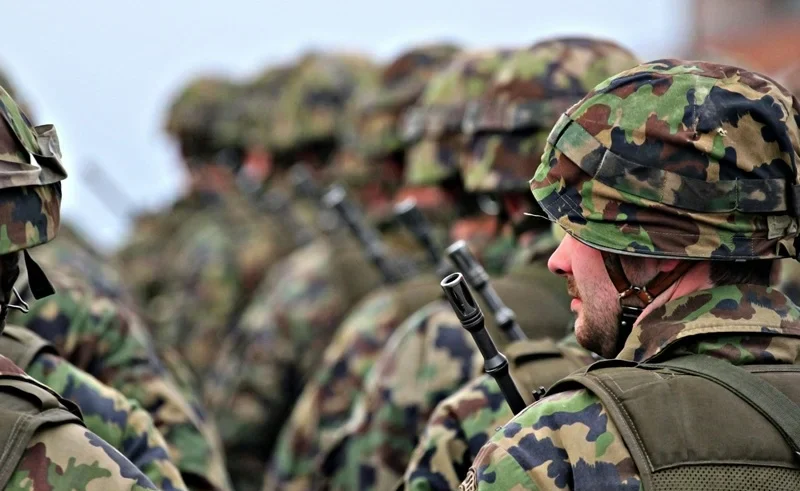
History has shown, a military victory doesn’t automatically mean the same result politically, when superior weaponry is deployed. Conventionally strong forces have repeatedly foundered in their battles against insurgent opponents that possessed little military strength but possessed the greater strategic sensibility and ability to be patient and to rely on local support and political endurance.
This is the Asymmetry Paradox. Super-power wars are indeed conflicts of political will, political legitimacy and time, not guns.
Stakes Are Never Equal
The first benefit goes to the actor with the most on the line. For an intervening power, counterinsurgency is typically a foreign policy option selected according to foreign policy goals. But for an insurgent, the struggle might be a fight for life, for territory and for national determination.
This disparity produces an astoundingly uneven equation of sacrifice. The strong State has to keep showing its people that it is worth their support and that the costs it bears are worthwhile, and the rebel band can choose to define victory as the act of survival. As the conflict extends on, the weaker military power can begin to lose the battle.
Time Becomes the Insurgent’s Weapon
The typical structure of conventional military forces is based on decisive operations. Insurgencies work hard to subvert that model by declining any fights where technology may make the difference.
Attacks uncoordinated, dispersed, concealed, and attritting a prolonged period of time make it a strategic weapon. Military defeat is not necessary for insurgents to defeat a superpower. They can do so, however, long enough for financial resources to be depleted, for political commitment to break and for public tolerance to wane.
Firepower Can Undermine the Mission
The contradiction is exacerbated by the reversal of the usual outcome and the political effects that dominate from a massive military push. The question is whether civilians and destruction are likely to reach a level that could tarnish the credibility of foreign troops and/or the local government they are assisting.
This feeds the unhelpful vicious cycle. The cost-benefit calculation of war in terms of its ability to crush an insurgency can create an opportunity for grievances to be generated that fuel recruitment and propaganda. Along the way, the forces may become more secure in their bases, more isolated from the people.
Home Front is a Battlefield
In democratic superpowers, the crucial battle could now take place at home, instead of on the battlefield. Of course, public perceptions of an overseas conflict are constantly being affected by the media, casualties, budgets and elections.
The political will to provide support can weaken even when there are occasional tactical victories if governments are not able to demonstrate progress. Competing threats and future military needs should also be taken into account by political leaders, and a prolonged counterinsurgency effort becomes difficult to sustain.
Why Tactical Victory Is Not Strategic Victory?
Its biggest failing is being judged by the standards of the battlefield. The number of areas captured or of insurgents killed is not a good indicator of acceptance of government authority or continued organisation of the insurgency.
Such a loss is not fatal to an insurgency, which may continue to operate politically though as a smaller group. The United States is the last of America’s “superpowers” to stay the course and secure a lasting political settlement where they were the victor of so many key battles.
Global Affairs, Closer Look
Can Canada’s Energy Rebound Fuel Growth?
Check out Canada’s clean energy push.
Could Vietnam’s Diaspora Policy Unlock Opportunities?
Find Vietnam’s diaspora strategy.
Can Prabowo Balance China And America?
Uncover Indonesia’s foreign policy balance.
Is Asia’s Climate Crisis Hurting Economies?
Explore Asia’s growing economic risks.
Are Washington And Beijing Battling For AI?
Track the intensifying AI rivalry.
True Lesson of Asymmetry Paradox
The Asymmetry Paradox does not imply that traditional military strength is not relevant. It implies the benefits of doing this are in condition. Indeed, Firepower is most effective if aligned with goals and aspirations of military objects, political objects, local legitimacy, and sustainable governance.
Legitimacy, patience and political credibility are some qualities that the conventional army cannot produce in a counterinsurgency operation. Those elements are what prevents overwhelming military might from being an expensive trump card in waging wars that ultimately may lose the motivation to fight.
FAQs
What is the Asymmetry Paradox?
Militarily stronger countries cannot secure strategic success against weaker insurgencies due to their divergent interests, means and time horizons: the Asymmetry Paradox.
Why do insurgents opt against the use of conventional warfare?
Insurgents typically try to evade open combat so that “the big boys” militaries may use their superior technology in order to gain from their advantages.
Does using force boost support for insurgents?
Increasing military force may backfire when it causes civilian casualties, destruction, or undue coercion that could allow insurgents to generate grievances to exploit.