

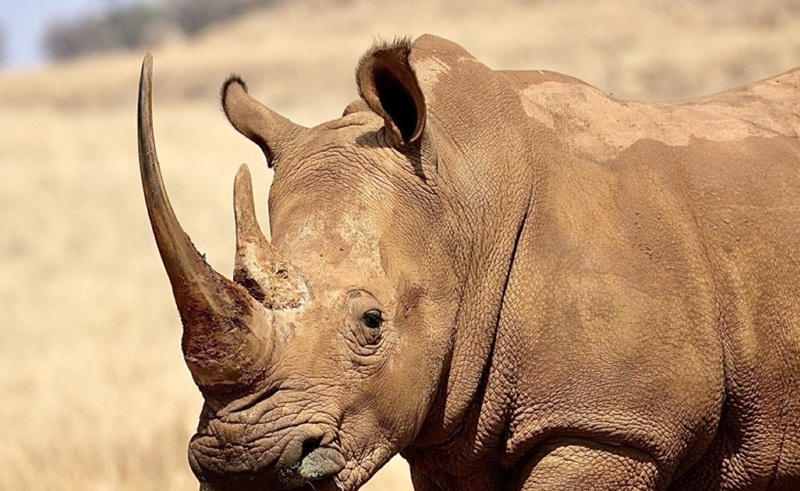
In South Africa, which holds nearly 70% of the world’s remaining rhino population, 103 rhinos were poached in the first quarter of this year alone, according to the Department of Forestry, Fisheries and the Environment. Most killings occurred in protected reserves, including the heavily targeted Kruger National Park. Namibia has also reported rising losses, with 15 rhinos killed by mid-year — a concerning spike in a country previously seen as a conservation success.
These numbers follow a grim trend. In 2024, South Africa recorded 420 rhino poaching incidents. Though slightly lower than 2023, it’s still hundreds of animals lost in a single year.
Innovation and Community Are Key
Yet, 2025 has also delivered new hope through science and grassroots action. One of the most talked-about innovations is the Rhisotope Project — an initiative that injects trace radioactive material into rhino horns. These isotopes are safe for the animal but can be picked up by radiation scanners at airports and border posts, making it harder for smugglers to move horns undetected.
195 Rhinos Have Been Killed By Poachers In South Africa In 2025.
— Xpose Trophy Hunting (@XposeTrophyHunt) July 26, 2025
Says South Africa’s Environmental Minister, Dr. Dion George. This marks the first high-level report of its kind under South Africa’s G20 Presidency.https://t.co/3DyCOLXlNQ pic.twitter.com/Wj0LekrzQK
Meanwhile, dehorning continues as a short-term deterrent. In regions where rhinos have had their horns removed by rangers, poaching has dropped by as much as 80%, according to a recent study reported by The Guardian. Though not a long-term solution, it offers valuable breathing room in high-risk zones.
Perhaps the most powerful change is happening at the local level. All-female patrols like the Black Mamba Anti-Poaching Unit are not just guarding rhinos — they’re changing mindsets. These women protect wildlife, educate children, and help shift communities away from poaching and toward conservation.
A War That’s Still Not Over
While there have been successes — such as the conviction of a Mozambican trafficking kingpin this year, who received a 27-year sentence — the trade is still thriving. Criminal networks adapt quickly, and international demand, especially in parts of Asia, remains high.
This crisis won’t be solved through arrests alone. It requires global pressure on consumer nations, better border enforcement, and deeper investment in Africa’s rangers and rural communities. Organizations like Save the Rhino, Wildlife ACT, and Global Conservation Force are already leading this fight — but they need support.
Africa’s rhinos have roamed this planet for over 50 million years. Whether they remain for the next generation depends on what we choose to do now.