

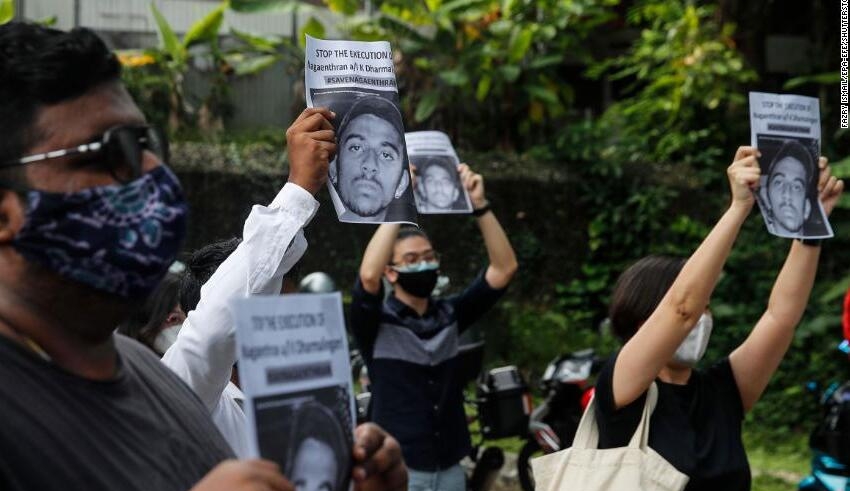
Singapore, known for its stringent approach to combating drug-related offenses, has come under increasing scrutiny for its uncompromising stance on drug trafficking and possession. Central to the city-state’s hardline drug policy is its controversial implementation of the death penalty for drug offenses, a practice that has drawn global attention and ignited a fierce debate concerning human rights and the efficacy of such extreme measures.
Enshrined in Singaporean law, drug trafficking, possession, or consumption of certain quantities of illegal substances can lead to a mandatory death sentence. This policy, which has been firmly in place for decades, is founded on the belief that the ultimate punishment acts as a powerful deterrent against drug-related crimes and preserves public safety.
Proponents of Singapore’s drug policy argue that the strict penalties have played a significant role in curbing drug abuse and maintaining a remarkably low drug-related crime rate. They contend that the pervasive fear of facing capital punishment has deterred potential offenders from engaging in drug-related activities and has helped keep Singapore’s streets relatively free from the scourge of drugs. According to the Central Narcotics Bureau of Singapore, the country’s anti-drug enforcement agency, the tough stance has resulted in a marked decline in drug abuse and related criminal activities.
Singapore’s government defends its drug policy by pointing to the success it has achieved in maintaining a drug-free society and safeguarding the well-being of its citizens. They argue that the death penalty sends a clear message that drug offenses will not be tolerated, and that a zero-tolerance approach is necessary to protect society from the devastating consequences of drug addiction.
Keep Reading



However, critics argue that Singapore’s use of capital punishment for drug offenses raises serious concerns about human rights and the right to life. International human rights organizations, such as Amnesty International, have consistently condemned Singapore’s use of the death penalty and called for its abolition, deeming it a violation of the fundamental right to life.
Opponents of Singapore’s drug policy also question its effectiveness. They argue that while the fear of the death penalty may deter some potential drug offenders, it does not address the root causes of drug addiction or provide the necessary support for individuals struggling with substance abuse. Critics assert that a comprehensive approach focusing on prevention, education, rehabilitation, and addressing socio-economic factors would be more effective in combating drug addiction and reducing drug-related crime.
The global discussion on Singapore’s drug policy has gained momentum in recent years, with countries, human rights organizations, and advocacy groups voicing concerns and urging the city-state to reconsider its approach. The United Nations and the international community have called on Singapore to review its laws and practices, highlighting the need to prioritize human rights and explore alternative methods for combating drug-related issues.
As the debate intensifies, Singapore finds itself at a crossroads, facing mounting pressure to reevaluate its drug policy. The city-state’s response to these calls for change will undoubtedly have far-reaching implications for its criminal justice system, human rights record, and its standing within the international community.
Singapore’s drug policy, with its reliance on capital punishment, stands as a stark example of the tensions between a government’s duty to protect its citizens and its obligation to respect individual rights. The outcome of this ongoing debate will shape the future of Singapore’s approach to drug control and could potentially influence the global discourse on the intersection of drug policy, human rights, and public safety.