









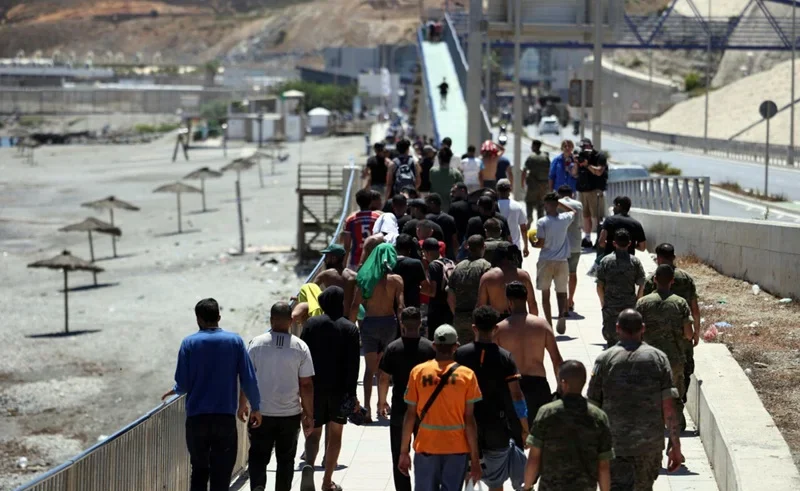
The migrant crisis in Ceuta has become one of the major border security issues in Europe in the past few years. In only a few days at the end of July and beginning of August, it is estimated that between 60,000 and 80,000 migrants arrived in the Spanish enclave of Ceuta from Morocco, putting a strain on the numbers of migrants even on the spot and sparking emergency responses all over the European Union.
Overnight the influx seemed to be a humanitarian crisis, but the situation also was viewed as a strategic political message from Morocco. The temporary reopening of the border underscores the fact that migration could be a “weapon” in frivolous disagreements between regions.
Why Morocco Relaxed Border Controls?
The crisis had its immediate context in a change in Spain’s foreign policy towards North Africa. Spain’s PM Pedro Sánchez visited Algeria in July 2026 to deepen energy cooperation and boost natural gas deals. The visit was generally seen as a step away from Madrid’s focus on Morocco’s autonomy plan for Western Sahara, which Rabat regards as one of its “main national concerns”.
Forwarding migrants has always been a significant aspect of Morocco’s ties with Europe. Morocco’s actions of decreasing the level of border control manpower in key areas for crossing, e.g. coastal towns along the Fnideq, and along the Tarajal and Benzú regions illustrated how this type of border cooperation is shaped by wider political considerations.
Domestic Developments That Added Pressure
Inside Spain, too, events had an impact on the surge in migration. In June 2026, a Spanish Supreme Court decision tightened restrictions on pushbacks of persons off boats without legal proceedings. Smuggling networks rapidly began presenting the action to be an entry to Spanish territory enjoying easy access, which attracted thousands of migrants to try and cross it.
Simultaneously, Spain’s actions to legalize undocumented migrants bolstered rumours about opportunities on Spanish territory. All these developments combined made for great draw factors which eventually added to the pressure at the border of Ceuta.
A Test for European Border Security
The crisis was soon to become a problem for Europe as a whole. With Ceuta being one of the Union’s few land borders with Africa, the event sparked new concerns regarding the activity on the Union’s external borders.
There were calls for the European Union’s member countries to act more collectively and proposals to step-up the measures on the Schengen borders. Emergency meetings were devoted to reinforcing surveillance in the marine environment, to better coordination between the Member States and to the prevention of such incidents from occurring elsewhere on Europe’s external borders.
Migration as a Tool of Geopolitical Pressure
A principal take-away message from the Ceuta crisis is the new-found sensitivity to the “weaponisation of migration. Nation states can use migration as a way of manipulating diplomacy negotiations and/or policy considerations, not just through military or economic means.
Other event themes involved the introduction of security concerns, territorial claims, humanitarian considerations and foreign policy issues in the process of hybrid threats in Europe.
Catch up on today’s major developments.
How Is Kumamoto Recovering Now?
Check out the latest government relief efforts.
Why Does ASEAN Leadership Matter?
Find the key priorities for the Philippines.
Is Kumamoto Rebuilding Faster?
See the early signs of recovery.
Why Target Financial Networks Now?
Uncover the latest counterterrorism strategy changes.
Why Is Ceuta Under Pressure?
Browse the latest border surge developments.
Political Fallout in Spain
At home, the crisis added to the woes of Prime Minister Pedro Sánchez. The opposition highlighted the lax management of migrants by the government and urged a more stringent immigration policy; regional partners questioned Spain’s readiness for future migrant influxes.
The government also accelerated measures to reinforce the security of the external borders such as the deployment of more troops and establishment of more barriers around Ceuta, as part of a general push for increased external border security.
FAQs
Why did a migrant crisis arise in Ceuta, in 2026?
Relaxed Moroccan border security, shifting Spain-Morocco diplomatic relations, Spain’s positive legalization process, and a rising number of migrants granted visas and encouraged by smuggling networks had led these individuals to view the opportunity of getting into Europe more favorably.
For what reasons did Morocco relax the border restrictions?
In many instances, however, many analysts have said that Morocco temporarily lessened border enforcement efforts as a diplomatic ploy when Spain bolstered its energy relationship with Algeria and appeared to have weakened support for Morocco’s position over Western Sahara.
What is meant by the “weaponization of migration”?
Weaponised migration describes migration being used as a geopolitical instrument, such as when states or actors permit the mass movement of people in order to assert political, diplomatic or geo-strategic advantage over another state or region.