









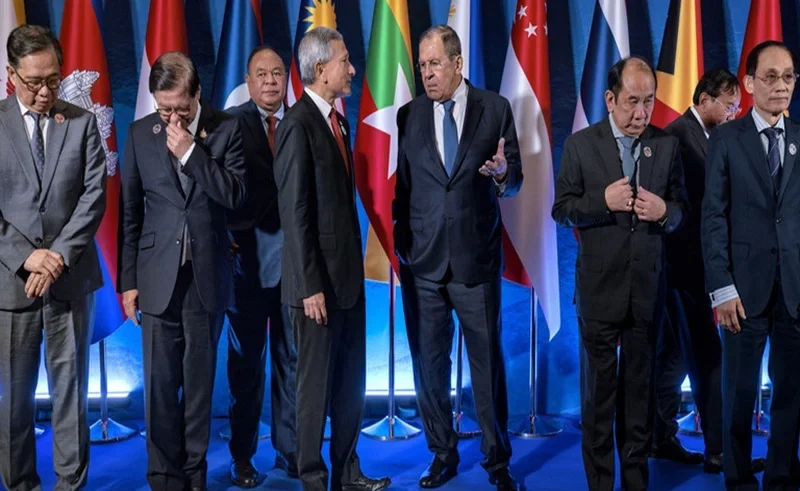
The Philippines takes on ASEAN Chairmanship for 2026 with this year characterized by a sea of uncertainty and unaffordable climate risks. Although the regional economic-integration agenda and the Myanmar issue continue to be treated as a top priority, Manila has taken the security of the waters in the region and the much-expected South China Sea Code of Conduct.
2026 is hoped to be a breakthrough given that negotiations have been going on for over 20 years. But the Philippine government always maintained that the speed cannot be at the cost of regional credibility or international law.
Why Does the Philippines Want Progress in 2026?
The need for the Code of Conduct is due to the more worrying security situation in the South China Sea. This has led to tensions to go up for possible accidental escalation between claimant states, particularly after regular maritime encounters, grey-zone operations as well as disruptions by supply vessels.
Security of the regional energy supply is also a pressing issue. Disruptions in the world disrupting crucial shipping hubs have heightened the need for ‘peace and stability’ at major shipping hubs in Southeast Asia. A successful outcome of the COC will also confirm the fact that the ASEAN can still tackle complex security issues without prejudice to its principle of “ASEAN Centrality” for the region.
Manila’s Focus: Substance Before Speed
The Philippines has consistently stressed that the final agreement should be more of a political agreement than anything else, yet the country has been supportive of further speeding up the negotiations. Manila feels that the Code of Conduct must give concrete protection to ease tensions and set forth rules of maritime conduct, making them predictable.
The Philippines’ main concern in the agreement is that it upholds the United Nations Convention on the Law of the Sea that was adopted in 1982. Philippine government officials have also said that any final agreement ought to take account of Exclusive Economic Zones, have reasonable communication tools in case of maritime incidents and must not restrict the capacity of the ASEAN member-states to cooperate with other countries in the region on energy or security matters.
ASEAN’s Consensus Challenge
One of the biggest challenges is to develop a unified stance within ASEAN. There are some claimant states which seek firmer legal guarantees, and some other member countries that prefer to keep their economic ties with China, which has resulted in divergent approaches in diplomacy.
It is also extremely challenging to negotiate because of the consensus-based decision making process adopted by ASEAN. However, if any one Member State objects to the inclusion of any part of the text in any decision, it may delay or weaken language on legal enforcement, dispute settlement or referrals to international law. In this institutional context, managing unity and effectiveness is a challenge.
More ASEAN stories to explore.
What’s Changing During Thingyan?
Check out the new festival rules in Myanmar.
Why Did China Reject Talks?
Find the reason behind Beijing’s diplomatic move.
How Will Tariffs Affect ASEAN?
Uncover the biggest trade challenges ahead.
Why Backs ASEAN Centrality?
Get to know North Korea’s latest position.
Why Is Myanmar Still Stuck?
Dive into the diplomatic roadblocks delaying progress.
Leadership Beyond the South China Sea
The Philippines as chair of the ASEAN will also need to take care of a wider regional agenda. Their diplomatic competition is ongoing in Myanmar, economic cooperation, digital transport and energy integration too.
The multiple priorities being pursued and balanced against the momentum of the Code of Conduct will be a big challenge for Philippine diplomacy. Manila’s leadership is expected to exist over building consensus while maintaining principles for them which they believe to be key to the stability of the region.
FAQs
What is the need for the South China Sea Code of Conduct?
The Code of Conduct is intended to provide “agreed” standards governing South China Sea affairs that allow for the resolution of disputes, reduction of tensions at sea and the prevention of conflicts between claimant states in the region.
What is special about 2026 to ASEAN?
By taking up the ASEAN Chairmanship in 2026, the Philippines boosts regional maritime security and nets a key diplomacy priority: the conclusion of the Code of Conduct.
What is the 1 main position of the Philippines when it comes to the Code of Conduct?
The Philippines can enter into a treaty that is meaningful and based on UNCLOS that will safeguard sovereign rights and respect EEZs and have practical dispute settlement mechanisms.