

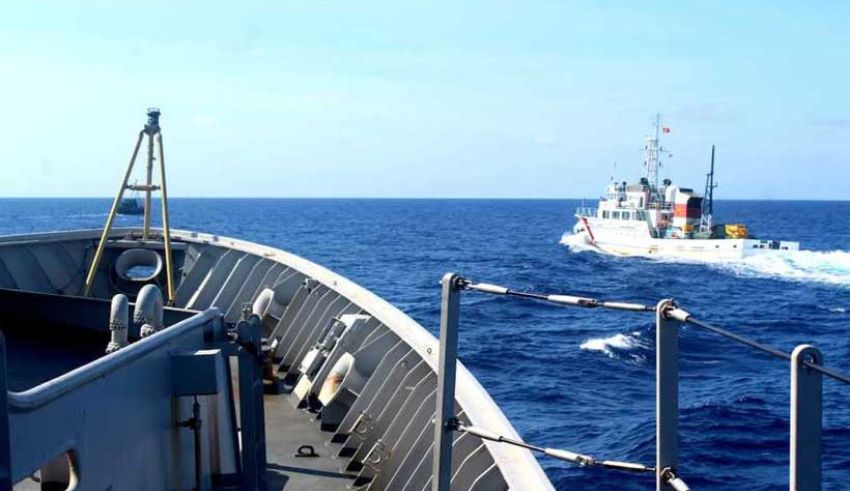
In Indonesia’s Riau Islands province, the North Natuna Sea is renowned for its crystalline, azure seas, which project an air of serenity and tranquillity. Peace and stability, however, have become a distant memory for the local fishermen who depend on these waterways for their livelihoods. Their fishing areas have been invaded by foreign ships, particularly those from Vietnam, China, and the Philippines, which has resulted in declining catches and earnings. Tensions have increased due to China’s disputed nine-dash line-supported claim to the region, endangering the lives of these fishermen and putting Indonesia’s foreign policy stance to the test.
Fishermen like Mr Dedi, who have been traversing these waters for years, are used to threatening encounters with foreign vessels. He recalls threatened by more extensive, heavily armed ships and Chinese coast guard boats staking claims to the Natuna fishing areas. The fishermen have experienced dread and anxiety due to these interactions, negatively impacting their livelihood.
According to the United Nations Convention on the Law of the Sea (UNCLOS), China has challenged Indonesia’s claim to the Natuna island group, a component of its 200-nautical-mile exclusive economic zone (EEZ). China bases its claim on its nine-dash line. These allegations are denied by Indonesia, which sparked a series of confrontations, including a significant one in 2020 that involved fighter jets, vessels, and political figures. Jakarta has mostly kept quiet in response to Chinese expansion as it carefully balances domestic issues, geopolitical aspirations, and non-aligned foreign policy.
Analysts contend that Indonesia’s quiet results from its desire for Chinese investment in its economy. Diplomacy and military drills are Indonesia’s strategic responses to global issues. While promoting its ASEAN Outlook on the Indo-Pacific (AOIP), oriented on inclusivity and economic cooperation, Indonesia seeks to forward discussions for a code of conduct for the South China Sea as ASEAN’s chair. A contrasting strategy from Laos, the incoming ASEAN chair, might undermine Indonesia’s efforts, observers warn.
Keep Reading



The precarious balance between resource rights, geopolitical aspirations, and sovereignty is seen in Indonesia’s North Natuna Sea during excellent power competition. Indonesia must protect its interests while keeping diplomatic ties with China and other regional countries as local fishermen suffer threats and decreased catches. Indonesia must proceed cautiously to safeguard its waterways, resources, and the means of subsistence of its fisherman since the path ahead is still uncertain.