
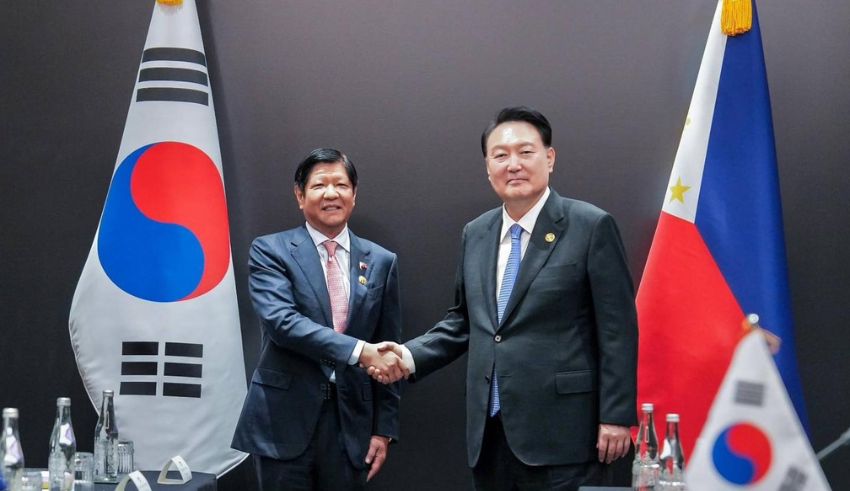
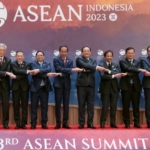
The Association of Southeast Asian Nations (ASEAN) recently held its 43rd summit, which provided insight into the growing alliance between the Philippines and the Republic of Korea (ROK), with a particular emphasis on President Ferdinand “Bongbong” Marcos Jr.’s role in promoting regional centrality and universal multilateralism in opposition to China’s assertive actions in the South China Sea.
Historical Foundation and Modern Collaborations
Since 1949, when diplomatic ties between the Philippines and South Korea were established, they have shared a rich history. When the Philippines was a vital component of the UN forces protecting South Korea during the Korean War, this friendship was put to the test and strengthened. This alliance has developed over time to include trade, development, defense, and cross-cultural interactions.
Security and Defense Collaboration
The collaboration on defense is a key component of their relationship. With a focus on strengthening territorial defense capabilities, South Korea has offered military support to the Philippine Armed Forces. As a result, South Korea has become a crucial ally in the Philippines’ defense and security, demonstrating the breadth of their cooperation beyond business dealings. A strong security alliance is shown in the Philippines’ notable acquisitions of guided missiles and FA-50 Golden Eagles from South Korea.
Formalization of Ties
Through the signing of a Memorandum of Understanding (MOU) in 2019, the Philippines and the ROK formalized their defense cooperation. This sped up Manila’s procurement of defense products from Korean manufacturers. This action signaled a strategic shift in their relationship towards an all-encompassing security collaboration just below an official treaty alliance by focusing on substantial defense acquisitions, such as frigates, corvettes, anti-ship missiles, and possibly submarines.
Keep Reading
Addressing Regional Concerns
President Marcos’ demand for a world governed by laws mirrors worries over repeated transgressions of international law in the South China Sea. In line with the attitudes of many Southeast Asian countries dealing with comparable issues, he emphasized the Philippines’ commitment to defending the freedom of navigation, overflight, and the rules-based international order in the area.
Korea-ASEAN Solidarity Initiative (KASI)
South Korea’s focus shifted from commercial interests to strategic coordination with ASEAN member states in areas of national security and defense when it adopted the Korea-ASEAN Solidarity Initiative (KASI), which was a watershed moment. Underscoring this trend is President Yoon’s suggestion to increase cooperation in the defense sector, which aims to improve maritime security in the area and fortify their alliance.
Their shared Indo-Pacific interests and the recent signing of a Free Trade Agreement (FTA) between the Philippines and South Korea mark a fundamental shift in their long-standing strategic alliance. Amid the Indo-Pacific’s constantly changing geopolitical dynamics, its development is welcomed as it offers a stabilizing force. Due to their shared history and strategic goals, the Philippines and South Korea are moving forward and reaffirming their dedication to the stability, security, and economic growth of the region.