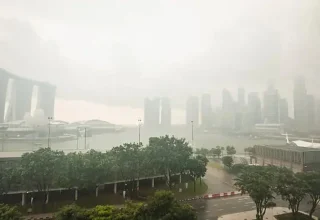


After the scorching heat, Singapore’s temperature took a pleasant and surprising dip to 20.1°C, which is the lowest temperature for the year across the island. The sudden turn towards the colder seasons has left people in the country lost for winter clothes that they are not used to in the tropics and happy to be enjoying a rare taste of “aircon weather”.
You may wonder why this oddly cold spell occurs and what you can expect in terms of warm weather leading up to it, so we’ve broken down the science behind the weather change. Everything you need to know about Singapore’s latest climate anomaly.
Why Is It So Cold in Singapore Right Now?
The Meteorological Service Singapore (MSS) at the Newton weather station recorded a spectacular drop in temperature during the heavy rainfall. This dramatic drop was the coldest February since a record 20.3°C was recorded in February 1926.
But what caused this extreme drop? This is mainly due to a large, prolonged rain band accompanied by heavy widespread thundery showers. On days when it rained for hours, it completely cut off solar radiation.
As the rain falls through the atmosphere, evaporative cooling takes place. This process extracts heat from the ambient air, leading to reduction of the surface temperature to levels not normally experienced so near the equator.
How the Cold Spell Intersects with El Niño Trends
The sudden dip has left many locals puzzled, particularly because long-term climate projections had predicted a much warmer period.
The Contrast of Weather vs. Climate
The World Meteorological Organization (WMO) reported El Niño weather phenomenon that is expected to generate drier and warmer weather in Southeast Asia, has been a significant influence on the global climate.El Niño weather phenomenon reported by World Meteorological Organization (WMO) which typically brings drier and warmer condition to Southeast Asia, has been a significant impact on the global climate. But meteorologists say they don’t mean to imply that the long-term climate trends preclude short-term regional weather aberrations.
Flash Floods and Heavy Rainfall
The same weather system responsible for the drop in temperature in Singapore to 20.1°C also brought along the massive amount of precipitation. The heavy downpour caused local drainage networks to run at capacity, with the National water agency (PUB) issuing flash flood warnings for low-lying areas such as Balestier and Paya Lebar.
Your Essential Singapore Travel Guide Starts Here
Making These Changi Entry Mistakes?
Check out the common SG Arrival Card and biometrics errors tourists make.
Ready For Winnie The Pooh Fun?
Discover festival timings, admission details and zipline rules before you go.
Where Can You Watch Fireworks?
Find the best free spots to enjoy Singapore’s massive NDP display.
Planning Around Singapore’s Biggest Events?
Explore how to secure passes early for newly announced expos and shows.
Prepared For Passport-Free Travel Yet?
Get to know the steps for setting up Singapore’s biometric boarding system.
How Long Will the Singapore Chill Last?
As Singaporeans enjoy the sweater weather, one key question has to be addressed: For how long?
Historical data collected by the MSS indicates that these strong cooling spells tend to be brief. Over the Malay Peninsula tropical weather systems have rapid movement. Once the heavy rainbands have passed and the clouds have lifted, solar heating will bring the city-state back to its normal temperature range of 31°C to 34°C.
During the weekend, residents should make full use of the cool breeze, with normal tropical humidity to return in the near future.
FAQs
What is the lowest temperature ever recorded in Singapore?
While 20.1°C feels exceptionally cold for the island, it is not the absolute lowest in history. The historical record stands at 19.4°C, which was recorded back in January 1934.
Why was Newton the coldest spot on the island?
Weather stations can record localized microclimate variances. Heavy, concentrated downpours directly over central Singapore, combined with localized wind drafts and dense cloud cover, allowed Newton to hit the lowest mark nationwide.
Does this mean El Niño is over?
No. El Niño operates on a macro-scale over many months, influencing overall seasonal averages. A singular heavy storm system causing a temporary temperature drop is a localized weather event and does not mean the overarching climate pattern has shifted.