

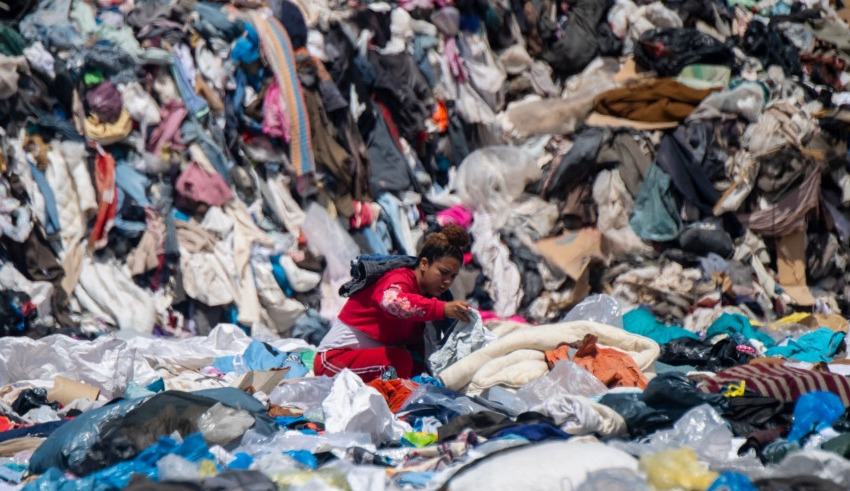
Fast fashion’s detrimental environmental footprint has come into stark focus with a satellite image capturing the shocking extent of a mountain of leftover clothes in Chile’s desert. The aerial view highlights the scale of waste generated by the fashion industry and raises concerns about sustainability and responsible consumption.
The satellite image, taken from space, reveals an enormous mound of discarded clothes in the arid landscape of Chile’s desert. The mountain of textile waste is a visual representation of the consequences of the fast fashion industry, where rapid production and consumption result in an alarming amount of discarded garments.
Fast fashion, characterized by inexpensive and rapidly produced clothing, has been criticized for its detrimental effects on the environment. The industry’s reliance on low-cost materials, excessive production, and short product lifecycles contribute to substantial waste and pollution, putting a strain on natural resources and ecosystems.
Keep Reading



The satellite image serves as a powerful reminder of the urgent need for sustainable fashion practices. It highlights the importance of reducing clothing waste, promoting circular economy models, and embracing ethical and environmentally responsible manufacturing processes.
To address this pressing issue, the fashion industry must shift towards more sustainable practices. This includes embracing eco-friendly materials, adopting recycling and upcycling initiatives, and promoting durable and timeless fashion choices that prioritize quality over quantity. Additionally, consumers play a vital role by making conscious purchasing decisions, supporting sustainable brands, and engaging in clothing recycling programs.
The mountain of leftover clothes in Chile’s desert should serve as a wake-up call for both the fashion industry and consumers. It underscores the need for collective action to address the environmental impact of fast fashion and to pave the way for a more sustainable and responsible future.
In conclusion, the satellite image capturing the mountain of discarded clothes in Chile’s desert highlights the environmental consequences of fast fashion. It calls for urgent action to promote sustainable fashion practices and responsible consumption, emphasizing the importance of reducing waste and embracing ethical manufacturing processes.