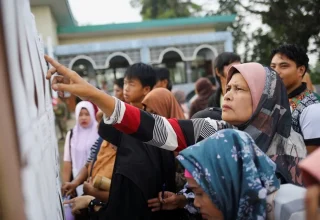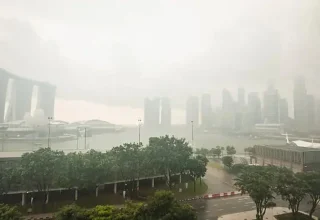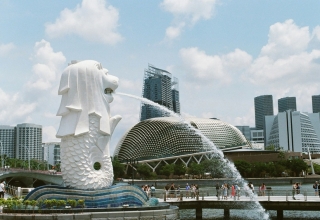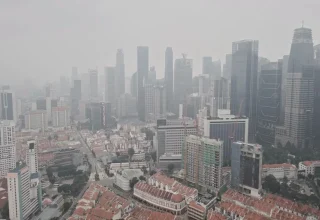

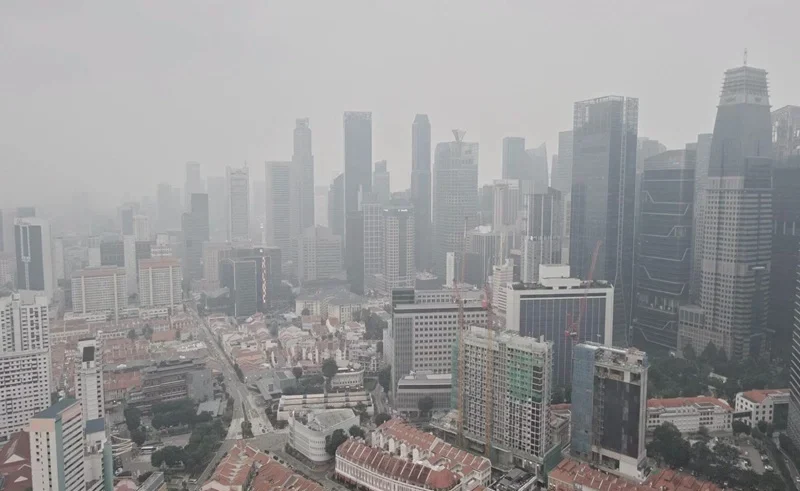
The city-state has been hit with the worst haze event this 2026, with smoke from wildfires in Indonesia being swept over the city. All five regions recorded unhealthy air quality on September 15 with the Pollutant Standards Index (PSI) in the central region peaking at 154 in the morning.
In addition, Singapore has also been ranked highly in real-time international pollution indexes during the episodes of haze, which is an anomaly in a city where urban air quality is usually regarded as relatively clean. The concern now is PM2.5 pollution or the fine particles that are most damaging to the health during a smoke haze.
Singapore Haze Crisis Worsens Across All Five Regions
The latest deterioration represents a major escalation from earlier in September.
On 4 September, the central region’s PSI was at 101, the first time since October 2023, due to haze, that it exceeded the Unhealthy threshold. In response, the National Environment Agency (NEA) of Singapore has implemented daily haze alerts and government response plans.
There were some fluctuations thereafter, but it deteriorated again on September 14. All five Singapore regions reached the Unhealthy range for the first time since September 2019 in the morning hours of September 15.
The 24-hour PSI for the central region was the highest and peaked at 154 at 6am while the north was the last area to breach the Unhealthy range at 104. This results in current conditions solidly in the PSI Unhealthy range of 101-200.
Residents can follow official readings through the NEA and Singapore government’s dedicated Haze portal.
Indonesian Wildfires Drive Transboundary Haze
The source of the deteriorating Singapore air quality lies largely across the border.
NEA has received reports of moderate to dense smoke plumes from fires in Kalimantan, where the smoke was carried to Singapore when the winds switched to blow from the east-southeast. The haze also resulted from smoke from southern Sumatra.
Indonesia on September 15th reported a startling rise in the number of fires, according to the country’s Ministry of Forestry. Nationwide there were 1,437 high-confidence hotspots detected as of the evening of September 14, compared to 592 the day before.
Kalimantan Emerges as a Major Hotspot
Central Kalimantan had 689 high-confidence hotspots (compared to 89 previously). Indonesia has stepped up its ground firefighting efforts, aerial surveillance, aerial bombing and weather modification activities in response.
The Indonesian Meteorological Agency (BMKG) has issued a warning for September as the next possible period of forest and land fire in Indonesia due to the presence of dry weather, the El Niño phenomenon and increased hotspot activity.
The situation is significant as a whole. According to AP, over 202,000 hectares have been burned in Indonesia since January 2026, which is more than 3 times Singapore’s landmass.
Is Singapore Really Among the World’s Most Polluted Cities?
The claim requires some context.
The real-time ranking of air quality can vary from hour to hour depending on the weather, wind direction and pollution concentrations. Singapore’s ranking has risen to an unusually high position during this haze period, due to the rise in PM2.5 concentrations.
This is not to say Singapore is one of the worst polluted cities in the world on an annual basis. Based on the data history, the annual average concentration of PM2.5 for the year 2025 at IQAir is 11.9 µg/m³, which is much lower than most severely polluted cities.
Thus, the current rating is based on a recent transboundary haze event and not on the usual air quality in Singapore.
The IQAir global air-quality ranking provides live comparisons, while Singapore’s official PSI should remain the primary reference for local health decisions.
Why PM2.5 Is the Biggest Health Concern
PM2.5 (particles less than 2.5 micrometres in size) is the most important pollutant during the Singapore haze.
These particles are very small and have the ability to pass deep into the respiratory tract. The effects on health rely upon a person’s current health, pollution level, and length and strength of outdoor exposure, NEA says.
If the 24-hour PSI exceeds Unhealthy, healthy persons should try to limit extended or heavy outdoor work activities. Any effort of such magnitude should be avoided by children, pregnant women and elderly people, and should be minimised by people who have a chronic heart or lung disease.
NEA suggests that if you need to decide on exercising outside, you should refer to the PM2.5 reading taken 1 hour earlier. Residents should use the 24-hour PSI forecast, which is available for planning activities for the next day.
More wildfire stories worth reading
Why Are Kalimantan Wildfires Spreading?
Check out the latest fires and toxic haze affecting Malaysia.
What Does Indonesia’s Ring Fire Mean?
Find out how volcanic risks affect local communities.
Could the Navotas Fire Affect Your City?
Uncover haze risks and ways to protect your family.
What Can Southeast Asia Learn?
Browse major wildfire disasters and lessons for the region.
Could Severe Haze Return in 2026?
See the red alert warning and expected peak months.
Could Singapore’s Haze Get Worse?
Weather will be crucial.
NEA forecasts dry weather across Singapore and the region, along with easterly to southeast winds which may help to carry smoke from Indonesia. Singapore may continue to be at risk of more haze in the future if the fires continue.
This warning is in line with previous studies. The Singapore Institute of International Affairs (SINET) in June predicted that August and September 2026 will be the critical period for transboundary haze due to the opportunity for El Niño-induced dry conditions.
That will require some improvement to depend on rainfall and wind shift and the rate at which fires in Sumatra and Kalimantan can be controlled.
FAQs
What is causing the Singapore haze in 2026?
The current Singapore haze crisis is primarily linked to smoke from forest and land fires in Kalimantan and Sumatra, Indonesia, carried toward Singapore by prevailing winds.
What PSI level is considered unhealthy in Singapore?
A 24-hour PSI between 101 and 200 is Unhealthy. PSI of 201–300 is Very Unhealthy, while readings above 300 are Hazardous.
What was Singapore’s highest recent PSI reading?
On September 15, the central region recorded a 24-hour PSI of 154 in the morning as all five regions entered the Unhealthy range.
Should people exercise outdoors during the haze?
When PSI is Unhealthy, NEA advises healthy people to reduce prolonged or strenuous outdoor exertion. Vulnerable groups should take stronger precautions.