
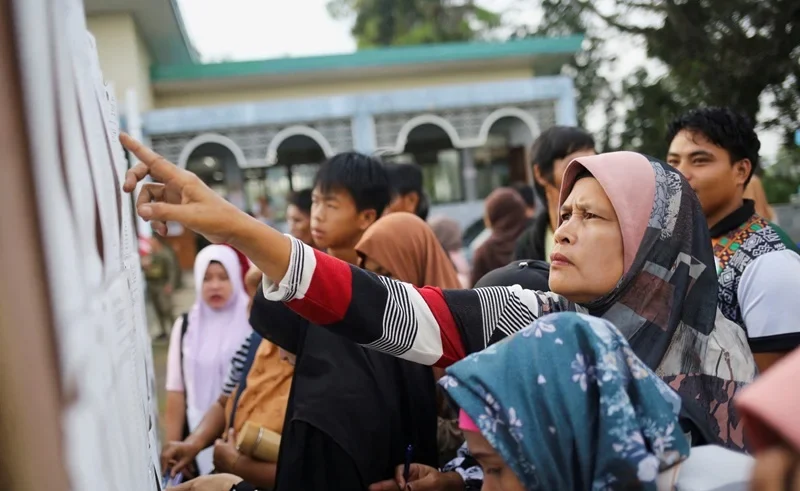
In the historic BARMM parliamentary election 2026 results, the Bangsamoro region’s first regularly elected Parliament was elected on September 14, with nearly 2.4 million registered voters participating in the process.
Preliminary results indicate that the Bangsamoro Federalist Party (BFP) grabbed the largest share of the regional party vote, closely followed by the United Bangsamoro Justice Party (UBJP). However, going to the top of the popular vote doesn’t guarantee a victory in government, as it does in presidential elections. The 80-seat Bangsamoro Parliament combines party, district and sectoral representation—and Parliament itself will ultimately choose the BARMM Chief Minister.
BARMM Parliamentary Election 2026 Results: Who Is Leading?
According to Commission on Elections data, as of the afternoon of Sept.15, 98.58 percent of the votes were counted.
In the previous detailed vote count, BFP had 659,405 votes compared to UBJP 607,966 and BARMM Grand Coalition (BGC) 386,027.
The Bangsamoro Peoples’ Democratic Party (BPDP), which was listed as the Raayat Democratic Party, came in second with 67,846 votes. These are provisional and tentative until the official canvassing and proclamation can be made.
The election is especially notable since the appointed transition authority is being replaced with a parliament elected using the Bangsamoro’s new electoral process. The BARMM peace and autonomy process that led to the creation of BARMM is a significant achievement that has come to a vote.
How Are the 80 BARMM Parliament Seats Allocated?
There are 80 members in the Bangsamoro Parliament but not all of them come from the same path to Parliament.
There are at present 40 seats in Parliament, representing 50% of the total, which are party-representation seats. There are 40% seats available in the single member parliamentary districts and 10% seats available for the sectoral and reserved seats.
How the 40 Party-List Seats Work
For the regional party vote, voters select a political party rather than an individual nominee.
One of the significant changes in the Bangsamoro Electoral Code in 2026 reduced the minimum threshold for allocation of the 40 party seats from 4% to 2.5% of the total valid party votes. This increases the chances for smaller regional parties to enter Parliament.
The successful allocation of seats is based on their lists of nominees submitted in the electoral framework, and the seats are filled based on the allocation formula.
That means the lead BFP has achieved in the BARMM elections has a significant impact, though it is only half of Parliament that is party-list seats.
District and Sectoral Seats Could Shape the Majority
There are 32 seats in the parliament in the Parliamentary districts, which operate differently. They are each single-member districts, based on who gets the most votes.
The remaining eight seats give representation outside of the traditional party system based on territorial boundaries.
It serves as the representation of Non-Moro Indigenous Peoples and settlers, as well as the Ulama and women, and youths. The changes approved in advance to the 2026 election also laid out a process for electing sectoral representatives.
As of September 15, UBJP candidates were winning a few sectoral races, such as for women and youth, and Ulama and traditional leaders.
Ultimately, the balance is determined by party seats and district wins, and not just by the overall party vote, combined with sectoral representation.
How Is the BARMM Chief Minister Chosen?
It is where the BARMM parliamentary system is quite distinct from the presidential politics at the national level in the Philippines.
The Chief Minister is not elected by the voters. Rather, members of the Parliament elect the head of government from among themselves after they are elected.
The Bangsamoro electoral system provides for the election of Chief Minister by a majority vote of all members of the Parliament on the first day of its session. To form a majority, you need 41 votes out of 80 members.
A runoff will be held if no candidate secures a majority in the first round and the top two vote getters will face each other in the second round.
Why Coalitions Could Decide the Next Chief Minister
It is not necessary that a party must win more popular votes to get the next Chief Minister.
Where no political group has a winning majority by itself, then parties may require parliamentary coalitions and elected representatives to form a majority. That essentially means that the outcome of the coalition discussions can be as significant as the actual election results.
The real problem now for the ruling party is not only to secure a majority of party votes but to create a winning coalition in the 80-member Parliament to form a government.
More Philippine updates worth knowing
When Will SSS Pensions Increase Again?
Check out the 2026–2027 tranche schedule and computation guide.
What Happened in the Ferry Fire?
Find the latest casualty figures and survivor search updates.
How Can You Apply for SSS LoanLite?
Uncover the UnionDigital Bank application process and requirements.
Where Can You Fly for ₱9.9?
Browse Cebu Pacific’s routes, booking tips, and total costs.
How Can Citizens Report Government Offices?
See how CSC Hotline 8888 helps file complaints against negligence.
Why the First BARMM Parliamentary Election Matters
The election of 14th September (2023) marks the apex of years of transition since BARMM was established in 2019.
There were almost 2.4 million registered voters for the historic election. The election comes as a step from a transitional administration to elected regional autonomy in the Philippines, following the peace process between the Moro Islamic Liberation Front and the government.
For official election information, voters can consult the Commission on Elections and the Bangsamoro Parliament. The election watchdog PPCRV is also publishing a dedicated BARMM election results dashboard.
FAQs
Who is leading the BARMM election 2026?
The Bangsamoro Federalist Party is leading the partial and unofficial regional party count, followed by UBJP and BGC. Final results and proclamations should be distinguished from these preliminary totals.
How many seats are in the Bangsamoro Parliament?
There are 80 seats: 40 party representatives, 32 district representatives and eight sectoral/reserved representatives.
How many seats are needed for a BARMM majority?
A majority of the 80-member Parliament requires 41 MPs.
Do BARMM voters directly elect the Chief Minister?
No. The Chief Minister is elected by members of Parliament, rather than directly by voters.