
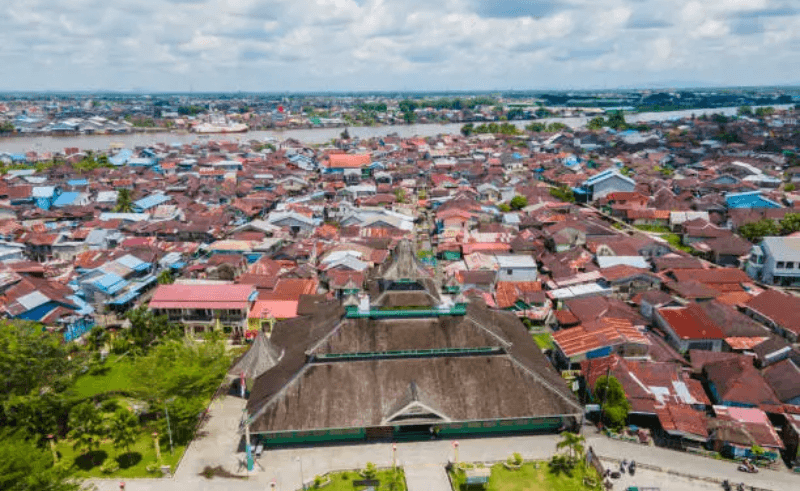
In Indonesia, hundreds of fire hotspots are posing a threat to one of the most crucial rainforest ecosystems in the world with a growing environmental emergency in the part of Borneo. Soviets have in the recent past identified 292 hotspots in West Kalimantan causing concern about possible burgeoning of a similar haze crisis which Southeast Asia has experienced in the past years.
The fires are exerting heavy stress on the already frail Borneo which is the third largest island in the world and most vital center of biodiversity. If fires are not contained within a short period of time, the place may suffer severe ecological and health effects, says environmental experts.
Increase in Hotspots Sparks Environmental Concerns
Satellite surveillance had picked up the hot spots in several districts in West Kalimantan. According to the officials, most of the fires are in the cheaper areas that are mainly peatland, and are extremely susceptible when dry.
The fire in peatlands is especially hazardous since they smolder underground and may last weeks releasing an excessive amount of smoke into the environment. This smoke usually extends into the surrounding areas and states making the haze pollution that Southeast Asia has always been facing.
The scenario has led to a sudden reaction of local governments, fire departments, and environmental organizations since they strive to stop the fires.
Why Borneo’s Forests Matter?
Borneese forests are considered to be one of the most biodiverse ecosystems on earth. These are the home to some rare species like the Bornean Orangutan, clouded leopards, and thousands of other species of plants which are not found anywhere on earth.
These forests are also an important source of carbon other than biodiversity. Large volumes of carbon trees and peatlands in Borneo bring about regulation of global weather. With such ecosystems burned down to ashes by fire, huge amounts of the greenhouse gases emitted into the atmosphere, and this causes climatic change.
The presence of the forests in the region tends to purify the area by absorbing the carbon dioxide and oxygen as well as they are referred to as the lungs of the area by the environmentalists.
Governments Intensify Firefighting
The Indonesian government has deployed emergency rescue teams and fire-fighting teams to fight the fires. The National Disaster Management Agency of Indonesia is also working with the governments of the regions to ensure that the activity of hot spots is monitored, and resources are deployed where necessary.
Some of the measures that are underway are aerial water bombing, ground patrols and public awareness programs which are based on forestalling illegal land clearing by burning. There is also surveillance of the level of air quality to guarantee the safety of the people in the affected regions.
The authorities stress that the fires should be prevented based on the early detection and the early response to them, so that the fires did not develop into such massive environmental catastrophe.
Race to Protect West Kalimantan
In the communities residing in West Kalimantin, the stakes are very high. The forest fires are not only life threatening to wildlife and the ecosystem, but it also affects the health of the people, agriculture and day to day living.
Scientists are concerned that unless Chinese authorities implement better fire control efforts, as well as efficient land development, the area might experience frequent environmental disasters every single dry season.
Until now, the struggle is ongoing to save one of the most important natural landscapes in Southeast Asia so that forests of Borneo would be able to remain the natural lungs of the planet.
FAQs
1. Why are there so many hotspots in West Kalimantan?
The fires in forests and peatlands are usually the cause of hotspots which are normally associated with the dry weather conditions and land-clearing activities.
2. What is the location of West Kalimantan?
West Kalimantan is an Indonesian provincial location found in the Island of Borneo.
3. What peatland fires are dangerous?
The fires that spread on peatlands take place below the earth and are hard to put out releasing heavy smoke and thus resulting in devastating air pollutants.
4. What is the impact of Borneo Fire on wildlife?
Fires take away habitats and endanger the wildlife and some endangered species like the orangutans and other native wildlife.
5. How can fires be controlled?
The authorities are curbing the fire through satellite surveillance, aerial suppression, ground patrols and education of the people.