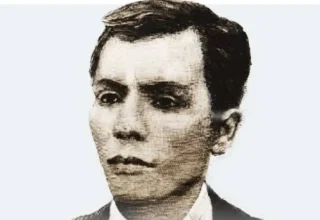










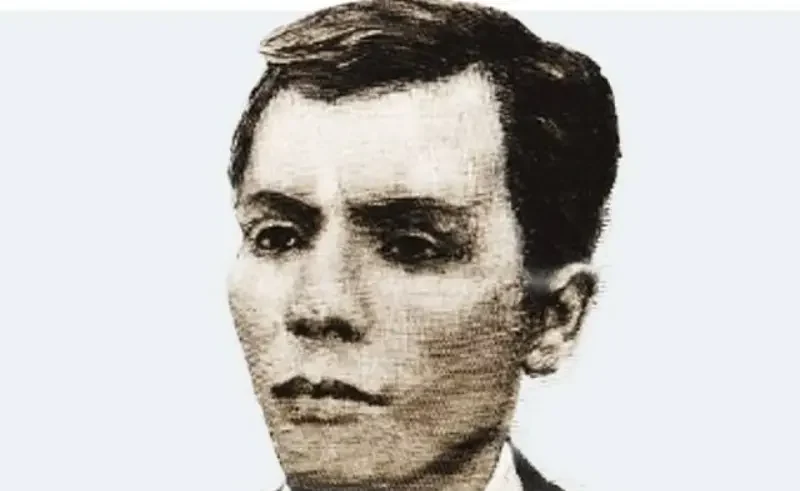
Andres Bonifacio is still one of the key players in Philippine history. He was the Supremo of the Katipunan, and played a leading role in the movement which confronted over three centuries of Spanish colonization. His life is a symbol of courage, self-education, sacrifice and struggle for the liberation of the nation. The following are 10 things that every Filipino should know about him and his legacy.
Andres Bonifacio Facts About His Early Life and Education
Bonifacio’s experiences growing up in Tondo, Manila, gave him insights into Spanish poverty and inequality. He was not well educated, but he built up a strong passion for reading, history and political thought that to some extent shaped his revolutionary activities.
1. He Was Born in Tondo, Manila, in 1863
Andres Bonifacio was born in Tondo, Manila on November 30, 1863. He was the son of Santiago Bonifacio and Catalina de Castro; both of his parents were working class. According to historical records his father was a tailor and his mother was a cigarette factory worker.
The struggles of ordinary Filipinos were what Bonifacio came across in his native Tondo. The district had people who worked, people who owned small businesses and families that suffered from the social and economic inequalities of the colonial world. Such early experiences contributed to his political consciousness and interest in the plight of the Filipino people.
2. He Became the Main Provider for His Siblings
Being a young boy, Bonifacio had a lot of trouble in his family. Both his parents passed away in the 1870s, and he had to drop out of school and care for his younger brothers and sisters. He was the oldest child in the family and he worked to provide the family food and other necessities.
He made and sold paper fans and canes, and the following is an account of how he made money doing this. He was also employed in a commercial business, such as messenger and warehouse worker. The experiences he had in his early life first-hand gave him a direct experience of working-class life and the trials of ordinary Filipinos.
3. He Was Largely Self-Educated
While Bonifacio knew he did not have much formal education, he learned a great deal through his own reading. He took Spanish lessons and read history, political and literary works. He was basically educated by himself without benefit of his classmates at the school or university.The schooling was mostly self-taught and not available to the more affluent Filipinos.
He also devoured the writings of European writers and Filipino intellectuals such as José Rizal. Rizal’s novels Noli Me Tangere and El Filibusterismo brought into light the injustices of Spanish colonial rule. It was through these concepts that Bonifacio formed his concept of freedom, equality and nationalism.
Andres Bonifacio Facts About the Katipunan and Revolution
Abandoning the movement for meaningful reform, Bonifacio became a political activist and a leader of the organised resistance movement against Spain. He became involved in nationalist groups, eventually helping to organize the Katipunan, the leading organization in the 1896 Philippine Revolution.
4. He Was One of the Founders of the Katipunan
Bonifacio co-founded the Katipunan, the Kataastaasan, Kagalanggalangang Katipunan ng mga Anak ng Bayan, on July 7, 1892. The secret society formed for the purpose of uniting Filipinos and to fight for independence from Spain by revolution.
Other founders were Deodato Arellano, Ladislao Diwa, Teodoro Plata, Valentin Diaz and Jose Dizon. The organisation started in secret, adopting the membership rites, code names and internal organisation to ensure its work was not exposed. Later, it would be led by none other than Bonifacio, who would come to be known as Supremo.
5. The Katipunan Grew Into a Large Revolutionary Movement
The Katipunan were small at first, but grew in membership in the years before the revolution. It brought in workers, peasants, clerks and middle-class people who wanted to put an end to the Spanish colonial rule.
The movement also established an organisational structure that comprised local chapters and regional leadership. Its activities were nationalistic propaganda, membership recruitment and plans for an armed uprising. By 1896, it was already a major threat to Spanish rule, and there are conflicting accounts concerning the numbers of its members.
6. He Helped Lead the Philippine Revolution of 1896
It was in August 1896 that Bonifacio was involved in the main revolution against Spain. The principal early engagements occurred on August 30 at San Juan del Monte, where revolutionary troops attacked Spanish positions, including the powder magazine.
Colonial troops were met with rebellion on different islands of Luzon. While Bonifacio’s men suffered military defeats, the rebellion was an important event in the struggle for independence. It was the beginning of the transition from covert political opposition to armed opposition.
Andres Bonifacio Facts About His Leadership and Personal Beliefs
Bonifacio was a revolutionary organiser, as well as a writer and a national unity advocate. His leadership was based on political conviction, collective action and rejection of the idea that Filipinos must be free, no matter what their social backgrounds are.
7. He Believed Filipinos From All Social Classes Deserved Equality
A significant achievement of Bonifacio’s was his attempt to bring together the Filipinos by breaking down barriers of social and economic status. The Katipunan recruited ordinary workers and other less privileged groups as opposed to movements run by educated elites.
This organisation helped to foster the notion of unity among the Filipino people as the way to achieve national freedom, not relying on a selected few powerful personalities. It promoted its ideals of patriotism, equality, respect, and service to the community. The inclusive nature contributed to the Katipunan’s becoming a wider nationalist movement.
8. He Was Also a Writer and Poet
Bonifacio used literature and writing to communicate revolutionary ideas. One of his best-known works is the poem Pag-ibig sa Tinubuang Lupa, which expresses love for the homeland and the responsibility to defend it. His writing reflected his belief that patriotism required action and sacrifice.
Katipunan also published a newspaper called Kalayaan, edited by Emilio Jacinto. It helped spread nationalist ideas and encouraged Filipinos to question colonial authority. Bonifacio’s literary contributions demonstrate that the independence movement relied on communication and education as well as armed resistance.
Andres Bonifacio Facts About His Death and National Legacy
Bonifacio’s revolutionary career ended amid internal disagreements within the independence movement. His death in 1897 remains one of the most debated episodes in Philippine history, but his role in initiating the revolution continues to shape national remembrance.
9. The Tejeros Convention Led to a Conflict With Emilio Aguinaldo
On March 22, 1897, revolutionary leaders gathered at the Tejeros Convention in Cavite to discuss the leadership and organisation of the revolutionary government. During the elections, Emilio Aguinaldo was chosen as president, while Bonifacio was elected to a different position. Bonifacio questioned the legitimacy of the proceedings after his qualifications were publicly challenged.
The disagreement deepened divisions between revolutionary factions. Bonifacio rejected the convention’s outcome and attempted to maintain his own authority. Aguinaldo’s forces later arrested him and his brother Procopio, who were charged with treason and sedition. The episode exposed serious internal tensions within the movement fighting Spanish rule.
10. He Was Executed in Cavite at the Age of 33
Andres Bonifacio and his brother Procopio were executed on May 10, 1897, in the mountains of Maragondon, Cavite, following a revolutionary military trial. Bonifacio was only 33 years old. His death occurred before the Philippines achieved independence from Spain and remains a controversial chapter in the country’s revolutionary history.
Today, Bonifacio is remembered as the Supremo of the Katipunan and a central figure in the Philippine Revolution. November 30, his birthday, is commemorated as Bonifacio Day, a national holiday honouring his contribution to the country’s struggle for freedom. Historical markers and monuments across the Philippines preserve his memory for future generations.
Why Andres Bonifacio’s Legacy Still Matters
Andres Bonifacio’s story is about more than a revolution or a struggle against colonial rule. His determination to educate himself, support his family and organise ordinary Filipinos demonstrates the power of individual commitment to a national cause. Although he did not live to see Philippine independence, his leadership helped set the revolution in motion. Remembering his life encourages Filipinos to value freedom, unity and the sacrifices behind their nation’s history.
Recommended Reads
Why Is Bonifacio Day Celebrated on November 30?
Find out why the Philippines observes Bonifacio Day as a public holiday on November 30, 2026.
Who Is the National Hero of Philippines?
How Does the Philippines Celebrate Bonifacio Day?
Discover Bonifacio Day’s history, holiday schedule and celebrations across the Philippines.
How Much Is Your Holiday Pay?
Use the DOLE holiday pay calculator for November 2026 to understand your expected pay.
When Does the Philippines Honour Its Heroes?
Learn about National Heroes Day and how the Philippines commemorates its historic figures.