

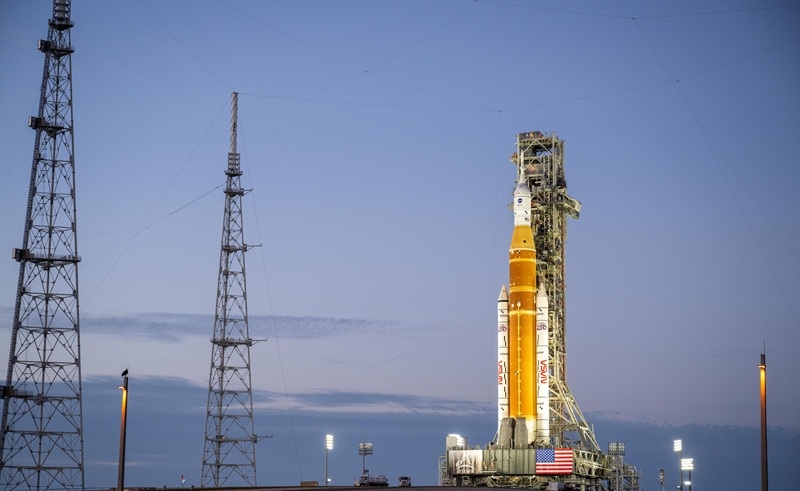
NASA’s Artemis program represents an important return to the Moon, with Artemis II serving as the key crewed test flight. Following the success of the uncrewed Artemis I in 2022, this mission confirmed the Space Launch System (SLS) rocket and Orion spacecraft for future landings. The launch on April 1, 2026, from Launch Pad 39B begins countdowns amid repairs and rollouts, exciting space fans around the world.
Mission Timeline and Launch Details
Artemis II is set to launch no earlier than April 1 at around 6:24 p.m. EDT, with backup dates on April 2-6 or 30 if needed. The SLS Block 1 rocket’s solid boosters will ignite at T-0, propelling a 10-day free-return trajectory around the Moon’s far side, about 1.3 million km away, without landing. Four main engines will throttle up seven seconds before launch, ensuring a safe ascent from Kennedy Space Center in Florida. The crew is entering final quarantine. The 322-foot rocket rolled out on March 20 after delays due to wind and repairs. This flyby will test life support, navigation, and reentry at 40,000 km/h, paving the way for Artemis III’s landing in 2027.
Meet the Historic Artemis II Crew
Commander Reid Wiseman leads a team that includes pilot Victor Glover, the first person of color on a deep space mission, mission specialist Christina Koch, the first woman, and CSA’s Jeremy Hansen, the first non-American since Apollo. They were chosen for their skills and will conduct equipment checkouts, splashdown in the Pacific Ocean, and inspire global audiences with live broadcasts. This diverse team breaks barriers. Glover and Koch symbolize important progress in NASA’s inclusivity, while Hansen strengthens Canada-U.S. relations. Training in Houston simulated every phase, from launch vibrations to views of the moon.
Why Artemis II Matters After 54 Years
Since Apollo 17 in 1972, no humans have traveled beyond low Earth orbit. That changes now. Artemis II tests Orion’s heat shield and the SLS’s reliability after delays from the February and March 2026 technical problems. It sets the stage for sustainable Moon bases, prepares for Mars, and supports commercial landers like SpaceX Starship by Artemis IV in 2028. NASA is speeding up its plan. There will be yearly landings after 2027, along with tests of xEVA suits and docking. This new era reignites interest in lunar science, resource mining, and international partnerships.
How to Watch the Launch Live
Tune into NASA TV, YouTube, or nasa.gov starting hours before liftoff for countdown coverage, crew walkout, and animations. Expect millions to watch as history unfolds. This is great for Google Discover feeds on space trends. We need the weather to cooperate; high winds delayed previous rollouts.
Read Also: NASA Postpones Astronauts’ Return, Opting for SpaceX Over Boeing’s Troubled Starliner
Frequently Asked Questions (FAQs)
1. When is the exact NASA Artemis II launch date?
NASA plans to launch on April 1, 2026, at 6:24 p.m. EDT from Kennedy Space Center’s Pad 39B, with alternate dates shortly after.
2. Who is on the Artemis II crew?
Reid Wiseman is the commander; Victor Glover is the pilot. Christina Koch and Jeremy Hansen (CSA) are also part of the crew. This is the first diverse deep-space team in 54 years.
3. Will Artemis II land on the Moon?
No, it is a flyby to test systems. The landing will happen with Artemis III in 2027.
4. Why 54 years since the last crewed Moon mission?
After Apollo 17 in 1972, the focus shifted to shuttles and the ISS. Artemis brings exploration back.
5. What rocket powers Artemis II?
The Artemis II mission uses the SLS Block 1 rocket with the Orion capsule. It is the most powerful rocket ever, and it was cleared for launch in March 2026 after repairs.