

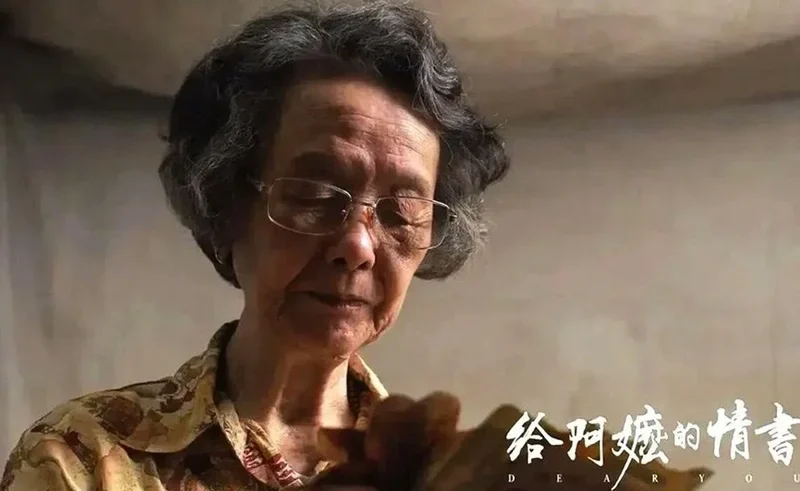
In today’s superstar-heavy, billion dollar production, and mega-marketing machine, it was hard to imagine that one small independent film would ever become the biggest movie of the year in 2026. Chinese Drama Dear You (Chinese name: Give Align To Align / Love Letters To Grandma), a family drama about sudden affection.
Production of the film cost only ¥14 million (about $2.06 million), but it has since grossed over $258 million worldwide. Such is its success that it has been propelled from a special regional production to one of the most talked about films of the year.
Why Is Everyone Talking About Dear You?
In this regard, there is a difference between the blockbuster movie that depends on visual effects and action scenes and Dear You, which reaches its audience by emotion, family history and cultural authenticity.
The novel details a modern-day grandchild who goes to the Chinatown of Bangkok to find his ancestors’ lost history. On his road, he discovers what his grandfather experienced in the 1940s when he emigrated from China, and how he was able to enjoy a wonderful life in Southeast Asia, writing written letters and sending remittances to loved ones back home.
The profound personal narrative of the film has touched people through generations, particularly affecting the viewers who are descendants of migrants and/or folks from overseas.
Forgotten History Behind the Film: What Is Qiaopi?
The primary motivation for the response of a viewer after leaving the movie is the focus on the topic of qiaopi.
Money remittances and letters sent by the Chinese who migrate overseas and handwritten to their family members at home are referred to as Qiaopi. These letters became emotional lifelines for thousands of families parted by war, economic hardship and oceans for many years.
Qiaopi letters were essential prior to video calls, messaging applications, or social media, conveying family news, financial assistance, and messages of hope. They were relied upon to sustain intergenerational family bonds and had an important role in Chinese migrations across South-East Asia.
The movie brings this lost ritual to the modern generation, and makes history into one of the most talked-about cultural events of 2002.
How a Teochew Dialect Film Became an International Success?
A thing that is surprising at Dear You is the fact that majority of the film is in teochew language and not standard Mandarin.
It took decades for many industry experts to realize that the possibility of regional dialect films to be commercially viable is limited. But there are models that prove that authenticity can also reach the audience in a more profound way than conventional models.
The movie has been hailed by viewers for recreating speech patterns that are mostly lost by the younger generation. When the Pinyin is cast as Teochew, the “feel” of the Pinyin becomes emotional, like it comes from a personal experience, sometimes more so for the audience than the actor or the filmmaker.
It has now been inspiring the fresh revival of interest in Chinese dialects and culture in Asia.
Why Are Singapore and Malaysia Experiencing Ticket Frenzies?
Because of the film’s expansion in Singapore, Malaysia, Hong Kong and Macao, there is now unprecedented demand.
Many Singaporeans and Malaysians who have Teochew or Hokkien ancestry are descendants of those who emigrated south from China many generations ago. Consequently, the themes of the film are more like reflections of real family experiences and less like historical fiction.
Grandparents, parents and children are watching movies together and leaving the movies with a family history at the end of the session. A unique multi-generational experience has been a driver of sold-out screenings regularly for a long time and long queues for tickets across the region.
Demand is so high that several cinema halls have extended their timings, as views keep rising.
Beating Major Hollywood Blockbusters
But perhaps the most startling thing about Dear You is that it not only outshoots a lot bigger productions but it also does a lot better, too.
The movie has managed to outsell larger-budget, big name Hollywood productions in several Asian markets so far, to the chagrin of those studios. This success shows there is still a demand for audiences to watch meaningful narratives and do more to elicit emotion.
Instead of using costly visual effects, this film is bound together by shared subjects and concepts of giving and taking from families, leaving ones’ place, identity and love spanning generations.
These themes are universal, breaking down language and cultural barriers to give the film a larger audience.
Emotional Appeal Driving Word-of-Mouth Success
In fact, a lot of the movie is taking off due to recommendations from the audience instead of regular advertising.
The movie is often cited as a cathartic journey for viewers to experience through and a time for introspection about family life and one’s roots. Since the screening of the film, many audience members have requested that parents or grandparents be contacted and many have started searching their own family histories.
The effect this emotional feedback has had is powerful, and has driven social media chatter, online reviews and repeat viewing, among other activities often unprecedented in cinema these days.
What Dear You Says About the Future of Asian Cinema?
The success of Dear You could have a lasting impact on the film industry. Up until today, producers had been urged to shift away from the appeal of their home audiences to adhere to a universal formula and script style.
The ethical and authentic way this film has been produced proves, here, that stories rooted in very local experiences can become international success stories.
The results indicate that audiences want to consume stories that are more cultural and identity-based rather than entertainment based.
The development of this niche industry has helped propel more filmmakers to be encouraged to produce regional-based movies and narratives, dialogues, and community histories which have not been part of the reel of the mainstream film industry.
Catch Up on Asia’s Biggest Entertainment Buzz
Did Their 14-Year Romance End?
Find out what led to the shocking relationship confirmation.
Ready For BTS Presale Success?
Check out smart strategies to improve your ticket chances.
What Awaits Minh Hằng’s Comeback?
Uncover the details behind her much-anticipated music return.
Why Is This AI Song Viral?
Dive into the trend taking over TikTok and WhatsApp.
Who Tops Thailand’s Rich List?
See which stars dominate the Thai entertainment industry.