










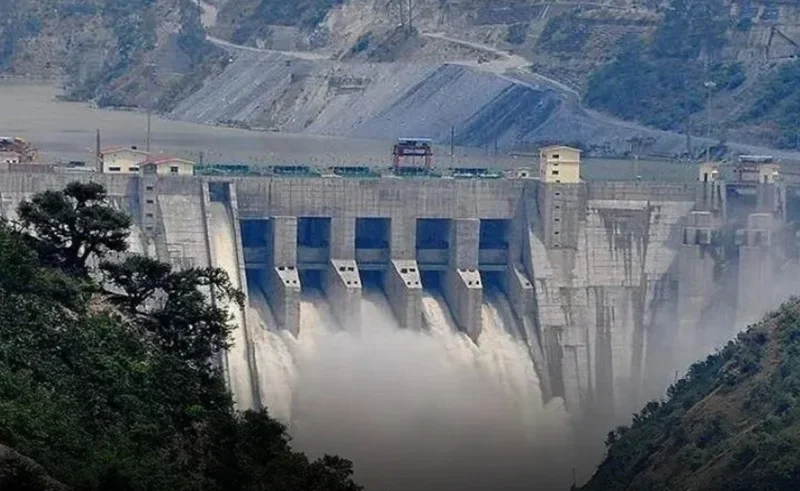
India has dismissed the decision by a court in the Hague that upheld the Indus Waters Treaty in favor of Pakistan, adding another twist to the decades-old Indus Water dispute. The Court of Arbitration on August 31, 2026, ruled that the Indus Waters Treaty would continue to be in effect in spite of India’s claim to put it on hold. New Delhi was quick to reject the authority of the tribunal, arguing that the body was “inadequately constituted” and lacked jurisdiction over India’s “sovereign decision-making”. The conflict has now spread to issues of water sharing as well as to the core issues of treaty obligations, arbitration, and relations between India and Pakistan.
What Did the Hague Tribunal Rule on the Indus Waters Treaty?
On August 31, the Hague-based Court of Arbitration handed down two rulings: one on the abeyance decision by Pakistan and the other on Pakistan’s request for interim measures against India’s Ratle Hydroelectric Plant.
The tribunal found that India’s decision to put the treaty in abeyance was not allowed under the treaty or international law rules. It has held that neither can unilaterally suspend or terminate the agreement because India had made progress.
The tribunal also put in place interim restrictions on some construction activities at the Ratle project while a neutral expert, commissioned by the World Bank, reviews technical issues.
The official proceedings and decisions can be followed through the Permanent Court of Arbitration case page.
Why India Rejected the Hague Tribunal Ruling
India’s response was unequivocal.
New Delhi has never accepted the legal status of the Court of Arbitration and its structure is not in keeping with the dispute-resolution clause of the treaty, says the External Affairs Ministry.
India called the tribunal “unconstitutional” and stated that it had “no jurisdiction whatsoever” over Indian’s sovereign decisions. The government of India also stated that this latest call will not impact projects India is undertaking.
Most significantly, India restated that it will continue to adhere to its commitment of keeping the Indus Waters Treaty in abeyance from its point of view.
India has also refused to join the arbitration process, and is instead following the treaty’s parallel Neutral Expert mechanism for technical issues.
Why Was the Indus Waters Treaty Put in Abeyance?
India has placed the treaty on its shelf after the Jammu and Kashmir terror attack on April 22, 2025, that claimed the lives of 26 people in the city of Pahalgam. New Delhi blamed the move on security concerns and cross-border terrorism.
The arguments for the suspension were however found not to create a lawful basis to abrogate the treaty unilaterally by the tribunal.
This distinction is now central of the conflict and India has thrown its weight behind a lack of sovereignty and a national security argument; Pakistan has kept up a legal argument over treaty obligations.
What Is the Indus Waters Treaty?
The two countries, India and Pakistan, signed Indus Waters Treaty 1960 after nine years of negotiations under the auspices of the World Bank.
The agreement stipulates that the Eastern Rivers, namely the Ravi, Beas and Sutlej, are mostly handed over to India. The Indus, Jhelum and Chenab (the Western Rivers) are the main beneficiaries of Pakistan and the specific uses for India include some hydropower development subject to the terms of the treaties.
It has been through wars and military crises and periods of diplomatic enmity that the treaty has endured, and so the current one matters much.
The World Bank’s official Indus Waters Treaty fact sheet explains both the allocation system and the institution’s procedural role.
Why the Ratle Hydroelectric Project Matters
The recent India-Pakistan water dispute also involves the hydropower projects on Western rivers of India.
The Ratle Hydroelectric Project is located in the Chenab river of Jammu and Kashmir. Pakistan has expressed its concern over certain aspects of the designs of the Indian hydroelectric projects, while India has said that it is able to build hydropower projects under specific technical conditions as per the treaty.
This is a geopolitical and very technical disagreement. It is not just about who gets water but how India can plan and manage hydroelectric facilities upstream.It is not only about who gets water, but about how India can plan and operate hydroelectric facilities upstream.
Asia’s Tech, Trade & Leadership Shifts
Can Ternus Take Apple Beyond iPhone?
Find out how John Ternus could reshape Apple’s future.
How Is India Deepening ASEAN Ties?
Check out India’s renewed Act East engagement.
Can ASEAN Build Stronger Regional Links?
Explore infrastructure, digital connectivity, and global partnerships.
What Will Singapore Prioritize For ASEAN?
Uncover key priorities for trade and businesses.
Can Brazil Transform ASEAN Agriculture?
See how tropical farming technology could help Southeast Asia.
What Happens Next for India and Pakistan?
The immediate positions remain far apart.
Pakistan has hailed the verdict of the tribunal and has demanded engagement based on the ongoing legal responsibilities under the treaty. India, for its part, states that the ruling by the arbitration body does not impact on their actions.
This puts the tribunal in an unusual position, in that it holds the treaty to be legally in force, while India states that it was placed on abeyance.
The larger challenge may thus have an impact on water diplomacy between India and Pakistan, as well as future projects in the hydropower sector.
FAQs
Did India reject the Hague ruling on the Indus Waters Treaty?
Yes. India rejected the August 31, 2026 Court of Arbitration ruling, saying the tribunal lacks jurisdiction over India’s sovereign decisions.
Did the tribunal cancel India’s suspension of the treaty?
The tribunal ruled that India’s unilateral abeyance was not permissible under the treaty or applicable international law. India rejects that conclusion and says its abeyance decision remains in force.
Which rivers are covered by the Indus Waters Treaty?
The treaty covers six major rivers. The Ravi, Beas and Sutlej are allocated primarily to India, while the Indus, Jhelum and Chenab are allocated primarily to Pakistan, subject to specified permitted uses.
Is the Indus Waters Treaty still active?
The tribunal says the treaty remains in force. India, however, continues to maintain that it is being held in abeyance. This legal and political disagreement remains unresolved.