







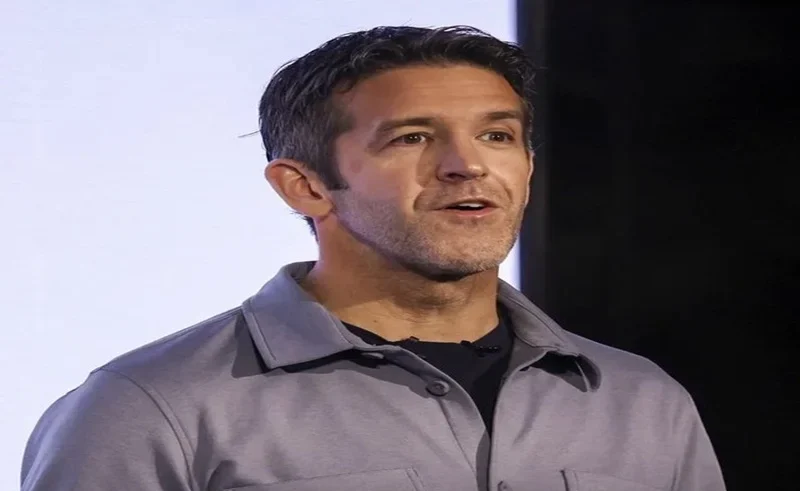
One of Apple’s next chapters is likely to be based around one question: can John Ternus build a meaningful growth machine without the iPhone? Ternus replaces Tim Cook, and adds an entirely new leadership profile to its ranks.
Cook’s progress and skill were recognized as the quintessential in terms of business operations, supply chain management and the rapid growth of Apple’s Services business. Ternus comes with hardware development experience across Apple’s hardware product lines.
From Operational Excellence to Product-Led Leadership
Ternus is not an example of replacing Cook’s model, it is a shift in emphasis towards the other. His hefty hardware oversight duties for the Mac, iPad, AirPods and Apple Silicon position him to have some insight into Apple’s priorities that would translate to his product development role.
That background could prove to be very significant as the company looks around for the next category in which it has to carry out a transformation. While Apple still has a lot of ways to continue to make the iPhone a better business component, things will become significantly more difficult to sustain in the long run if the main hardware platform is the only truly “must have” in the Apple business.
Search for Apple’s Next Big Product
A few segments are also new and may prove to be significant in Ternus’ future. There is one path through the Vision product line of spatial computing, which will take a while to get scaling in the mainstream, though lighter hardware, improved battery life and much lower costs would obviously help.
There’s a shot at mobile devices that can fold, too. But Apple would have to overcome some tricky engineering challenges relating to the product’s hinges, its screen mount, its durability and the integration of the ultra-thin components before these items can be real businesses.
Apple Intelligence Could Change the Equation
Another big tick off is Artificial Intelligence. On-device AI offers an opportunity for Apple to make its lineup of hardware products more valuable, but to achieve that requires an up-close-and-personal relationship between chips, software and cloud infrastructure.
The experience and skills of the engineering business of Ternus may come into play here. The catch, though, is not just that the company adds in AI capabilities, it’s ensuring it establishes an ecosystem where AI is the driver of the sales of new Apple devices – not just an additional software update.
Wearables and the Smart Home Are Bigger Opportunities
This is also smart glasses, further so far as the personal devices are involved, and more sophisticated wearables and smart-home gadgets may be some areas Apple could expand upon. These categories are aligned with the company’s ecosystem approach, in addition to facilitating more opportunities for computing to be ambient vs. screen dependent.
This is a massive engineering challenge. In order to meet that requirement, Apple must reduce the size of potent components, increase battery life and ensure that new devices walk and talk like those Old People can use today without making the iPhone uncool the next morning.
iPhone Will Still Be the Foundation
They’re not saying it’s the end of the iPhone, just that they hope to end reliance on it. The smartphone is still the heart and soul of the ecosystem, powering products including the Google Glass and AirPods among others.
It is also the source of the necessary funds to finance innovation and research and development and expansion of services and returns to shareholders. As such, a sensible approach to diversification should be centered on the iPhone and not against the iPhone.
Ternus’s Real Test Is Finding a Second Engine
At the far end of Apple’s shelves are their future products, and the most difficult part of their business isn’t keeping those iPhones. It is making something else which will achieve strategic parity someday.
What Apple hopes to be assessed on is whether he will be able to leverage new technologies into standalone enterprise-sized companies, rather than just a marginally superior handset from Apple. There’s possibilities of vision products, foldables, processors with AI powers, and wearables but nothing as economically important as the iPhone yet.
Can He Do It?
Ternus has a plus on the card, one that Apple requires a level of knowledge and understanding of how products are engineered, not just the business engineered around them.
However, having technical know-how won’t improve their chances of a second breakthrough of the iPhone scale. Apple has to develop products that not only are bright technologically, but also are affordable, useful and can engender new consumer habits.
The iPhone “comfort zone” will thus continue to be Apple’s financial cushion. Ternus’ larger task is to ensure it doesn’t evolve into being the strategic ceiling at the company.
FAQs
Who is John Ternus?
John Ternus happens to be an Apple hardware exec with experience across key product categories, such as the Mac, iPad, AirPods and Apple Silicon.
Can Apple’s “realistic” move away from the iPhone get to the next generation?
Yes, but the iPhone is still Apple’s crux product and revenue driver and new hardware categories and services are more likely to provide diversification.
What are the possible products that are capable of the next growth cycle into Apple?
Spatial computing, foldables, AI-driven enablers, smart glasses, wearable and smart home devices are potential growth areas.
Stay Updated: What’s Next for Your iPhone?
Should You Update iOS 26.6.1?
Check out the latest iOS 26.6.1 update details and find out whether your iPhone needs it now.
What’s New in iOS 26.6?
Uncover the key iOS 26.6 features, changes, and reasons users may want to update.
How Much Will iPhone 18 Cost?
Find the expected iPhone 18 Pro Max pricing in the Philippines, including the latest leaks and estimates.
Should You Buy iPhone 17 Pro?
Browse the key reasons to buy the iPhone 17 Pro now or wait for Apple’s next flagship.
Which iPhones Will iOS 27 Drop?
See the complete list of iPhones that may lose iOS support with Apple’s new iOS 27 update.