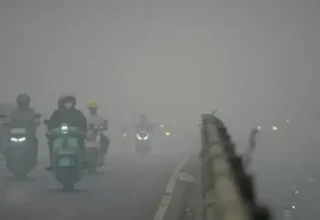










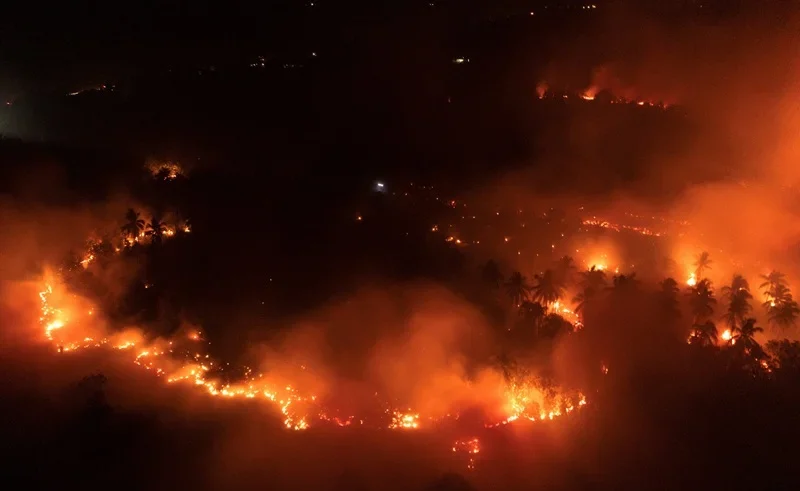
Indonesia wildfires 2026 have become much worse, with almost 95,000 hectares burned in July alone—due to a powerful El Niño that dries out forests and carbon-rich peatlands. Government data reported by Reuters showed that the July upswing brought Indonesia’s total burnt area to around 202,004 hectares from January to July. The Southeast Asia haze is now spreading to beyond Indonesia as Kalimantan and Sumatra fires spread smoke.The Southeast Asia haze is now reaching beyond Indonesia, escalating the regional warning system to its maximum level for the ASEAN region as smoke from Kalimantan and Sumatra fires spreads.
Indonesia Wildfires 2026 Burn 95,000 Hectares in July
To be clear, the headline figure of 95,000hectares is for damaged land only in July 2026, not for the year.
The Forestry Ministry of Indonesia said that between January and June, 107,465 hectares of land burned in the country. The figure for January to July, after a bad July spike, was 202,004 hectares (about 499,000 acres). July was also nearly as much burned area as the first six months of the year.
The area affected is already large enough than in 2019 and 2023, but less than the approximate 600,000 hectares burned during the same period in the catastrophic 2015 fire season, said forestry minister Raja Juli Antoni.
Readers can follow official fire-prevention updates through Indonesia’s Ministry of Forestry.
How El Niño Is Intensifying Indonesia’s Wildfires
Dry Weather Creates Dangerous Fire Conditions
The El Niño Indonesia 2026 pattern is a major reason authorities remain concerned.
Hazardous hotspots were observed in patches in Kalimantan and satellite monitoring indicated moderate to dense smoke originating from these hotspots and spreading northward across the West Kalimantan border. There was also a lot of smoke spread throughout southern and central Sumatra.
As of 1 Sept, the monitoring in ASEAN indicated smoke over Sarawak, Sabah, Brunei and parts of the Philippines, including Palawan and Panay. Healthy to hazardous air-quality conditions were being reported by some stations throughout Borneo and the southern part of Sumatra.
Southeast Asia Haze Spreads Beyond Indonesia
The crisis has become increasingly regional.
On August 26, the ASEAN Specialised Meteorological Centre activated Alert Level 3, indicating a high risk of severe transboundary haze.
Satellite monitoring showed moderate-to-dense smoke coming from clusters of hotspots in Kalimantan, with transboundary haze moving north from West Kalimantan. Smoke was also widespread across southern and central Sumatra.
By September 1, ASEAN monitoring showed smoke affecting Sarawak, Sabah, Brunei and parts of the Philippines, including Palawan and Panay. Some air-quality stations across Borneo and southern Sumatra were reporting unhealthy to hazardous conditions.
The latest regional conditions can be checked through the official ASEAN haze monitoring portal.
Malaysia Feels the Impact of Indonesia Haze
The Indonesia haze 2026 has become particularly serious in Malaysian Borneo.
For most of August, smoke from Indonesian Kalimantan has been impacting Sarawak. In Malaysia, reports of deteriorating breathing health and delays to outdoor activities due to rising air pollution levels.
The Level 3 alert is particularly noteworthy as it is the highest alert in the regional three-tier haze-warning system of ASEAN. Persistent hotspots, extensive smoke coverage, dry weather conditions and winds that are able to carry pollution to neighbouring countries are taken into account.
What Is Indonesia Doing to Control the Fires?
Indonesia has expanded both ground and aerial firefighting operations.
Fire-prone provinces have seen authorities conduct weather modification, such as cloud-seeding. Reuters reported these operations were carried out from February to July.
The government has also mobilized thousands of troops. Authorities stepped up their efforts and over 11,000 personnel were mobilised in South Sumatra alone. There is also ongoing investigation of companies suspected of involvement in fires in concession areas.
The most difficult task might be the timing. The Indonesia Meteorological Agency (BMKG) is projected to have higher wildfire risks, while ASEAN is forecasting more extreme El Niño and less than normal rainfall for much of southern Southeast Asia countries.
More wildfire stories worth knowing.
What Can Southeast Asia Learn?
Check out major wildfire disasters and their key lessons.
How Severe Was Japan’s Wildfire?
Find out how the massive blaze destroyed buildings.
Could Australia Face Another Black Summer?
Uncover why Australia expects a severe bushfire season.
How Is Climate Change Transforming Our World?
Browse examples showing how Earth’s climate is changing.
Who Protects Indonesia’s Peatlands From Fire?
See how firefighters defend Indonesia’s vital peatlands.
Why Peat Fires Are Especially Dangerous
Sumatera and Kalimantan are home to large areas of tropical peatlands in Indonesia.
Large amounts of carbon, which is stored for hundreds of years, are contained in peat. It is extremely flammable when drained and dry. Fires can be smoldering and hard to extinguish and generate smoky pollution that may last for days.
This is why the forest fires in Indonesia are an environmental, public-health and climate issue; and why, in general, it is more effective to prevent the larger peat fires than to try to extinguish them after they have spread.
FAQs
How much land has burned in Indonesia in 2026?
Government data showed approximately 202,004 hectares burned between January and July, including nearly 95,000 hectares during July alone.
Is El Niño causing the Indonesia wildfires?
El Niño is intensifying the dry conditions that increase wildfire risk, although land use, peat drainage and human activity are also important factors.
Is Indonesia’s haze reaching other countries?
Yes. ASEAN monitoring has detected transboundary haze affecting Malaysia, Brunei and parts of the Philippines.
How serious is the Southeast Asia haze alert?
ASEAN activated Alert Level 3 on August 26, its highest warning level for transboundary haze risk.