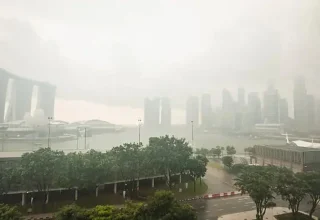

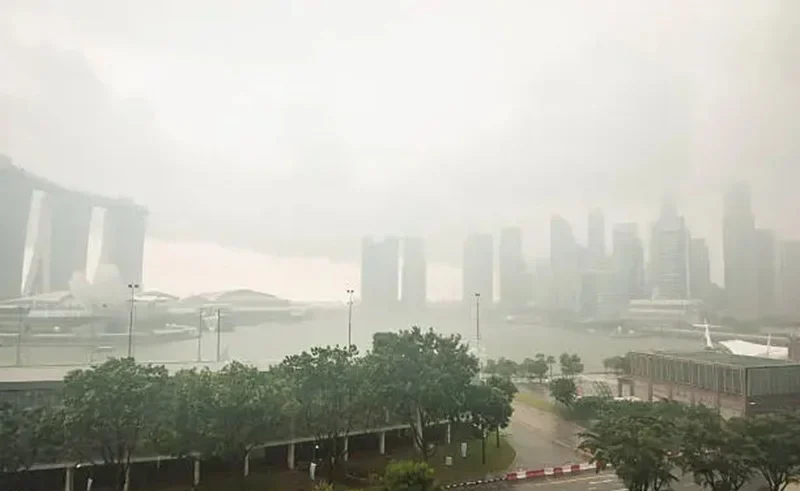
In the face of regional fires, the Singapore haze 2026 has re-awakened the issue of air quality in the city-state. Singapore’s 12-hour PSI hit the Unhealthy range for the first time in the past six months since October 2023, on Sept 4.
So, what is the significance of a PSI of 101? So, should you measure PSI or 1-hour PM2.5 levels before going outside for some exercise? The numbers, health recommendations and latest conditions are explained in this Singapore haze guide, allowing residents to make informed decisions.
Singapore Haze 2026: What Is Causing the Poor Air Quality?
The next haze episode in Singapore is associated with smoke from fires in southeastern Sumatra and Kalimantan. The National Environment Agency (NEA) reported moderate to dense smoke plumes, and winds were blowing largely from the southeast or south, which may transport smoke towards Singapore.
There have been some fluctuations, but it has not been consistently poor. At 1 hour PM2.5 readings were between 38µg/m³ and 70µg/m³ at 6pm on 10 September, which is in the Normal to Elevated range. The 24-hour PSI ranged from 73 to 104, from Moderate to Unhealthy level.
The potential for more haze, says NEA, will “rel heavily on the continuation of regional fires and the wind and rain patterns.
Residents can follow live conditions through the official NEA website, Haze.gov.sg and the myENV app.
Singapore PSI Ranges Explained
The Pollutant Standards Index (PSI) is a measure of the air quality in Singapore for the past 24 hours. Fine particulate matter or PM2.5 is the pollutant most important during periods of haze.
The official PSI ranges in Singapore are simple:
0–50 is Good, 51–100 is Moderate, 101–200 is Unhealthy, 201–300 is Very Unhealthy, while anything above 300 is Hazardous.
Therefore, a PSI above 100 does not necessarily mean that people should stay indoors. Instead, advice will be based on the nature of the reading, the amount of outdoor activity, and the health of the individual.
1-Hour PM2.5 Levels vs 24-Hour PSI: What Should You Check?
Understanding the difference between 1-hour PM2.5 and 24-hour PSI is one of the most important parts of the Singapore haze health advisory.
Use 1-Hour PM2.5 for Immediate Decisions
The measurement by PM2.5 for 1 hour is more representative of the current air quality. When planning activities for outdoors, NEA suggests using it to make decisions about running, walking or exercising.
Readings between 55 µg/m³ and below are considered to be Normal according to the official bands. If the concentration is between 55 and 150 µg/m³, it is in the Elevated band. If the concentration is greater, it is classified as belonging to the Higher and Very High bands respectively.
This matters because haze can change considerably within a day.
Use 24-Hour PSI to Plan Ahead
The 24 hour PSI forecast is then aimed at planning longer activities and decisions on the next day.
For instance, a person who is planning an extended outdoor activity should refer to the PSI and health advisory. They can then quickly consult the latest 1-hour PM2.5 level prior to heading outside to determine whether conditions are still acceptable.
Singapore Haze Health Advisory: When Should You Reduce Outdoor Activity?
Normal activities for healthy people and vulnerable groups, NEA’s health recommendations, at a PSI of 100 or below (Good to Moderate).
Once PSI reaches 101–200 (Unhealthy), healthy people should reduce prolonged or strenuous outdoor physical exertion. These activities should be avoided by children, elderly people and pregnant women, and people with long-term heart or lung disease should try and limit them.
Precautions are more stringent at 201-300 (Very Unhealthy). Prolonged or strenuous outdoor activity should be avoided by healthy individuals and outdoor activity avoided or minimised by vulnerable groups.
If PSI is 300 or higher (Hazardous), healthy people should limit their outdoor activities and vulnerable are advised not to go out.
When needed, any person who feels ill, especially children, older people and individuals with chronic heart or lung disease will need medical attention.
More Singapore Stories Worth Reading
Will Singapore PMs Earn More?
Check out the debate over Singapore’s new salary.
Why Are Singapore Stars Moving Abroad?
Uncover why celebrities are choosing overseas creative hubs.
Why Was The PJ Marathon Cancelled?
Find refund details, race packs, and alternatives.
Who Leads Singapore’s Richest List?
Browse the biggest winners and losers this year.
How Can You Refund SGQR Payments?
See how hawkers and banks handle overpayments.
Why Singapore’s 2026 Haze Episode Matters
The PSI entered into the Unhealthy range in the September episode which led to an action being taken by the Government. The Singapore’s Haze Task Force (HTF), which comprises 28 public agencies, has implemented measures to safeguard public health and mitigate the impact of deteriorating air quality.
The government also started to provide daily haze advisory statements with a 24-hour forecast of PSI (HWQ) to assist the public and organisations to make decisions about their activities.
For regional context, the ASEAN Specialised Meteorological Centre monitors hotspots, smoke haze and weather conditions across Southeast Asia.
FAQs
What PSI level is unhealthy in Singapore?
A PSI of 101–200 is Unhealthy. A reading of 201–300 is Very Unhealthy, while readings above 300 are Hazardous.
Should I check PSI or PM2.5 before going outside?
Check 1-hour PM2.5 levels for immediate activities such as running or walking. Use the 24-hour PSI forecast when planning longer or next-day activities.
What is considered a normal 1-hour PM2.5 reading?
NEA classifies 1-hour PM2.5 concentrations of 55 µg/m³ or below as Normal.
Where can I check Singapore haze readings?
Current readings and advisories are available through NEA, Haze.gov.sg and the myENV app.