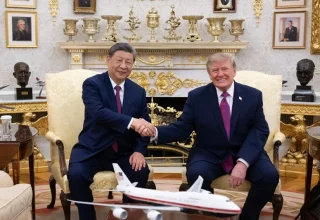










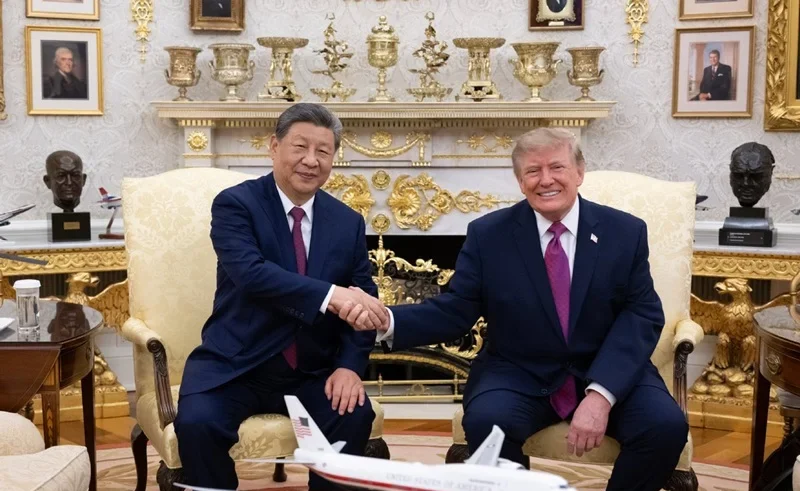
The Washington summit between Trump and Xi hopes for stability in trade yet exposes Southeast Asian economies to risk. The U.S.-China nuclear do-over is important to ASEAN members as their economies are affected by the U.S.-led attention that could impact exports, manufacturing, investment and supply chains across Asia.
While diplomacy can ease the precedent uncertainty, it can’t remove the deep rivalries between Washington and Beijing. Southeast Asia will have to therefore weigh increasing possibilities arising from better relations alongside readying itself for the return of trade friction.
Trade Stability Offers Temporary Relief
If Vietnam, Malaysia and Thailand are the typical export economies, then a continuation of the truce over trade may offer some certainty. Maintaining tariffs and a dependable supply of industrial raw materials and a steady market demand for their goods is essential to business.
But the ad interim agreements should not be confused as a solution that is permanent. Changes in tariff policy and export controls, or in bilateral negotiations, may rapidly impact production costs and investment decisions. Southeast Asian governments and businesses need to brace for co-operation and continued tensions.
China Plus One Strategy Faces New Challenges
Under the China Plus One strategy investments and employment opportunities in Southeast Asia will result from businesses diversifying manufacturing operations from China. Vietnam has increasingly come to be seen as a conduit for electronics assembly, Malaysia has become relevant for the development of semiconductors and Thailand is an important autophagy hub for automobiles.
However, moving production does not mean that there are no risks of U.S.-China tensions to the production itself. Numerous factories existing in the region still rely on the Chinese components, material and machinery. Implementing stricter rules of origin and closer oversight on potential transshipment could add to manufacturers’ compliance costs, too.
The priority for ASEAN should be strengthening local supplier networks, upping the skills of their workforces and bettering their manufacturing capacities.
Strategic Autonomy Remains Essential
The diplomatic task for the countries in Southeast Asia is not an easy one either. They rely on the two powers for trade and remain extremely sensitive to anything imperialistic between them, which imposes an exclusive reliance on one or the other power with attendant costs.
ASEAN’s focus on dialogue, cooperation, and diversified partnerships provides a template with which to deal with these conflicting relationships. However, there are variations both between the various Member States and amongst Europe’s different economies which can hinder a coordinated regional response.
As well as this, technical problems with technology, as well as with semiconductor controls and questions about maritime trade routes add to the strain. These problems do not just apply to big manufacturers, but to little ones and consumers and energy importing economies.
More Global Stories to Follow
Could ASEAN-Russia Trade Ties Grow Stronger?
Check out the new 10-year plan shaping ASEAN-Russia economic cooperation.
Can Pinglu Canal Transform Regional Trade?
Explore how China-ASEAN connectivity could reshape regional trade routes.
Could Trump-Pezeshkian Talks End Deadlock?
Uncover how a UN meeting could affect the Iran war.
What Could the US-China Summit Change?
See how Trump and Xi’s Washington meeting could shape ties.
Why Is Iran Trump’s Biggest Problem?
Dive into the political challenges Iran is creating for Trump.
Building Resilience Beyond the Summit
While the Washington meeting might buy some time for stability in the short term, longer-term security does require decisions taken in Southeast Asia. Commitment from governments to boost intra-ASEAN trade through increased diversification of trade partners, development of infrastructure, strengthening of digital skills and investment in domestic industries.
Meanwhile, companies are requiring shifts in the way goods are sourced and for contingencies to be planned in case policies change suddenly. Grasping the process of diplomacy as more of a wakeup call to get ready than a guarantee of a stable situation can help prevent future turmoil.
In conclusion, the Trump-Xi meeting with respect to Southeast Asia offers both potential good news and bad news. The benefits will not only be realisable through statements of diplomacy but will also largely rely on the ability of the regional economies to develop temporary stability into enduring resilience.
FAQs
Why does the Trump-Xi summit matter to Southeast Asia?
This is so that the summit will impact U.S. and Chinese trade policies on ASEAN exports, manufacturing investments, supply chains and technology access.
How could a trade truce benefit ASEAN countries?
A trade truce would also help to minimise short-term tariff uncertainty, which in turn would enhance business planning and provide more weathered certainty for manufacturing and exports.
What is China Plus One strategy?
China Plus One is the tactic of companies operating in China while operating in other countries such as Vietnam, Malaysia and Thailand.