










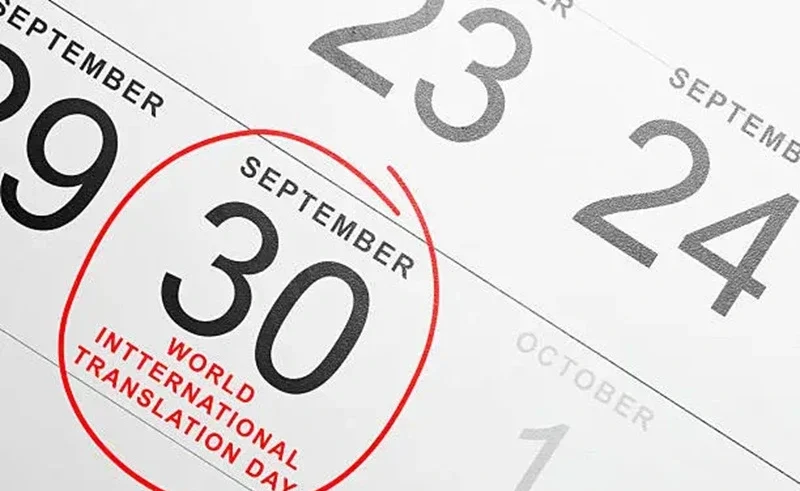
International Translation Day, also known as the Day of the World’s Translators, is celebrated internationally on 30th September to honour translators and interpreters of the world’s languages. They facilitate communication between people of different language and cultural backgrounds in the areas of international relations, education, medical care, business and cultural exchange.
In an era increasingly dominated by digital communication and AI, the observance also underlines the value of precise and inclusive translation, based on the tissue of history, culture, language, and geography.
International Translation Day 2026 Theme
International Translation Day 2026 is seeking anyone with input to contribute a comment on “Linguistic Diversity and Language Rights: The Power of Being Understood. It has focussed attention on the need to provide information in languages that people can understand.
In the realm of healthcare, legal matters, and educational and public services, language accessibility becomes essential. The theme also aims to highlight the attention given to languages spoken worldwide that do not enjoy the same prominence in the digital language services as do other, more widely used languages.
History and Origins of International Translation Day
It was determined that September 30th would be on the feast day of Saint Jerome, one of the Christian saints most appreciated as patron saint of translators. He translated the Bible into Latin, called the Vulgate.
In 1953 the International Federation of Translators (FIT) was founded. The organisation in 1991 championed the concept of a “Day to Celebrate Translators” and of building unity and cooperation among language professionals on an international level.
The United Nations General Assembly, in 2017, declared September 30 as the International Translation Day by adopting the Resolution 71/288 The recognition underscored the role of translation service in the promotion of international understanding and cooperation.
Why Is International Translation Day Important?
Translation and interpretation facilitate communication between different languages for governments, international organisations and communities. As legal interpreters, they assist participants in the legal process in comprehending the proceedings and conveying their thoughts.
International trade, tours, literature, education and digital applications are other categories that benefit from translation. Whether businesses are adapting websites, apps and products to fit differences in language and cultural expectations around the world, they are using localisation to do so.
Explore Key Global Shifts
Can AI Growth Go Green?
Check out how grids and incentives could reduce AI data centre costs.
How Is India Reshaping ASEAN Trade?
Find out how India seeks balanced ASEAN trade amid rising commerce.
Can Canada Protect Strategic Autonomy?
Uncover how geography shapes Canada’s strategic choices.
Can Bangladesh Balance Three Powers?
Look into Bangladesh’s challenges in maintaining strategic autonomy.
Where Will Green AI Hubs Grow?
Explore China-ASEAN opportunities across Indonesia, Malaysia, and Vietnam.
How Is International Translation Day Celebrated?
International Translation Day is celebrated at professional conferences, online events, through academic panels and awareness-raising campaigns. Associations for translators and translators’ unions and educational bodies can arrange talks on language technology, ethical issues and career possibilities.
Literary translation, literary terminology and literary interpreting can be introduced as a vocation to the field of literature at universities to inspire students to learn more about these areas. Organizations can also honor translators whose job is so much behind the scenes yet vital in achieving international communication.
FAQs
When will be the International translation Day in 2026?
International Translation Day is celebrated on 30th September each year on the feast day of Saint Jerome.
Who is the patron saint of translators?
Saint Jerome is considered the patron saint of translators because he translated the Bible into Latin.
Why is the translation process important in today’s world?
Translation aids people to reach vital information, engage in global conversation, understand other cultures and talk between languages.