
The Afghan government, along with others, has described Afghanistan as a land bridge between Central Asia and the Arabian Sea and so that is what it has wanted to be for many years. Proposed Uzbekistan–Afghanistan–Pakistan Railway and larger Trans-Afghan Corridor represent that vision, and its impact will importantly change the landscape of regional commerce.
But the frequent closure of Afghanistan-Pakistan border posts reflects a stark truth: There is a fundamental truth that political turmoil will not overcome infrastructure. Each time the Durand Line is shut down strengthens the belief of its fragility as one of Asia’s major ambitions in trade.
The persistent closure of Torkham, Spin Boldak (Chaman) and Kharlachi have become a regular occurrence along the borders. They have grown to become a recurring problem impacting exporters, transport operators, investors and governments of South and Central Asia.
Critical Trade Corridor Under Pressure
Afghanistan is the shortest route between the landlocked States of Uzbekistan, Tajikistan and Turkmenistan and their Ports in Pakistan, including Karachi, Port Qasim, and Gwadar. An overland route from Tashkent to Karachi is much shorter than other routes to reach Karachi via Europe or maritime transshipment routes.
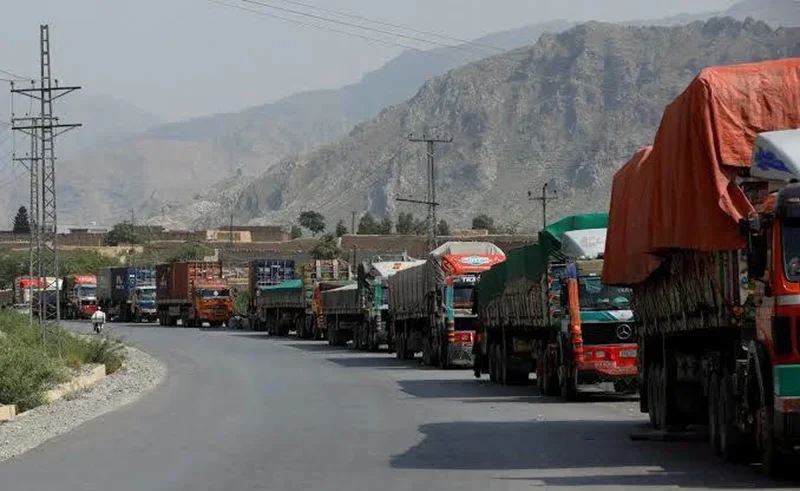
Thousands of trucks loaded with agricultural products, textiles, minerals and industrial products, however, are trapped at each border. The results are a ticking cargo clock, a rising price of cargo and subsequent delivery deadlines, which translate into ever more unpredictable supply chains on a regional level.
Rising Cost of Uncertainty
Sitting trucks at border crossing points are just one symptom of the economic damage caused by the crisis. Numerous interruptions cost regional traders about $200 million monthly, and logistics firms have to take political risk into account in each cargo.
The competitive advantage of the Trans-Afghan route gets progressively reduced by a variety of factors such as higher insurance premiums, demurrage charges, warehousing costs and contractual penalties. With no cut in transport costs, the instability is adding significant costs to regional trade.
Investors Are Watching Closely
Tensions along the border also have repercussions on the larger infrastructure connections. The Railroad is an expected $4.8 billion to $7 billion project that was expected to make a huge difference in the development of the Uzbekistan-Afghanistan-Pakistan Railway as a trade route that will connect Central Asia to global markets.
Securing their cooperation and overcoming political disagreements and security issues, Uzbekistan has been continuing to make progress in feasibility study with regional partners, but practical construction timelines are set to further slide into the future. Recent estimates mean that the railway will not become fully operational until approximately 2030, if things improve in the region.
Alternative Routes Gain Momentum
The bird that can eventually be the largest rapacious in the nest continues to be the biggest thorn in the regional trade strategy, perhaps that’s the most important consequence of closures. The governments are moving towards considering Pakistan as an option instead of a leading port to international markets.
In addition, there is a push to grow trade relations with Uzbekistan and Tajikistan over Turkmenistan and Iran’s Chabahar and Bandar Abbas ports, as well as the Middle Corridor (TITR). These are typically longer-term solutions and more costly but, for renewed operating confidence, they are becoming an increasing advantage in today’s international logistics.
Catch the biggest global diplomacy updates.
Why Is ASEAN Still Deadlocked?
Find out why Myanmar talks remain stalled.
How Is UAE Vision Evolving?
Explore the leadership shaping the nation’s future.
Why Did China Reject Talks?
Uncover Beijing’s stance on Japan relations.
How Will Tariffs Impact ASEAN?
Check out the export sectors facing pressure.
Why Does North Korea Back ASEAN?
Get to know its position on regional security.
Regional Cooperation Must Match Regional Ambition
The efficiency of the border infrastructure, the modernization of customs and investments in the railways are impossible without continued political cooperation. The Afghanistan-Pakistan Transit Trade Agreement was planned to ease trade in the region but persistent diplomatic issues remain a problem today.
To enhance processing of cargo during days of normal operations, Pakistan has started to expand dry ports and customs facilities. This is while Afghanistan expands its economic ties with the Central Asian and Chinese markets in order to minimize overreliance on Pakistani transit links. Both of these parallel approaches portray a greater diversification than dependence on one corridor.
FAQs
What is the significance of closure of Afghan-Pakistan borders for Central Asia?
Afghanistan and Pakistan serve as central Asian countries’ shortest route to the ports of the Arabian Sea. Closes borders, increases transportation costs and delays regional trade.
Which of the border crossings are most impacted?
Torkham, Spin Boldak (Chaman), and Kharlachi are all important crossings for transportation between Afghanistan and Pakistan that have been disrupted most often.
What is the Uzbekistan-Afghanistan-Pakistan Railway?
UAP Railway is a proposed project of a railway line through Afghanistan from Termez, Uzbekistan to Peshawar, Pakistan. The project’s plans are to enhance trade in the area, but the schedule is being slowed because of security and political issues.