









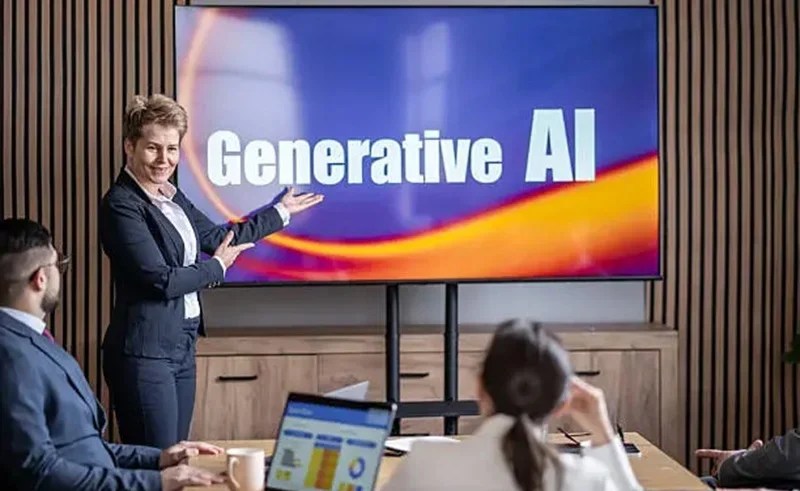
A revolution in education sparked by the rise of Generative AI has opened one of the biggest debates of our time. As universities in Asia grapple with the question of AI in the classroom, the extent of integration is currently becoming a matter of debate. AI tools for research, writing, coding, translation, and tutoring are increasingly being used by students, and it is not just students in Singapore that are making the shift, but other users across India and Vietnam as well.
Generative AI will impact higher education in Asia. The true metrical challenge is finding ways for technology to support learning without replacing the intellectually tough thinking and creativity though that is what higher education is supposed to inculcate.
From Memorization to Meaningful Learning
In many parts of Asia for decades, exams, essays, and standard exams have taken priority in higher education. That has been upset by generative AI within a blink of an eye. In the past, lengthy research was necessary to accomplish tasks, but now it can be finished in a matter of minutes with the help of AI assistants.
Consequently, assessment structures in universities are re-designed, placing less emphasis on the result of assessment, but more on the learning process. Comprehensive oral exams, supervised classroom tests, a portfolio project, and discussion-based problem-solving activities are slowly taking the place of traditional take-home assignments. This change can be attributed to a recognition that education should assess students’ thinking, not their writing.
AI Literacy Is Becoming a Core Skill
Major universities are not just trying to ban AI, but are also taking steps to use it.Leadership institutions like the National University of Singapore, University of Hong Kong, University of Tokyo are not hesitant to ban AI they are trying to use it. Rather, they are instructing pupils in its responsible use.
The time of digital literacy has passed and now AI literacy has taken its place. Students’ understanding of prompt engineering, of algorithmic bias, of verifying information created by AI, and their disclosure of its use, are increasingly being expected. In the era of technology, these skills are quickly becoming a must-have for graduates entering these workplaces.
Breaking Language Barriers Across Asia
The power of Generative AI is that it makes knowledge accessible and available to everyone. English translation software powered by AI can enable students in non-English speaking countries to read academic papers from international journals, provide summarization of academic papers, and effectively communicate their own academic ideas through English.
This technology is useful in helping overcome language-based barriers and gain access to global scholarship for students in multilingual societies such as Vietnam, Indonesia and Japan. On top of that, there is the emergence of the 24/7 personalized feedback that we can expect from institutional AI tutors, which will extend learning support beyond classroom walls.
A Region Moving at Different Speeds
The AI changes in Asia are far from uniform. The countries that already have high digital infrastructure, such as Singapore, Japan and South Korea, are developing curricula that prioritize given importance to AI, as well as enhancing the relationship between universities and the industry.
In parallel to this, students at the grassroots in South Asia are pioneering the adoption of the University, while universities are also seeking to train faculty and rectify deficiencies in physical and intellectual infrastructure. In developing Southeast Asia, institutions are increasingly seeing AI as a viable option to address teacher shortage as well alleviate access to quality higher education.
These variations imply that the mere adoption of technology solutions is insufficient. Education must also continue to invest in educators and school readiness and need to develop policies.
Challenges Cannot Be Ignored
Generative AI is unquestionably a powerful tool with immense potential, but it raises some challenging questions for higher education. The primary concern is that most of the major AI models were trained using primarily western data sets, which means that they lack proper cultural representation, historical awareness, and do not offer support in many Asian languages.
Another concern is that of becoming intellectually reliant on the device. Although AI can make them more productive, hefty overreliance can lead to a loss of independent thought, analytical writing, and long-term memory of information. Universities need to make sure that students don’t use AI to replace real work and concentration but to use it as a learning tool.
Another critical issue is the preparedness of faculty. The number of students using the AI tools has surpassed the number of institutions that have offered academic integrity and responsible usage training, resulting in varying policies. There’s no confusion in innovation when it comes to educator training.
Future Is Collaboration, Not Replacement
Generative AI is not going to replace Professors or Universities. Rather, it’s reshaping their job. The role of the educator will become more and more that of Mentor, guiding students to keep evaluating information, ask better questions and enabling them to apply knowledge in an AI-driven world in a critical, informed and creative manner.
It is a great chance for universities from Asia to drive this change by integrating cultural diversity, multilingual education and academic ethics with technological advancement. Those that achieve success will not be the institutions that panic and implement AI as quickly, but those that thoughtfully incorporate it while maintaining what is still important in higher education and education generally: educating informed, creative, responsible citizens.
Explore more AI and future trends.
How Is Malaysia Using AI?
Discover the roadmap driving digital transformation.
Why Does The AI Partnership Matter?
Find how the UAE and US are shaping AI.
Which AI Image Tool Fits?
Browse the best AI image generators available.
Can AI Transform Online Dating?
See how technology is changing modern relationships.
What Shapes Asia’s Future Workforce?
Look into the skills powering tomorrow’s careers.