










Today, Asia’s workplace is changing rapidly. Recruitment, development and retention is being radically transformed as artificial intelligence (AI), digital transformation and personnel expectations evolve.
At the same time new opportunities are opening up in the workplace for workers and employers due to changing demographics and global digital integration. Employers are creating skill sets that are more flexible and they are valuing more those who can be flexible and adaptable and also able to continue learning more than the standard qualifications.
A Skills-First Workforce Is Becoming the New Standard
Asia is seeing a shift towards skills-first approach driving change in the future of work. According to global labour market studies, over 50% of the workforce in developed and emerging Asian economies in the next few years will require substantial upskilling and reskilling. Workplaces are increasingly recognizing the value of skills that can be transferred to the job quickly and continuously learning is important for career development.
Across key cities being considered as a hub for innovation like Singapore, Tokyo, Bengaluru and Kuala Lumpur, the growing need for literature on Artificial Intelligence, data interpretation and the automation skills has been making itself very noticeable. In addition to technical skills, human-centred skills, such as critical thinking, emotional intelligence, leadership and cross-cultural communication, are increasingly becoming relevant. These uniquely human talents will remain vital competencies in successful professionals as repetitive processes get automised.
Learning Is Becoming More Flexible
While traditional university education is still useful, it is no longer the only route to success in one’s career. Many businesses are now acknowledging micro-credentials or industry qualifications alongside short professional learning courses and are accepting them as credentials for their staff to acquire new, relevant skills efficiently. This change allows employees to stay current with the latest technologies, and employers to connect with employees who have current information and knowledge.
Emphasis on lifelong learning is fostering the learning and use of skills throughout a worker’s careers, as opposed to relying on the skills that were acquired early in one’s career. Development is a key personality trait of today’s workforce in Asia.
Flexible Work Is Expanding Beyond the Office
Flexibility in the workplace in Asia is no longer limited to the hybrid work model. Companies have adopted geographically distributed teams, project-based hiring and hiring people from overseas to acquire needed specialised talent. With the savor of digital collaboration tools evolving, businesses can assemble cross-country, cross-time-zone teams that work effectively.
In addition, some Southeast Asian countries have also opened up digital nomad and remote work visas, positioning the area as a star destination for foreign professionals. Meanwhile, governments and digital platforms are also pushing for the improvement of social security for gig workers and the establishment of portable benefits as well as digital ID systems.
Explore The Future Of AI
How Is Malaysia Embracing AI?
Discover its digital transformation roadmap.
Why Is UAE-US AI Growing?
Explore the expanding technology partnership.
Which AI Image Tools Shine?
Find the best creative platforms.
Why Is Grok 4 Free?
Check out the latest AI update.
How Is Asia Becoming Connected?
Uncover technology driving regional growth.
AI Is Enhancing, Not Replacing, Human Work
AI helps financial institutions identify fraud and streamline compliance processes, while professionals focus more on building relationships and providing strategic advice to clients.The potential of AI in finance means that more time for building relationships and providing advice to clients, compared to working on compliance and fighting fraud.
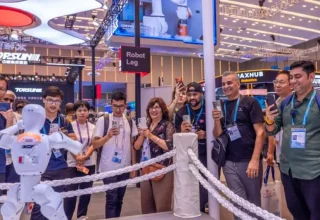
Smart factories, equipped with the Internet of Things and predictive maintenance, are becoming the norm in manufacturing, and public services are enlisting artificial intelligence to create citizen platforms that boost efficiency. The significant emergence depicts that job loss is not the greatest concern but getting the workers job-skills to interact with the new technologies.
FAQs
What will be the drivers of the future of work in Asia?
AI, digitalization, ageing society and workforce, and need for practical skills are shaping the future of work in Asia. All these factors are influencing businesses to transform into a more flexible and technology oriented working environment.
What’s making skills increasingly important than degrees?
The nature of certifications within the industries is such that how traditional education programmes are structured is lagging behind the evolution of industries and is not nearly as relevant as certifications through continuing learning and Micro-Credentials.
What is the role of AI in the workplace in Asia?
AI is leading the automation of repetitive tasks and assisting workers to make decisions, analyze data, and improve productivity. AI doesn’t eliminate most positions, it allows people to use their minds to work on more creative, strategic and relationship-focused roles.