









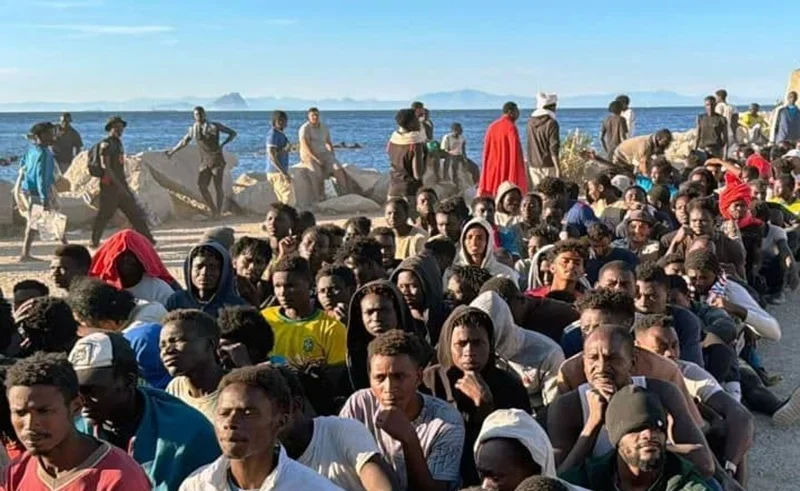
The Ceuta immigration crisis 2026 must not be viewed merely as another stage of the huge migration pressure that has always been a feature of migration in the South. The countries that are overwhelmed by the migration of tens of thousands of migrants is not only crippling their system, but increasing geopolitical pressure.
The small Spanish enclave, Ceuta, is an unusual presence at a major issue in the migration debate going on in Europe. Its fences and kept watch are a sign of the EU’s resolve to ensure that its external borders are kept safe. But the crisis showed that the strongest borders are insufficient to contain those who want to move, and the strongest addition were countries that control migration routes and calculate the political, economic and social costs and benefits of migration.
When Migration Becomes a Foreign-Policy Tool?
There are no single causes of migration. Decisions to leave home are driven by poverty, conflict, unemployment, political instability and climate pressures. However, as the Ceuta crisis has taught us, keeping migration routes under control can also be a diplomatic weapon.
The effects of lax border protection or shifting enforcement priorities can quickly make their way to Europe’s capitals. This leaves front-line countries like Spain to deal with the initial humanitarian and political ramifications themselves, and gives an asymmetric nature to the leverages of the transit nations.
But it doesn’t mean all migration waves are purposefully created. It does not mean however that Europe can no longer divorce migration issues from its broader foreign policy. The fields of border cooperation and development assistance, trade relations and diplomatic disputes are increasingly overlapping.
Ceuta Exposes Europe’s Internal Divide
Perhaps the most important part of the crisis was the response of Europe to breach. The governments of frontline countries tend to call on the European Union to be more united in the face of external challenges; other governments stress the need for more external regulation and stronger measures of deterrence.
Lacking an institutional mechanism to internally check and strengthen its migration architecture, reveals the structural weakness of the EU migration system. If migration is the responsibility of those countries which bear the brunt of the crisis, like Spain, Italy and Greece, this moves from being a challenge to which the countries respond collectively to being a political sore spot between them.
Misinformation Can Move People Faster Than Borders
The crisis is also a reminder of the fact that Europe’s migration problems are no longer limited to beaches, fences and border crossings. The world of social media may change the rules to become an effective migration signal for legal developments, rumors and manipulated information.
Lies regarding asylum procedures or deportation requirements can be shared from country to country in hours. These stories can feed into the motivations of migrants, in the process being misused by smuggling networks to create a sense of urgency that may even lead to unsafe migration for those who are preparing for or are already undertaking these trips.
So the challenge for policy makers in Europe is to combat misinformation as part of migration, rather than stifling communication with and within migrants.
Deterrence Cannot Be the Entire Strategy
At the end of the day, a deterrence-centered policy fails to reveal the human cost. The establishment of stronger fences can lead people to take more dangerous journeys, but the reasons for these journeys will not disappear.
It is necessary for Europe to have a more solid external perimeter, but the European security measures should be pursued in parallel to legal migration procedures, speed-up the procedures for asylum, and regional cooperation and targeted development policy are important.
The Ceuta crisis needs to be seen in the broader context as a warning instead of as a standalone reality. Challenges to Europe are not just about holding people back from entering from their borders. It is creating a migration system that safeguards the borders and at the same time fulfills its humanitarian mission and European solidarity.
Whether Brussels and national capitals are able to extend migration beyond the politics of walls and emergency response to a system which purely manages mobility before it becomes a crisis will be key to the future of European migration policy.
Key Global Developments Shaping Asia Today
Could Trump Face Iran War Fallout?
Check out the political costs facing Trump after the Iran conflict.
How Could Iranian Oil Disrupt Asia?
Find out how US pressure may affect Asian energy imports.
Could Forced Labour Tariffs Reshape Trade?
Uncover how new US tariffs could affect BTA negotiations.
How Are India-Russia Defense Ties Evolving?
Browse the latest S-400, BrahMos and local manufacturing developments.
What Did Myanmar Gain From Thailand?
See the key economic and border security takeaways from the visit.