









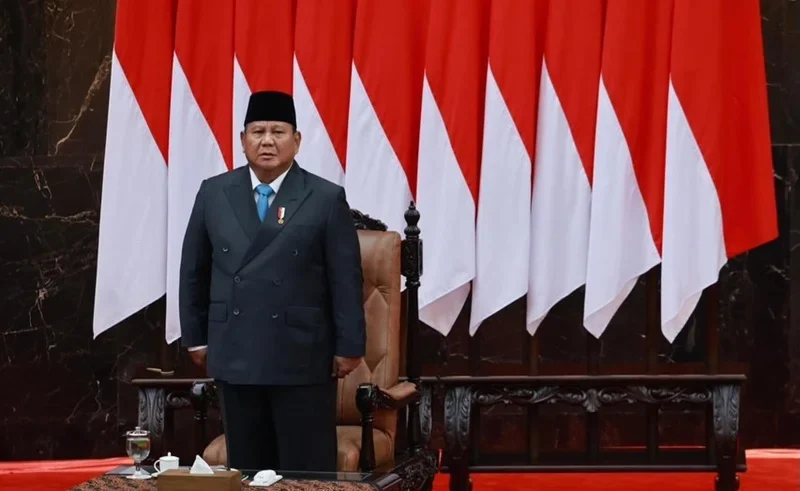
Bebas-aktif (“free and active”) foreign policy is a concept that Indonesia has been promoting for a long time and is not a policy of affiliating with major powers, but at the same time helping to ensure regional stability. But this doctrine is taking a turn for President Prabowo Subianto. Jakarta is working on closer economic ties with China and at the same time beefing up defense alliances with Western and regional powers, rather than keeping the distance from competing global powers.
This is an approach mirroring a fast-transforming Indo-Pacific. Indonesia has a distinctive situation, as geopolitical spat between the United States and China grows. It has a lot of natural resources, a strategic location and is the ASEAN biggest economy, making it an important player which both Washington and Beijing want to play. Whether Jakarta can continue enjoying the benefits of both sides without losing its independence, the question is.
Economic Logic Behind the Beijing Gambit
The priority for Prabowo’s engagement is not ideology but necessity, especially with regard to the economic benefits of the Chinese market. Within his government’s strategies he has set high ambitions, such as an annual economic growth of 8 percent, the development of industrial capacity and the speeding up of the utilization of Indonesia’s vast natural resources in the downstream sector.
An essential component of this vision is China as an indispensable partner. In 2025, bilateral trade will be roughly $167.49 billion, and Chinese investment will be used to drive large scale infrastructure and industrial investments. Beijing is actively involved in Jakarta’s development agenda through the Jakarta-Bandung High-Speed Railway and investments in the development of large-scale nickel smelters in Morowali, along with investments for the development of the electric vehicle ecosystem.
In addition to infrastructure, Chinese capital backs the downstreaming policy which aims at processing minerals in Indonesia instead of exporting raw materials. The strategy can generate more economically valuable exports, more employment, and enhanced competitiveness of the industries for the product, which can be hard to turn a blind eye to for Chinese investment.
Beyond China: A Multipolar Foreign Policy
Prabowo’s push towards Beijing is not Westward backing. Rather, it mirrors Indonesia’s overall foreign policy goals of being active in several diplomatic and economic fora at the same time.
Indonesia’s induction into the BRICS nation exemplifies this. Jakarta’s presence in the grouping underscores its interest in stepping up its relations with the rest of the Global South and lessen reliance on the traditional financial outlines of the west. Concurrently, Indonesia pursues membership of the OECD, continuing to seek to be part of the advanced economies.
Jakarta seems to be in the camp of maximizing opportunities, without favoring one sector of geopolitics to the other. This multi-alignment policy gives flexibility to Indonesia, but also minimizes the risk of economic shocks from a single source.
Maritime Challenge That Refuses to Disappear
The delicate balancing act can be seen in the controversy over the November 2024 cooperation statement issued by President Prabowo and President Xi. The ‘overlapping claims’ in the South China Sea immediately sparked concerns as Indonesia has consistently rejected China’s nine-dash line as stipulated in the UNCLOS.
Indonesia’s Foreign Ministry, however, soon issued a clarification that it “was not aiming to recognize the territorial claims of the Chinese side,” but the language left some legal experts and security analysts wondering. It would be something to be feared as it makes Indonesia’s position on its Exclusive Economic Zone around the North Natuna Sea look weaker than it has been.
Meanwhile, realities at sea continue to defy diplomatic talk. Since then, the Indonesian maritime authorities and Bakamla have been keeping an eye on Chinese Coast Guard vessels patrolling in parts of Indonesia’s EEZ and have also repeatedly met them in the middle with Chinese vessels. While economic ties are probably deeper, maritime issues have yet to be solved.
ASEAN’s Leadership Faces a New Test
Jakarta, the capital of the biggest ASEAN member country, has traditionally been ASEAN’s diplomatic hub. But in bilateral ties, Indonesia with Beijing, countries in the region closely watch the impact on regional unity.
But critics take issue with the bilateral joint development agreement as they believe it could have a negative impact on ASEAN’s unity in negotiations on the long-brothered South China Sea Code of Conduct. Successful Chinese efforts in reaching individual understandings with the various members of ASEAN could seriously affect ASEAN ability to do the same.
But supporters say pragmatic diplomacy is in play in Indonesia’s engagement. Jakarta does not aim to prevent conflicts from tabling economic progress but by seeking pragmatic cooperation while maintaining its legal stance over its sovereignty.
South China Sea updates, tensions and key regional developments.
Can ASEAN Handle Sea Tensions?
Check out the Philippines’ regional role.
Will Philippines Resist China?
Find out Manila’s response plans.
Why Was The Survey Halted?
Uncover the dispute behind it.
Is China A Regional Threat?
See why concerns are growing.
Can US Unlock Sea Resources?
Explore the growing US partnership.
Can Indonesia Truly Remain Independent?
Indonesia is progressing to strengthen its military ties with the United States, Australia, Japan and France. Joint exercises, which have been increased as Super Garuda Shield, and the procurement of high-tech defense equipment from various suppliers instead of relying on one strategic supplier, show that the activity is far from limited.
This is an economic diversification also. Although investment from China has been considerable, the Europeans, the Middle East and Japan are also targets of choice for the Indonesian government. Diversifying investment sources will reduce excessive reliance on any country and increase bargaining power for Indonesia in foreign investment.
Finally, it cannot be said that strategic autonomy can be maintained through rhetoric alone. It demands diversified economic relations, reliable defense in an international right framework and constant compliance with international law.
FAQs
What does Prabowo’s new “gambit” involve in Beijing?
Prabowo’s Beijing gambit is Indonesia’s policy on strengthening economic ties with China but holding onto security ties with the U.S. and other regional allies for maintaining strategic independence.
Why is the importance of China to the Indonesian economy?
China has been Indonesia’s biggest trading partner as well as a significant investor in Indonesia’s downstream industrial projects for supporting the economic development of the city, in the processing of nickel, in the supply chain of electric vehicles and in the infrastructure sector.
What does it mean to balance relations with the West in Indonesia?
Indonesia is working to enhance military cooperation by holding joint military drills and defense procurement with countries such as the U.S., Australia, Japan, and France, as well as by beefing up economic ties with China.