









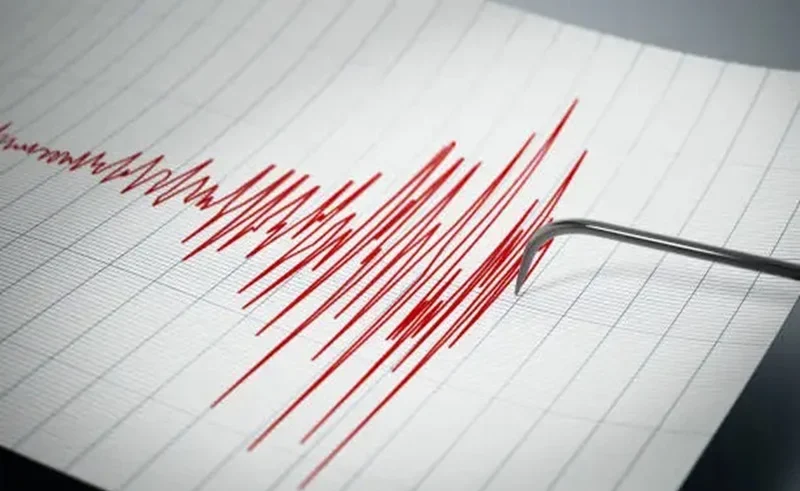
Davao Oriental was shaken by a big 5.6-magnitude earthquake this afternoon (7 May 2026) as the ground in the southern Philippines continues to vibrate. The latest tremor comes on the heels of another strong quake earlier this week, and the people are clearly on their guard. Following closely on the heels of another strong tremor earlier this week, experts are on a hunt to look into the reasons behind the latest tremor. The regular occurrence has resulted in immediate concerns about the activity at the Pacific Ring of Fire and the immediate effect it has on the Philippines, as the Philippine Institute of Volcanology and Seismology (PHIVOLCS) keeps a watchful eye on the situation.
Understanding the Seismic Surge in Davao Oriental
The tremor, which occurred near the municipality of Baganga, rattled Davao City and the neighboring provinces with a 5.6 magnitude. There have been no immediate casualties reported, but local disaster risk reduction offices are evaluating structural damage to old infrastructure, as well as coastal roads. Such an event is not out of the ordinary, but is part of a “cluster” of high-frequency seismic events that have occurred in the Philippines this year.
According to data from the Official PHIVOLCS Website, the epicenter was tectonic in nature; this is related to the movement along the Philippine trench. It is one of the world’s most seismically active subduction zones that can produce shallow tremors and massive tsunamis. The frequency of the quakes is recent and implies that there is increased adjustment in the crust of the region.
Why Two Major Quakes in One Week?
The recent shaking of the Philippines is largely due to its vulnerability. The nation is located near several of the planet’s fault lines and is a hotspot for the Pacific Ring of Fire activity. The double seismic event this week can be attributed to the interaction between the Philippine Sea Plate and the Eurasian Plate.
The Role of Pacific Ring of Fire Activity
The Ring of Fire surrounds the Pacific Ocean and is a horseshoe-shaped area 40,000 km in length where numerous earthquakes and volcanic eruptions happen. For the Philippines, it’s a situation where there’s a constant friction that’s always simmering under the surface. As occurred earlier this week, when one piece of the fault slipped, it can sometimes pass the stress to the next piece of the fault, resulting in the “double quake” event taking place in Mindanao.
Assessing Philippine Seismic Vulnerability
The geography of the archipelago is one of the factors that make it prone to earthquakes in the Philippines. There is no region in the Philippines completely exempt from ground shaking because the Philippine Fault Zone (PFZ) runs for more than 1200 km from Luzon to Mindanao. Local governments need to tighten up building codes and hold more frequent “Duck, Cover, and Hold” drills, said organizations such as the Office of Civil Defense (OCD), which stated that the recent activity is a reminder of the need for local governments to be more vigilant.
Philippines Stories Everyone Is Reading!
Why Are Couples Choosing Philippines Now?
Explore the best budget honeymoon islands for 2026.
Why Did Malacañang Declare Holidays?
Check out the reason behind the May 6–8 break.
How Strong Was Mindanao’s Earthquake?
Find the latest PHIVOLCS bulletin and updates.
Why Is BINI Making History Globally?
Dive into the group’s landmark Coachella 2026 run.
Why Is KATSEYE x Gap Trending?
Browse why Philippines fans can’t stop talking.
Safety Measures and Government Response
The Department of Social Welfare and Development (DSWD) has prepositioned relief supplies in the Davao Region in response to the earthquake in Davao Oriental. Residents are warned not to go to high ground where there is the risk of landslips and are asked to look for cracks in their homes before returning.
The United States Geological Survey (USGS) states that although technology can’t yet predict exactly when an earthquake will occur minute-by-minute, the monitoring of the “creep” of fault lines can help make more long-term preparations. Resilience and dissemination of information through mobile alerts and local broadcast media are the priority for the Philippines.
FAQs
Is a Tsunami expected after the 5.6 Davao quake?
Based on current data from the Pacific Tsunami Warning Center, there is no immediate tsunami threat for the 5.6-magnitude event. However, those near the coast should always remain observant of unusual sea-level changes.
How does Pacific Ring of Fire activity affect the Philippines?
It causes constant tectonic movement, resulting in frequent earthquakes and volcanic activity. The Philippines experiences roughly 20 detectable earthquakes daily, though most are too weak to be felt.
How can I reduce my Philippine seismic vulnerability?
Ensure your home is built according to the National Building Code, secure heavy furniture to walls, and have an emergency “Go Bag” ready with at least three days’ worth of food, water, and medicine.