









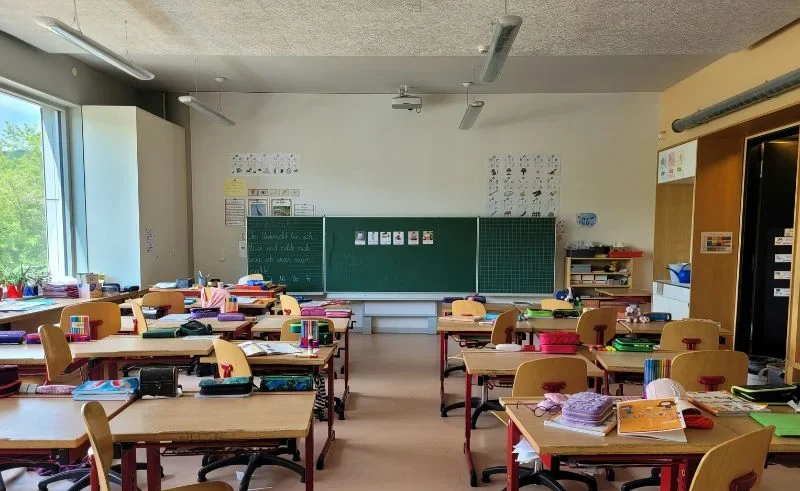
Schools were seen for generations as the place where children were to be taught how to read, calculate, think and understand the world. Today this mission has grown on a large scale. Schools are increasingly expected to solve problems, provide meals, identify mental-health problems, manage behavioral crises, teach social skills and compensate for inequalities far beyond the classroom.
That growth would seem to be empathetic, but that poses a serious dilemma: just how much can a school take on before its main purpose gets corrupted?
Schools Have Become More Than Classrooms
Schools are by now a component of a social safety net for many students. School meals can be a valuable source of food for families on low incomes. Teachers and counsellors are also expected to recognize signs of distress and offer support where services in the community are either not available, or not available in sufficient quantity.
On the other hand, schools are also taking up responsibilities entrusted to people and communities outside the school. While social-emotional learning, behavioral intervention and life-skills coaching are all valuable, each one adds up in terms of time, resources, and knowledge.
Problem Begins When Schools Become the Universal Fix
Schools do not give it to us, other than that, the risk is posed by the fact that they offer support. The risk is that they may come to rely on the school solving their problems without having any control over that.
Poverty, housing insecurity, health care deficits, and inflation and digital disparities impact student learning. Educators frequently bear the responsibility for responding to the behaviors of these issues as they show up at the school gates and continue to be responsible for the attainment of students.
That just makes for a cascading effect that schools take the pressure, they’ve got less time to do instruction, and in the end, the performance drops, and schools are blamed for that.
Teachers Cannot Be Expected to Do Every Job
For a teacher to be important as an adult in a child’s life is not tantamount to being a psychologist, social worker, health-care professional or family-support specialist.
The more the school takes responsibility, the more the teacher needs to distribute his or her time and energy between teaching and crisis management. This may lead to fatigue and burnout as well as limited reading and math, science and critical thinking time.
The answer to this is to do no such thing as taking the social agencies out of the schools. It’s to be all right for educators not to be expected to bear those obligations by themselves.
What a Better Model Could Look Like?
Schools can be a set of public services that continue to play a central role in the community as a public institution rather than outside its responsibilities.
Social workers, health professionals, counselors, and family-support specialists have the ability to operate within or in addition to schools and play a role in school practices and issues, while simultaneously fulfilling their professional duties. This would enable all students to be taken care of without equipping teachers as “solvers” of every problem.
Meanwhile, investment in out-of-school is not unimportant. Better youth services and more affordable health care, as well as family economic support/community programs, can dampen some of the issues that teachers are having to deal with within classrooms.
Accountability Has to Be More Honest
It is essential that educational systems must indeed be accountable for educational outcomes. Schools should be tasked to aim to enhance teaching, support those who struggle and be resourceful.
However, if schools are required, as it seems they are, to be held accountable for everything that could affect a child’s life, accountability gets skewed. No single solution to homelessness, neighborhood insecurity, healthcare access and generational poverty can be single-handedly achieved by a school.
Not that there is no referrer power for schools. It asserts that if change is to be effected by public policy it demands a discrimination between what the schools can change and what can only be changed elsewhere.
Goal Should Be Stronger Schools, Not Bigger Expectations
It is not always the teacher’s burden to fix inequality in education. The best reform is to make the institutions which bear on schools stronger, in order to enable schools teachers to concentrate on what they are especially trained to do: teach.
Schools can be a place of safety, support and opportunity without being society’s emergency room for all unquantifiable social problems.
FAQs
Should schools be looking after mental health?
Schools can indeed make a difference to recognise issues and link pupils to help. They should, however, have qualified mental health professionals or external services rather than counting solely on teachers.
How do students cope with the impact of additional work on academic achievement?
Staff time and class hours may be consumed that are not spent on academic concerns and then not as much time will be available for core instruction. Sometimes the teacher may suffer from stress and burnout due to the overloading.
What to do about the government?
Governments can ensure that family-support services, healthcare professionals and social workers are involved in the school community as well as providing funding for services beyond the education sector.
Explore the innovations shaping Asia’s smarter future.
How Is AI Transforming Malaysia’s Digital Future?
Check out why artificial intelligence is driving Malaysia’s digital transformation.
Which AI Tools Create Stunning Images?
Find the best AI-powered image generation tools for creative visuals.
Can ChatGPT Really Think Like Humans?
Uncover how ChatGPT performed in a test of human-like intelligence.
How Will Asia’s Workplaces Evolve?
Browse the skills, flexibility, and innovations shaping Asia’s future workforce.
Can Technology Connect Asia More Closely?
See how technology and infrastructure are building a more connected Asia.