
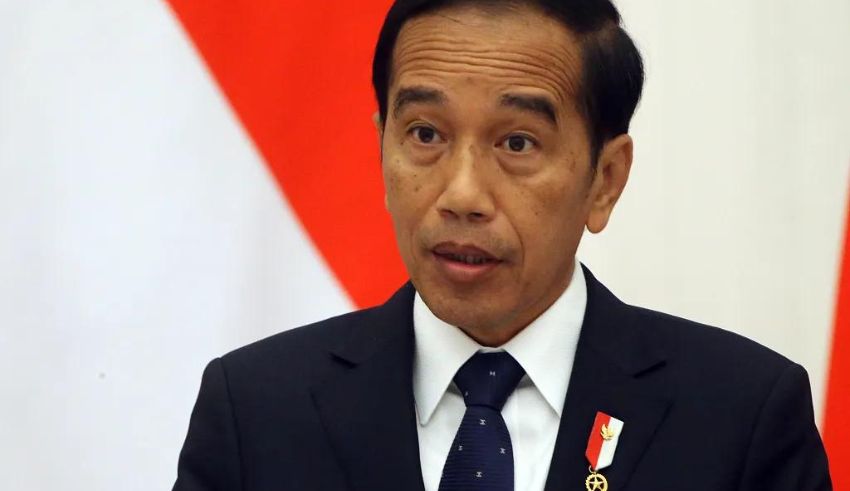
Last month’s BRICS summit held in South Africa concluded with a surprising decision – Indonesia did not join the group. This left many questioning why a nation with one of the world’s largest populations and economies, as well as a rich history of leadership in developing countries, did not become a new member.
In 1955, Indonesia hosted the Bandung Conference, a seminal event in Asian-African relations, solidifying its legacy in international diplomacy.
Indonesian President Joko Widodo, affectionately known as Jokowi, addressed the issue after participating in the summit. He stated that his administration was carefully reviewing the possibility of joining BRICS, emphasizing the need for thorough consideration before making any hasty decisions.
“To become a new member of the BRICS group, a country must submit a letter of expression. Until now, we have not submitted that,” President Jokowi explained.
Should Indonesia Join BRICS?
Tri Tharyat, the director general for multilateral cooperation at Indonesia’s foreign ministry, declined to comment further on BRICS, citing the president’s official statement. He also did not provide a timeline for the submission of the letter.
President Jokowi highlighted Indonesia’s “incredible” ties with the existing BRICS members, particularly in economic cooperation. He stressed the importance of rejecting trade discrimination and ensuring equal and inclusive cooperation, positioning BRICS as a front-runner in the fight for development justice and fairer world governance reform.
As the world’s fourth-most-populous state, Indonesia wields increasing economic and diplomatic influence. It is a G20 member and recently hosted a summit attended by China’s leader, Xi Jinping. The nation also welcomed leaders from the Association of Southeast Asian Nations and other countries in a Jakarta summit.
Keep Reading
What Kind of Country is Indonesia
Notably, Indonesia maintains substantial trade relations with individual BRICS founding countries. In 2022, Indonesia exported goods worth over $65.8 billion to China, the highest among all listed countries. It had significant exports to India, Russia, South Africa, and Brazil as well. The Vice Trade Minister, Jerry Sambuaga, emphasized that BRICS membership could open doors to “nontraditional” markets in Africa and Latin America, using South Africa and Brazil as entry points.
Indonesia’s investment ties with the People’s Republic of China are also noteworthy. In 2022, China was the second-largest investor in Indonesia, with $8.2 billion, while Hong Kong ranked third with $5.5 billion. This underscores Indonesia’s deepening economic connections with China.
Nur Rachmat Yuliantoro, a prominent academic, emphasized that Indonesia must consider its relations with all BRICS founding countries, not just China. He noted that while China plays a central role, Indonesia should ensure the representation of the interests of all members.
Johanes Herlijanto, chairman of the Indonesian Sinology Forum, expressed concerns about China’s dominance in BRICS and the potential challenges it could pose to Indonesia’s neutral stance in global politics. He supported Indonesia’s cautious approach, highlighting the importance of not rushing into joining BRICS.
Indonesia’s “free and active” foreign policy principle, which avoids aligning with major global powers, presents a challenge. Rachmat stressed that Indonesia must convince the international community, especially the United States and its allies, that BRICS membership aligns with its national interests without violating non-aligned principles.
Joining BRICS could undoubtedly strengthen the group and influence the geopolitical balance. However, the extent of Indonesia’s involvement in global issues and its ability to balance its national interests will determine the impact of its potential membership.
Rachmat concluded by dispelling concerns of Indonesia being labeled as “anti-Western” if it joins BRICS, asserting that Indonesia’s regional influence cannot be overlooked by major global players.
In conclusion, Indonesia’s contemplation of BRICS membership reflects the nation’s growing stature on the global stage and the complexities of balancing its interests amid major geopolitical shifts.