
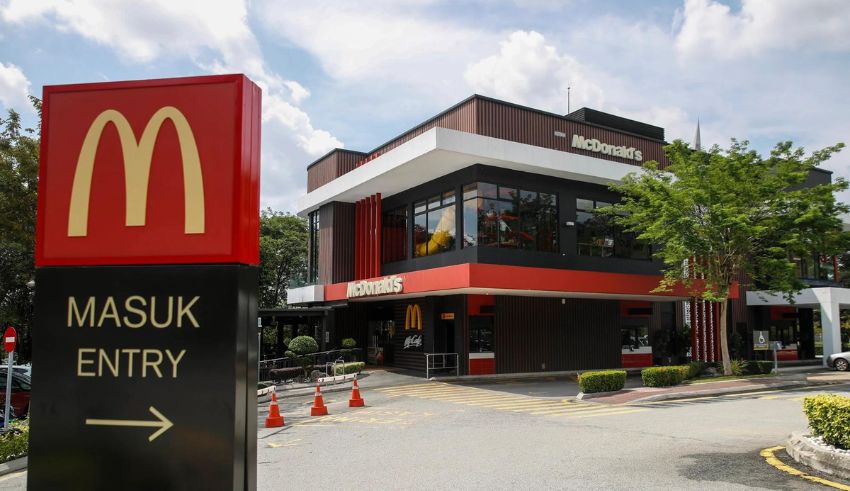
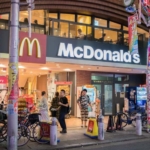
McDonald’s Malaysia, the licensee of the global fast-food giant in the country, has filed a lawsuit against a local pro-Palestinian group, BDS Malaysia, for defamation over social media posts that allegedly linked the company to Israel’s military offensive in Gaza¹.
The lawsuit seeks damages of 6 million ringgit ($1.31 million), claiming that the boycott campaign has hurt its business and reputation. However, the move has backfired, as it has drawn more attention and criticism to the company, and has failed to address the root causes of the boycott.
Why did McDonald’s Malaysia sue BDS Malaysia?
The lawsuit stems from a series of social media posts by BDS Malaysia, a local chapter of the Boycott, Divestment, and Sanctions (BDS) movement, which advocates for non-violent pressure on Israel to end its occupation of Palestinian territories and comply with international law.
The posts, which were published in May 2023, during the height of the Israel-Gaza conflict, urged the public to boycott McDonald’s Malaysia, along with other companies that were perceived as supporting Israel. The posts claimed that McDonald’s Malaysia was paying royalties to McDonald’s Corporation, which in turn was funding Israel’s “genocidal war against Palestinians in Gaza”¹.
McDonald’s Malaysia denied these allegations, stating that it had no connection to the political turmoil and did not channel any funds towards either faction. It also said that it had contributed 1 million ringgit ($218,000) to the Palestinian Humanitarian Fund, in line with the Malaysian government’s initiative². However, these statements did not appease the boycotters, who continued to spread the accusations and call for action against the company.
In December 2023, McDonald’s Malaysia decided to take legal action against BDS Malaysia, accusing it of inciting the public to boycott its outlets, which led to a loss of profits, job cuts, reduced operating hours, and closures of some of its restaurants¹. The company said that the false and defamatory statements made by BDS Malaysia had caused significant damage to its reputation and business, and sought damages of 6 million ringgit to compensate for the losses it had suffered.
How did the lawsuit backfire?
The lawsuit, however, did not have the desired effect of stopping the boycott or restoring the company’s image. Instead, it had the opposite effect of attracting more attention and criticism to the company, and exposing its weaknesses and vulnerabilities.
First, the lawsuit provoked a backlash from the public, especially from the pro-Palestinian supporters, who saw it as an attempt to silence and intimidate a legitimate social movement. Many netizens expressed their solidarity with BDS Malaysia, and vowed to continue the boycott until McDonald’s Malaysia withdrew the lawsuit and apologized. Some also questioned the company’s motives and sincerity, and accused it of being hypocritical and greedy.
Keep Reading



Second, the lawsuit revealed the company’s lack of understanding and sensitivity to the local context and culture. Malaysia, a Muslim-majority country, has been a vocal critic of Israel’s actions in Gaza, and has supported calls for boycotts of Israeli and companies perceived as supporting Israel. The lawsuit, therefore, was seen as a disregard and disrespect for the sentiments and values of the Malaysian people, and a betrayal of their trust and loyalty.
Third, the lawsuit exposed the company’s vulnerability and dependence on the global franchise system. The lawsuit admitted that McDonald’s Malaysia was paying royalties to McDonald’s Corporation, which confirmed the suspicions of some boycotters that the company was indirectly supporting Israel. The lawsuit also showed that the company was unable to cope with the boycott, and had to resort to legal action to protect its interests. The lawsuit, therefore, undermined the company’s autonomy and credibility, and raised doubts about its sustainability and resilience.
What could McDonald’s Malaysia have done differently?
The lawsuit, in hindsight, was a strategic blunder that worsened the situation for McDonald’s Malaysia. The company could have taken a different approach to address the boycott, such as:
- Engaging in dialogue and mediation with BDS Malaysia, and seeking a mutual understanding and resolution of the issue.
- Educating the public and the media about the facts and the realities of the franchise system, and dispelling the myths and misconceptions about its links to Israel.
- Emphasizing its commitment and contribution to the local community and the society, and highlighting its social responsibility and ethical practices.
- Enhancing its customer service and product quality, and offering incentives and promotions to attract and retain customers.
- Diversifying its sources of revenue and reducing its reliance on the franchise system, and exploring new opportunities and markets.
McDonald’s Malaysia, by suing a pro-Palestinian group, shot itself in the foot, as it aggravated the boycott and damaged its reputation. The company could have avoided this outcome by adopting a more constructive and proactive approach to deal with the challenge.