
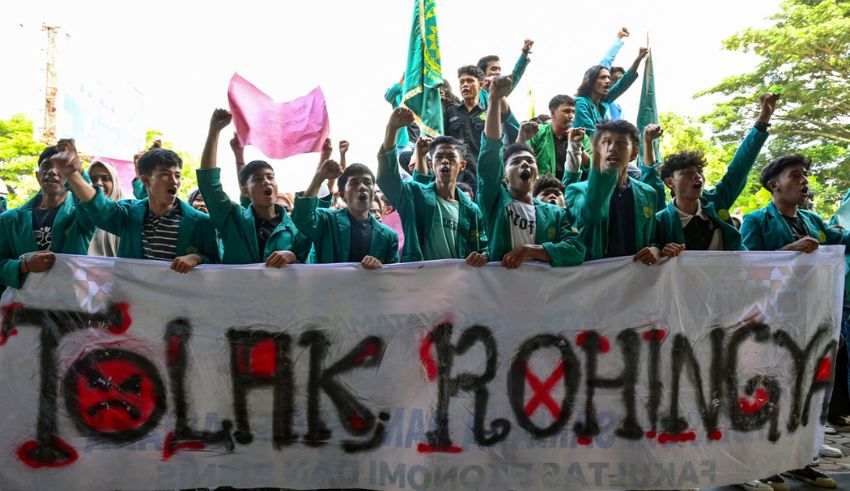
Indonesia’s residents have shown hostility and resistance against the arrival of more Rohingya refugees from Myanmar, who have fled persecution and violence in their homeland.
The residents have staged protests, attacked shelters, and demanded the deportation of the refugees, who they perceive as a burden and a threat to their communities.
The negative attitude of the residents towards the Rohingya refugees is partly influenced by Myanmar’s disinformation campaign, which has spread false and misleading information about the Rohingya crisis, and has attempted to justify and cover up its human rights abuses.
What is Myanmar’s disinformation campaign?
Myanmar‘s disinformation campaign is a systematic and coordinated effort by the Myanmar military and its supporters to manipulate and distort the facts and the narratives of the Rohingya crisis, which has resulted in the displacement of over one million Rohingya Muslims from Myanmar’s Rakhine state since 2016. The campaign, which mainly uses social media platforms, such as Facebook and Twitter, aims to:
- Deny and downplay the atrocities and crimes committed by the Myanmar security forces against the Rohingya, such as killings, rapes, arson, and torture.
- Portray the Rohingya as illegal immigrants, terrorists, extremists, and traitors, who pose a threat to the national security, sovereignty, and identity of Myanmar.
- Discredit and delegitimize the international community, the human rights organizations, and the media, who have documented and exposed the violations and the suffering of the Rohingya.
- Influence and mobilize the public opinion, both domestically and internationally, in favor of the Myanmar military and its actions, and against the Rohingya and their demands.
Keep Reading


How does Myanmar’s disinformation campaign influence Indonesia’s rejection of the Rohingya refugees?
Myanmar’s disinformation campaign has influenced Indonesia’s rejection of the Rohingya refugees in several ways, such as:
- Creating confusion and mistrust among the Indonesian public and the media, who may not have access to reliable and accurate sources of information about the Rohingya crisis, and who may be swayed by the propaganda and the misinformation disseminated by the Myanmar military and its allies.
- Fueling fear and hatred among the Indonesian residents, especially in the provinces of Aceh and North Sumatra, where most of the Rohingya refugees have landed, who may believe the false and defamatory claims that the Rohingya are terrorists, criminals, or disease-carriers, who will harm their security, welfare, and culture.
- Undermining the solidarity and the sympathy of the Indonesian government and the civil society, who have historically supported the Rohingya cause and welcomed the refugees, who may face pressure and criticism from the Myanmar military and its supporters, who accuse them of interfering in Myanmar’s internal affairs and violating its sovereignty.
- Hampering the cooperation and the coordination of the regional and the international actors, who have tried to address and resolve the Rohingya crisis, who may encounter obstacles and challenges from the Myanmar military and its supporters, who reject and resist any intervention or assistance for the Rohingya.
Myanmar’s disinformation campaign, therefore, has played a role in shaping and influencing Indonesia’s rejection of the Rohingya refugees, who have been denied and deprived of their basic rights and dignity. The campaign has also contributed to the perpetuation and the escalation of the Rohingya crisis, which poses a threat to the peace and the stability of the region and the world.